
Phylacteria
Phylacteria
The disease known as Phylacteria is caused by specific fungal pathogens that interfere with the normal cellular development of host plants. The pathogen functions by disrupting the hormonal balance of plant tissues, leading to abnormal growth patterns.
What the section contains
Phylacteria
The fungus is capable of surviving in the soil and on crop debris as mycelium, making it a persistent threat in agricultural fields. It can withstand various environmental stresses by entering a dormant state until conditions become favorable.
Propagation occurs via spores that are disseminated primarily by splashing rain, wind, and irrigation water. The lifecycle of the pathogen is closely tied to the moisture levels within the field environment.
Once the fungal spores reach a susceptible host, they penetrate through natural openings or micro-wounds, establishing a localized infection that quickly spreads throughout the vascular system.
The pathogen utilizes the resources of the host plant for its own development, secreting metabolic byproducts that weaken the plant's immune system and accelerate the decline of the affected organ.
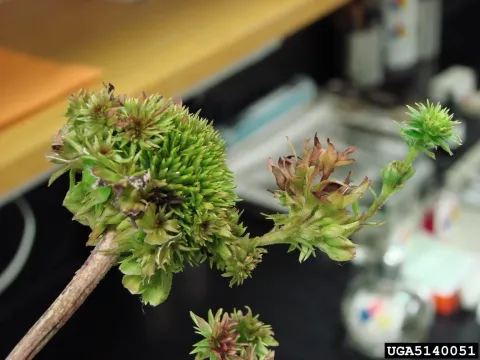
The primary symptom of Phylacteria infection is the formation of irregular growths, such as galls or tumor-like swellings, on the stems, roots, or leaves of the crop.
These growths often start as subtle thickening of tissues and gradually enlarge, sometimes exhibiting a rough or cracked surface texture that is characteristic of the infection.
Affected plants often display stunted growth compared to healthy crops in the same field. Leaves may show symptoms of chlorosis, appearing pale or yellowed due to the impairment of nutrient uptake.
Deformation of the plant structure, such as twisted stems or curled leaf blades, is a common indicator of the pathogen's interference with normal cell division processes.
In advanced stages of the disease, the tissue within the galls may become necrotic or subject to secondary invasion by saprophytic organisms, leading to the rapid decay of the plant organ.
High moisture levels are the most critical factor for the development and spread of Phylacteria. Fields with poor drainage or high humidity are significantly more susceptible to outbreaks.
Optimal temperatures for the fungal pathogen typically range between 18°C and 26°C. Such conditions often occur during late spring or summer, coinciding with active crop growth.
Monoculture practices significantly increase the risk of disease, as the pathogen accumulates in the soil over consecutive seasons, leading to an increasing inoculum pressure.
Mechanical damage caused by farm machinery or agricultural tools provides an easy entry point for the fungus. Proper sanitation and care during field operations are essential to prevent infection.
Dense planting patterns reduce air circulation within the canopy, trapping humidity on the plant surfaces and creating an ideal environment for spore germination and colonization.
Phylacteria leads to substantial yield reductions, as affected plants struggle to divert enough energy to fruit or seed production, often resulting in small or malformed produce.
The overall quality of the harvested crop is degraded, with lower sugar content and altered nutritional profiles, rendering the product less marketable for fresh consumption or processing.
In perennial crops, the disease can eventually lead to the total collapse of the plant due to the disruption of the root system and the blockage of vital vascular channels.
The long-term impact on soil health requires significant investment in site remediation, as the persistent nature of the pathogen makes it difficult to cultivate susceptible crops for many years.
Economic losses are compounded by the increased cost of fungicide applications and the potential requirement to uproot and destroy entire sections of a planting to stop the spread.
The most effective strategy for managing Phylacteria is the use of resistant crop varieties, which are specifically bred to withstand the infection and minimize yield loss.
Crop rotation remains a fundamental agrotechnical practice, as rotating away from susceptible species for several years helps to exhaust the pathogen's survival structures in the soil.
Strict sanitation measures, including the removal and burning of infected plant debris, are vital to prevent the carry-over of the fungus to the next growing cycle.
Chemical control involving the use of systemic fungicides can be applied as a preventive measure, especially in areas known for historical disease pressure or during high-risk weather windows.
Improving field drainage and ensuring balanced fertilization are key to maintaining plant vigor, which enables the crop to mount a more effective natural defense against the pathogen.