
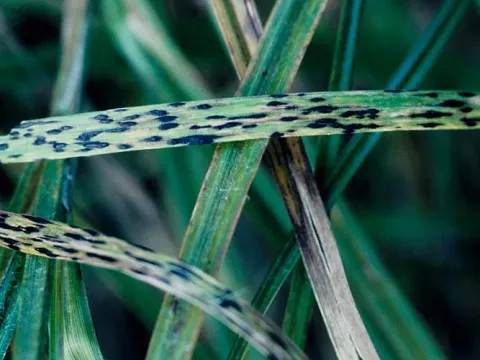
Phyllachora graminis
Phyllachora graminis
The causal agent of this disease is the ascomycete fungus Phyllachora graminis. This pathogen is a specialized parasite that targets a wide range of wild and cultivated grasses.
What the section contains
Phyllachora graminis
The life cycle of the fungus is characterized by the production of black, shiny stromata on the leaves and leaf sheaths. These hard, crust-like structures serve as the site for ascospores maturation.
The fungus overwinters on crop residues and infected plant debris in the form of mycelium and fruiting bodies, ensuring its survival even in harsh climatic conditions.
Dissemination occurs primarily through ascospores, which are ejected from the stromata during wet weather and transported by wind currents to healthy plant tissues.
The biology of Phyllachora graminis involves a latent period, which often masks the infection until the fungus has already established itself within the plant tissues.
The most distinctive symptom of the disease is the development of black, glossy, and slightly raised spots, known as stromata, on the foliage and sheaths of infected grasses.
These spots are typically oval or elongated in shape. As the infection progresses, the surrounding plant tissue often turns yellow or necrotic, indicating cellular damage.
Under humid conditions, the foliage may exhibit early signs of senescence and wilting, which compromises the plant's overall health and physiological function.
In severe cases, the black crusts can cover large portions of the leaf surface, significantly reducing the area available for photosynthesis and affecting plant vigor.
- Black, shiny stromata on leaves and sheaths
- Chlorosis and necrosis surrounding the fungal spots
- Premature drying of the foliage
- Overall reduction in plant growth and development
The development of this fungal disease is favored by mild temperatures and high moisture levels, which are critical for the germination and penetration of fungal spores.
Dense crop stands create a humid microclimate, which encourages the spread and establishment of the fungus, particularly in regions with high rainfall during the summer months.
Leaving plant debris on the surface after harvest provides an ideal substrate for the fungus to persist, making it easier for the infection to return in the following season.
Poor ventilation and low light penetration in crowded fields can exacerbate the disease, providing the perfect conditions for the proliferation of the pathogen.
Seasons characterized by persistent rain and high humidity increase the risk of an outbreak, as free water is necessary for the successful infection process.
The harm caused by the disease is primarily related to the reduction of the green leaf area, which decreases the plant's ability to perform photosynthesis and produce carbohydrates.
Stunted plant growth and reduced biomass production can lead to significant economic losses in both forage production and cereal grain yields.
In infested pastures, the nutritional quality of the grass is diminished, which can impact livestock feeding efficiency and animal health if the grass is harvested or grazed.
In cereal crops, severe infection can lead to poorly filled grains, reducing the quality and quantity of the harvest at the end of the season.
The presence of the fungus can shift the composition of grass communities, potentially favoring more resistant but less desirable species over valuable agricultural crops.
Crop rotation remains the most effective management tool, as it breaks the life cycle of the fungus by avoiding susceptible hosts in the same field for consecutive years.
Deep plowing and proper management of crop residues are essential to bury infected plant material, which helps in reducing the primary inoculum source for the next season.
Selecting resistant or less susceptible cultivars is a recommended strategy to minimize the risk of yield loss in areas where the disease is known to be endemic.
Controlling wild grasses on field borders and neighboring non-crop areas helps eliminate reservoirs of infection that can spread to the main crop.
In specific cases where the disease pressure is high, the use of registered fungicides can be considered to protect the crop during the most vulnerable stages of development.