
Phyllachora fungi
Phyllachorales
Phyllachora fungi (order Phyllachorales) are a group of ascomycetes that act as obligate parasites on various plants. These fungi have evolved to parasitize living host tissues, establishing a long-term relationship with the plant host.
What the section contains
Phyllachora fungi
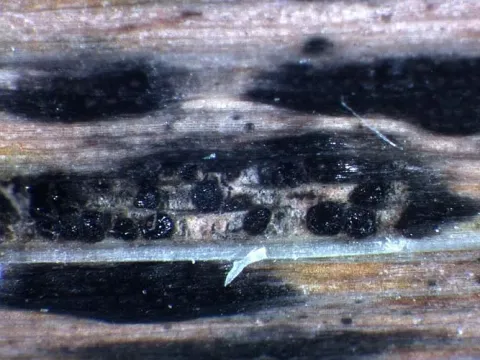
The fungus develops dark, hard structures called stromata within the epidermal tissue of leaves. These stromata act as protective shields, housing the perithecia where the sexual spores (ascospores) are produced.
Members of this order are highly host-specific. A well-known example, Phyllachora graminis, targets various grass species, causing characteristic spots that interfere with the plant's metabolic processes.
The life cycle involves the penetration of the host's mesophyll by fungal hyphae. This allows the pathogen to efficiently absorb nutrients directly from the living cells while maintaining the host's vitality for an extended period.
Dispersal is primarily mediated by wind-borne or rain-splashed ascospores. Under favorable weather conditions, these spores land on healthy tissue, germinate, and initiate new infections, repeating the cycle.
The most distinctive symptom of Phyllachora infection is the development of black, glossy, and slightly raised spots on the leaf surface. These spots are essentially the fungal stromata embedded in the plant tissue.
Often, these spots appear in linear arrangements, following the venation of the leaves, particularly in monocotyledonous crops. As the infection progresses, the spots may merge into larger necrotic patches.
A chlorotic halo frequently surrounds the blackened areas, indicating a localized decline in chlorophyll content and tissue vitality. This leads to reduced photosynthetic capacity across the entire leaf.
Unlike rusts or mildews, the structures formed by Phyllachorales are firm and cannot be wiped off the leaf surface. They are deeply integrated into the plant's structural layers.
In cases of severe infestation, the leaves may show widespread browning and premature senescence. The presence of these hard black dots is a reliable diagnostic feature of the disease.
High relative humidity and frequent rainfall are the primary drivers for the spread of Phyllachora fungi. Moisture is critical for the activation of spores and their release from the matured stromata.
Warm temperatures, generally ranging between 18°C and 25°C, provide the best environment for rapid fungal development. During extended periods of mild, wet weather, the pathogen can spread rapidly through the canopy.
Dense plant stands with poor airflow create an optimal microclimate for infection. The persistence of dew or water droplets on leaves facilitates the germination of spores on the plant surface.
Crop debris from the previous season serves as the primary reservoir for the fungus. If this material is not managed, it provides a source of inoculum that can infect young crops in the following spring.
Plant stress, caused by nutrient deficiencies, poor drainage, or adverse environmental conditions, significantly increases susceptibility. Robust, healthy plants are often better equipped to tolerate or resist infection.
The primary economic impact of Phyllachora infection is the reduction in photosynthetic area, which limits the plant's ability to produce sugars and store energy for growth and yield.
In forage grasses, the disease reduces both the dry matter yield and the palatability for livestock. This can lead to decreased growth rates or lower milk production in grazing animals.
For grain crops, infection can result in thinner, shriveled kernels, negatively impacting both the quantity and the quality (test weight) of the harvest.
Ornamental plants suffer from significant aesthetic damage. The unsightly black spots and premature leaf loss reduce the market value and health of nursery stock or landscape plants.
Additional costs arise from the need for fungicide applications and intensified monitoring. Furthermore, uncontrolled outbreaks in nursery settings can lead to strict quarantine measures to prevent the disease's spread.
Management begins with strict sanitation practices. Removing or burying infected plant residues significantly reduces the amount of overwintering inoculum in the field.
Crop rotation is essential for disrupting the fungal life cycle. Avoiding susceptible crops in the same area for several seasons prevents the pathogen from establishing a permanent niche.
Fungicides, particularly those with systemic action, are effective if applied preventively. Early intervention is key to managing the spread before the infection becomes severe.
Balanced fertilization, especially ensuring sufficient potassium, helps improve the structural integrity of the plant's cell walls, making them more resistant to fungal penetration.
- Implement deep plowing to bury infested organic matter.
- Select resistant cultivars whenever they are available.
- Manage weed populations that may harbor the fungus as alternate hosts.