
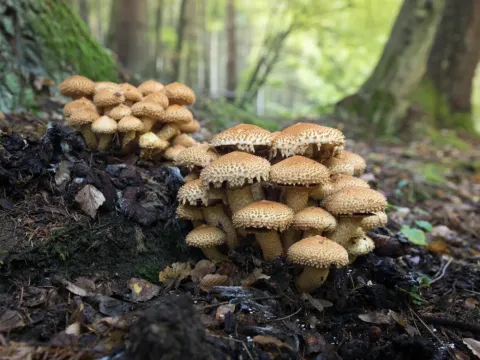
Pholiota squarrosa
Pholiota squarrosa
The causal agent of this condition is the wood-decay fungus Pholiota squarrosa, commonly known as the shaggy scalycap. It belongs to the Strophariaceae family and acts as a facultative parasite.
What the section contains
Pholiota squarrosa
This fungus primarily targets woody tissues, where it secretes enzymes that break down cellulose and lignin. While it often decomposes dead wood, it can actively invade the living tissues of stressed trees.
The infection is classified as a trunk rot. The mycelium penetrates deep into the heartwood, slowly colonizing the tree from within and compromising its structural integrity over several seasons.
Dissemination is achieved through spores carried by wind, rain, or insects. These spores land on damaged bark surfaces, germinate, and begin the slow process of infecting the host plant.
The organism is characterized by the production of dense, tufted clusters of fruit bodies at the base of the trunk, which are the most visible signs of the underlying decay.
The primary symptom is the emergence of distinctive clusters of yellowish-brown mushrooms covered in dark, shaggy scales, usually found near the root collar or on the lower trunk.
Internal wood decay is a hallmark of this disease. The wood becomes soft, discolored, and fibrous. As the rot progresses, the tree loses its strength and becomes prone to mechanical failure.
Affected trees often show symptoms of general decline, including stunted growth, yellowing or premature wilting of foliage, and a noticeable reduction in annual fruit yields.
In advanced cases, the bark may exhibit cracks or localized weeping, as the internal wood collapses and the structural support of the trunk is significantly weakened.
The odor of the affected area is often musty or damp, reflecting the presence of active decay and the breakdown of complex organic matter by the fungal mycelium.
High humidity and moisture are the primary drivers of Pholiota squarrosa development. The fungus thrives in shaded, poorly ventilated areas where moisture persists for long periods.
Mechanical injuries are the most common entry points. Wounds from improper pruning, frost damage, or physical impacts create the necessary conditions for spore germination and colonization.
Autumn is the peak season for fruit body development, as cooler temperatures and higher rainfall levels provide the ideal environment for the fungus to complete its reproductive cycle.
Poor orchard sanitation, such as leaving stumps or dead wood lying around, facilitates the buildup of inoculum, increasing the risk of infection for neighboring healthy trees.
Dense, overgrown plantings create a unique microclimate with reduced airflow and increased humidity, which significantly elevates the susceptibility of the entire orchard to fungal infestations.
The main threat posed by Pholiota squarrosa is the loss of structural stability. Trees infected with trunk rot are hazardous and may collapse during windstorms, posing a risk to property.
It acts as a metabolic drain on the host. By disrupting the transport of water and nutrients, the fungus stresses the tree, leading to gradual decline and reduced longevity.
In orchard settings, this disease often results in the loss of productive fruit trees, forcing growers to remove specimens that are no longer safe or economically viable.
The disease is persistent; once the fungus is established deep within the trunk, it is extremely difficult to eradicate, often leading to the eventual death of the host tree.
The fungus acts as a reservoir of spores, meaning an infected tree can continuously contaminate the surrounding environment, putting other susceptible plants at risk.
Proactive sanitation is the most effective control measure. Properly prune trees, removing dead or diseased branches, and seal all large wounds with approved pruning sealants.
Maintain orchard hygiene by removing old stumps and dead wood, which serve as breeding grounds for the fungus. Burning or burying these materials helps reduce the spore load.
If fruit bodies appear, remove them immediately to prevent further spore dispersal. Ensure that the infected area is monitored, as the mycelium likely extends deep into the wood.
For valuable trees, professional arborist intervention may be necessary to assess the extent of the decay and determine if the tree can be saved or needs to be removed for safety.
Regular maintenance, including proper fertilization and watering, helps boost tree immunity. A healthy tree is significantly better at compartmentalizing minor infections compared to a stressed one.