
Pholiotina rugosa
Pholiotina rugosa
Description
Symptoms
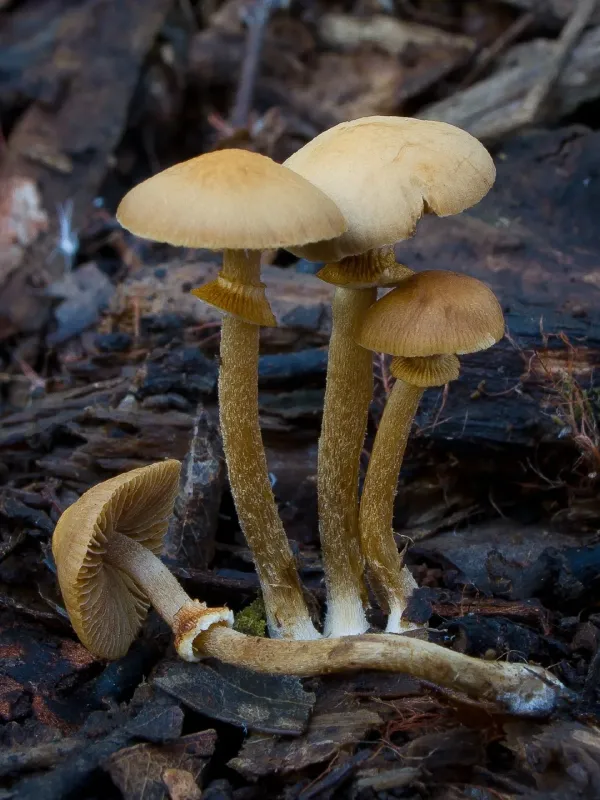
The fruiting bodies of Pholiotina rugosa are small, typically featuring a conical or bell-shaped cap that is brownish or ochre in color.
A distinctive feature of this species is the presence of a clear, membranous ring on the stem, which is crucial for distinguishing it from other small brown mushrooms.
The surface of the cap is often wrinkled or striated, especially when moisture levels are fluctuating, contributing to its common name and identification.
The gills are crowded and initially pale, turning rust-brown as the spores mature and are released into the immediate environment.
The fungus typically appears in clusters after rain or heavy irrigation and has a short lifespan, though the mycelium remains in the soil to fruit again under favorable conditions.
Pathogen
Pholiotina rugosa (formerly Conocybe rugosa) is a small saprotrophic fungus belonging to the Bolbitiaceae family. While it is not a direct plant pathogen, it frequently colonizes agricultural environments.
The fungus feeds on decaying organic matter and is commonly found in lawns, garden beds, greenhouses, and potting soil. Its presence is primarily an ecological indicator of high moisture and organic content.
The biological significance of this fungus lies in its potent toxicity; it contains amatoxins, the same compounds found in the deadly Amanita phalloides.
The mycelium network spreads through the soil, breaking down complex organic materials, which can lead to rapid nutrient cycling but is overshadowed by the danger of its fruit bodies.
It is a highly adaptive fungus, capable of appearing in diverse environments, from well-mulched garden plots to the artificial soil mixes used in container gardening.
Conditions for development
This fungus thrives in moist, shaded environments where the soil is rich in humus, bark mulch, or unfinished compost.
The optimal conditions for development include mild temperatures between 15°C and 22°C and high atmospheric humidity.
In commercial settings, the fungus often enters through contaminated growing media that has not been properly sterilized or composted.
Inadequate airflow and poor drainage in greenhouses provide the perfect microclimate for the fungus to establish its mycelial network.
Excessive use of organic mulches without proper breakdown processes serves as a primary food source for this opportunistic fungus.
Why it matters
The primary concern regarding this fungus is its extreme toxicity. Ingestion can lead to severe liver failure and death, making it a critical threat in gardens, schools, or homes.
While it does not attack plant tissues, its mass appearance indicates poor soil management, specifically issues with waterlogging and excessive organic decomposition.
Its presence in nursery containers can be problematic for commercial growers, potentially causing safety concerns for staff and consumers.
Since the spores can be easily disturbed, handling infested soil without protective gear poses a risk, especially in enclosed environments like greenhouses.
It serves as a biological signal that the current moisture and aeration management practices are suboptimal for healthy plant growth.
Protection
Effective control starts with proper moisture management. Improving drainage and reducing irrigation frequency are the most effective ways to discourage growth.
Maintain adequate spacing and airflow between plants to reduce the humidity levels that the fungus requires for fruiting.
Always use sterilized growing media and avoid adding fresh, uncomposted organic matter to the surface of potted plants or garden beds.
If fruiting bodies appear, remove them immediately wearing gloves and dispose of them safely, ensuring that the mycelium is also disturbed or removed.
- Promote good aeration in the soil surface by regular loosening.
- Use appropriate mulches that decompose at a slower rate.
- Apply professional fungicides if colonization becomes extensive in sensitive areas.
Discussion
No discussions yet — be the first.