
Pholiota terrestris
Pholiota terrestris
Description
Symptoms
Initial symptoms are often subtle and manifest as general growth stunting and chlorosis, as the root system loses its functionality and nutrient uptake is severely impaired.
Close inspection of the soil surface around the root collar reveals the presence of whitish, filamentous mycelial mats that darken as the infection progresses.
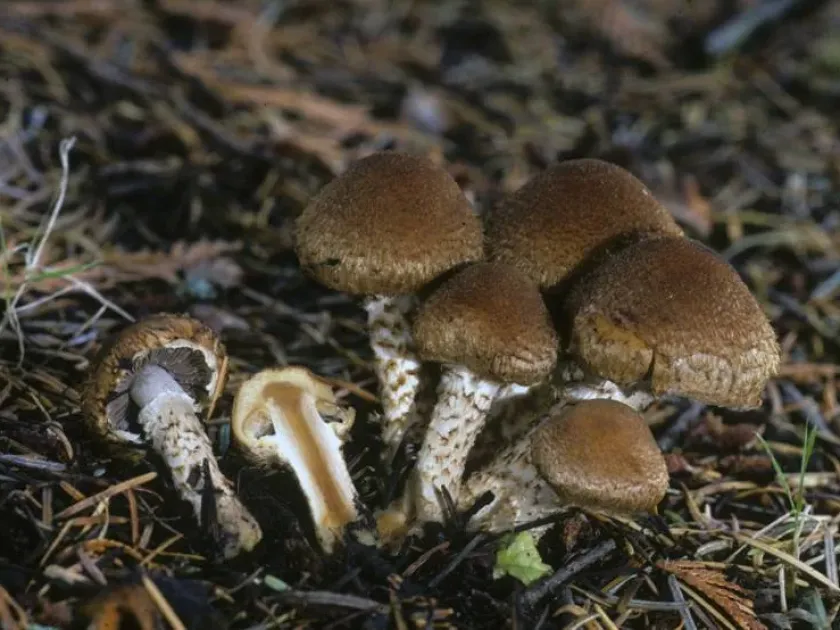
The emergence of small, clumped mushrooms at the base of the stem is a diagnostic hallmark, indicating that the fungus has reached a reproductive stage.
Affected roots turn soft, waterlogged, and dark, often accompanied by a distinct, musty fungal odor indicating tissue decay caused by secondary opportunistic organisms.
In the final stages, the plant suffers from sudden wilting as the vascular system becomes completely compromised, leading to permanent death of the specimen.
Pathogen
The disease is caused by the fungus Pholiota terrestris, which belongs to the Strophariaceae family. It is a saprotrophic and facultative parasitic fungus that can utilize decaying organic matter to thrive before invading living tissue.
The mycelium of the pathogen spreads through the soil, establishing a foothold in the root zones of plants. Once the environment is favorable, it begins to penetrate plant tissues using specialized enzymatic secretions.
The biology of Pholiota terrestris is characterized by its adaptability, allowing it to survive in various soil types while maintaining the capacity to form sporocarps under specific moisture conditions.
Dissemination primarily occurs through wind-blown spores and the transfer of contaminated soil particles on tools or equipment used in gardening and agriculture.
The pathogen is highly persistent, capable of remaining dormant in the soil for years, which complicates efforts to eradicate the infestation completely.
Conditions for development
Excessive soil moisture and poor drainage are the primary drivers for Pholiota terrestris outbreaks, creating the anaerobic conditions necessary for its development.
The accumulation of uncomposted plant debris, such as fallen leaves and mulch, provides a necessary substrate for the fungus to establish its initial mycelial network.
Moderate temperatures ranging from 15°C to 22°C are ideal for the rapid growth of the mycelium and the subsequent formation of fruiting bodies on the ground surface.
Physical injuries to the root system or the base of the trunk, often caused by improper cultivation or pest activity, significantly increase the risk of fungal entry.
Soil with low pH or unbalanced nutrient content may further predispose plants to infection, weakening their natural defense mechanisms against such soil-borne pathogens.
Why it matters
Pholiota terrestris poses a severe threat to landscape plants, perennials, and shrubs, leading to root rot and eventual total collapse of the plant.
The pathogen causes significant financial losses in horticultural settings by necessitating the removal and disposal of infected plants and the expensive treatment of soil.
Since the fungus occupies the root zone deeply, it can suppress the growth of beneficial microorganisms, creating a sterile or unbalanced environment that is hard to restore.
The disease is particularly dangerous because it often goes unnoticed until the plant is beyond the point of rescue, making early detection extremely difficult.
Infected areas often remain "hot zones" for subsequent plantings, as the fungal mycelium can persist in the soil for extended periods after the host is removed.
Protection
Effective management requires strict adherence to good agricultural practices, primarily ensuring excellent soil drainage to prevent water stagnation in the root zone.
Regular sanitation, such as the prompt removal of organic waste and debris from the base of plants, is essential to minimize the fungal substrate.
Chemical control using systemic fungicides can be applied to the soil, though its efficacy is highest when the infection is identified at its earliest stage.
Biological control using Trichoderma-based inoculants is a recommended strategy to outcompete the pathogen and improve overall soil health.
- Disinfect gardening tools after contact with infected soil.
- Amend soil with sand or gravel to improve aeration.
- Isolate infected plants immediately to prevent the spread of mycelia.
Discussion
No discussions yet — be the first.