
Pear leaf blister
Taphrina bullata
Description
Symptoms
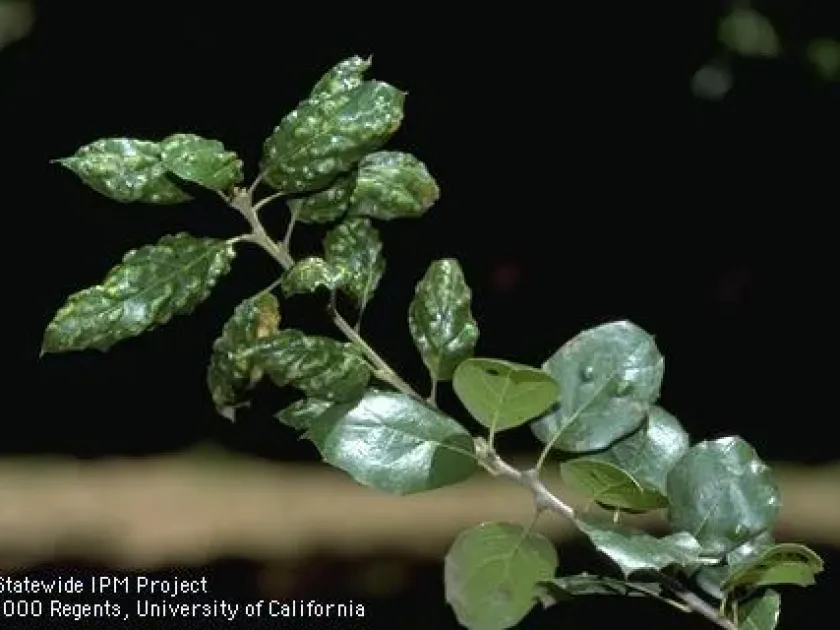
The primary symptom of pear leaf blister, caused by the fungus Taphrina bullata, is the distinct deformation of the leaf blades. Affected leaves develop raised, blister-like swellings that gradually change color to yellow, pink, or reddish-brown.
As the infection progresses, the tissues in these blistered areas become thicker, tougher, and leathery. Eventually, a fine, whitish, powdery bloom may appear on the underside of these leaves, which is the fungal spore mass.
Severely infected leaves tend to wither, curl, and drop prematurely. This early defoliation significantly reduces the tree's ability to photosynthesize, weakening it during the critical growing period.
In some cases, the infection can also affect young shoots, causing them to twist, thicken, and display stunted growth. The overall architecture of the tree may appear thin and sparse as the season progresses.
Distinguishing these symptoms from other issues, such as pest-induced galls, is important for accurate diagnosis and effective treatment in the orchard.
Pathogen
The disease is caused by the ascomycete fungus Taphrina bullata. This pathogen is a specialized parasite that primarily targets trees of the genus Pyrus (pear trees).
The fungus overwinters as spores or mycelium within the bud scales and in the crevices of the tree bark. When spring conditions arrive, the pathogen emerges to infect the tender, developing leaf tissue.
The fungus produces hormonal substances that induce abnormal cell division and hypertrophy in the leaves, creating the characteristic blisters from which the scientific name bullata is derived.
Spores are disseminated by wind, rain splashes, and insects, allowing the infection to spread rapidly throughout the orchard if environmental conditions remain favorable.
The life cycle of the pathogen is intricately linked to the tree's phenology, which dictates the timing for effective chemical or cultural interventions.
Conditions for development
Pear leaf blister flourishes during springs characterized by prolonged cool and wet weather. High humidity and consistent rainfall are essential factors for successful spore germination and host infection.
The pathogen is most active when temperatures range between +10°C and +18°C. During hot and dry summers, the fungal development typically ceases, leading to a temporary halt in new symptoms.
Orchards with poor ventilation and dense canopy growth are more prone to infections because they trap the moisture necessary for fungal colonization and spore production.
Over-fertilization with nitrogen can exacerbate the problem by promoting succulent, fast-growing tissue that is highly susceptible to the fungal invasion.
Older trees with significant bark damage serve as ideal reservoirs for the fungus, allowing it to persist in the orchard across multiple growing seasons.
Why it matters
The primary economic harm results from a severe reduction in photosynthetic efficiency due to leaf deformation and premature defoliation. This limits the tree's carbohydrate production.
Chronic infection drains the tree’s energy reserves, causing reduced fruit set, lower quality of pears, and decreased growth of new structural branches.
The tree’s overall physiological stress leaves it more susceptible to environmental extremes, such as severe winter frost or secondary attacks from other pathogens and insect pests.
In younger orchards, the disease can stunt tree development, significantly delaying the time it takes for trees to reach commercial fruit production levels.
Persistent defoliation over consecutive years can lead to the decline and death of branches, eventually compromising the long-term health and productivity of the entire tree.
Protection
The most effective management strategy involves applying protective fungicides in late winter or early spring, specifically during the dormant phase before bud burst.
Sanitation is a vital component of control; growers should prune and destroy all infected shoots during the dormant season to eliminate sources of inoculum.
Maintaining tree vigor through balanced fertilization—focusing on phosphorus and potassium—helps strengthen cell walls and improves natural resistance to fungal entry.
Proper canopy management, including regular thinning, improves airflow and light penetration, creating an unfavorable microclimate for fungal development.
- Clear and destroy fallen leaf litter to prevent spores from overwintering.
- Apply lime wash to trunks to disinfect bark and reduce fungal hiding places.
- Monitor trees closely during cool, wet springs for the first signs of blisters.
Discussion
No discussions yet — be the first.