
Parasola
Parasola
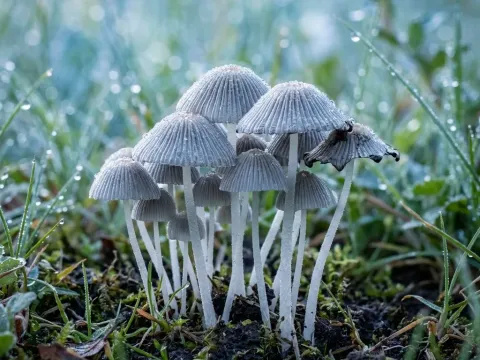
The fungus genus Parasola is not a plant pathogen. It presents as small, fragile mushrooms with pleated, umbrella-like caps that appear rapidly after rain.
What the section contains
Parasola
These fruiting bodies are often found growing in clusters on moist, organic-rich soil or on decaying plant debris and mulch.
You will not observe symptoms like leaf spots, stem rot, or tissue necrosis associated with Parasola infection on your plants.
Their presence is a visual sign of active organic matter decomposition rather than a disease of the plant itself.
The mushrooms appear quickly and wither away within a few hours or days as the soil surface dries out.
The genus Parasola belongs to the family Psathyrellaceae. These fungi are classified as saprotrophs, not parasites.
They derive their nutrients solely from dead and decaying plant material, such as cellulose and lignin within mulch or old straw.
They do not invade living plant tissues, nor do they interfere with the nutrient uptake or vascular health of agricultural crops.
Reproduction is achieved through basidiospores that are dispersed by wind and water, colonizing substrates that are rich in organic carbon.
In the soil microbiome, they act as decomposers, contributing to the recycling of essential nutrients back into the soil profile.
Development of Parasola is favored by high humidity levels and mild temperatures typically found during spring and autumn seasons.
The availability of substantial raw organic matter is the primary requirement for the colonization and appearance of fruiting bodies.
Poorly drained soils or areas prone to waterlogging create the optimal moisture conditions for the rapid growth of the fungal mycelium.
Frequent rainfall or excessive irrigation provides the necessary water to trigger the emergence of mushrooms from the soil.
Once the substrate dries or the organic material is fully decomposed, the fungal activity typically declines or shifts elsewhere.
There is no direct damage caused to plants by Parasola. It does not weaken the roots or inhibit the growth of agricultural crops.
Indirectly, intense decomposition of woody mulch by fungi might temporarily tie up soil nitrogen, which is a common effect of saprotrophic activity.
Their presence can sometimes serve as an indicator of excessive soil moisture, which could predispose crops to other, true pathogenic infections.
For most horticultural applications, these fungi are considered benign or beneficial due to their role in soil organic matter transformation.
No economic damage is associated with this genus, and it does not qualify as a pest or disease requiring chemical intervention.
Since Parasola is not a pathogen, there is no need for chemical fungicides or complex management programs to control its population.
Improving soil aeration through regular cultivation and better drainage management is the most effective way to discourage fungal growth.
To keep the garden tidy, one can manually remove the fruiting bodies as they appear, though this does not harm the underground mycelial network.
- Ensure proper irrigation practices to avoid surface water saturation.
- Avoid placing thick layers of uncomposted mulch directly against stems.
- Promote healthy plant growth through adequate fertilization and soil structure management.
Management should focus on the overall soil health and moisture balance rather than specifically trying to eradicate these natural decomposers.