
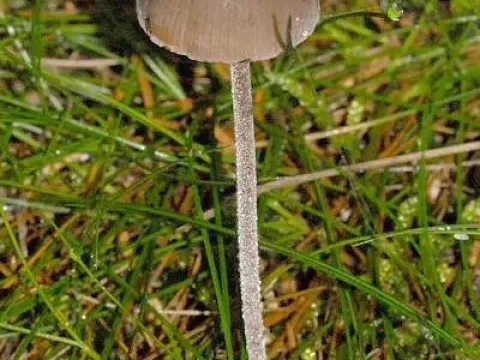
Panaeolus acuminatus
Panaeolus acuminatus
Panaeolus acuminatus is a small gilled mushroom in the Bolbitiaceae family. It is a saprotroph, meaning it feeds on decaying organic matter rather than living plants.
What the section contains
Panaeolus acuminatus
It is not a plant pathogen and does not cause infectious plant diseases. Its presence in agricultural fields is purely coincidental to the availability of organic debris.
The fungus plays a role in the natural decomposition cycle, breaking down soil organic matter into humus, which ultimately benefits soil fertility.
Unlike true phytopathogens, it does not invade host tissue or disrupt metabolic pathways in crops. It remains an external dweller of the soil surface.
From an agronomical perspective, this organism is an indicator of a rich organic soil environment rather than a threat to crop health.
The most visible sign is the development of small, conical brown mushrooms growing directly from the soil or near compost piles.
There are no lesions, wilting, or discolorations on the crop plants associated with this fungus. The health of the plants remains unaffected.
The mycelium network stays within the topsoil or organic layer. It does not colonize the root systems or stem structures of agricultural crops.
Clusters of mushrooms may appear after periods of heavy rainfall, as high humidity triggers the fruiting of the mycelium.
These fruiting bodies are short-lived and usually disappear quickly as the moisture levels in the topsoil begin to decrease.
The fungus thrives in moist, nitrogen-rich environments. Heavy rainfall or excessive irrigation are the primary triggers for mushroom development.
The presence of raw manure or poorly decomposed compost provides an ideal substrate for the fungal mycelium to establish itself.
Temperatures during the moderate growing season are ideal. Extreme heat or drought will typically cause the fungus to become dormant or dissipate.
Soil pH levels around neutral or slightly alkaline facilitate the growth of Panaeolus acuminatus in agricultural fields.
Poor soil drainage creates localized spots with prolonged waterlogging, which are the most common locations for these mushrooms to emerge.
There is no direct damage caused to agricultural crops. The fungus does not compete with plants for mineral nutrients and does not produce toxins.
No economic impact is associated with the presence of this species. Crop yields and product quality remain entirely unaffected by its presence.
The only negative outcome is the risk of misdiagnosis by field staff, which may lead to unnecessary chemical applications and increased production costs.
The fungus is ecologically beneficial, as it accelerates the recycling of nitrogen and organic matter back into the soil ecosystem.
Overall, it is a neutral organism that poses zero risk to the sustainability or performance of farming operations.
No control measures are needed. Since Panaeolus acuminatus is not a pest or a disease, fungicide applications are unnecessary and discouraged.
To reduce occurrences, ensure that all manure or compost applied to the field is fully aged or stabilized, reducing available fresh organic substrates.
Improving soil drainage and optimizing irrigation schedules will prevent the damp conditions that favor the development of fungal fruiting bodies.
Mechanical cultivation of the soil effectively disrupts the mycelial mats, preventing the spread of the fungus across the plot.
Correct identification through proper diagnostic training is the best way to handle this situation and avoid needless chemical usage on the farm.