
Panaeolus campanulatus
Panaeolus campanulatus
Description
Symptoms
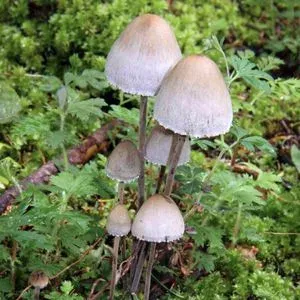
Panaeolus campanulatus presents as small, fragile mushroom bodies typically found growing in clusters on nutrient-rich soil.
The cap is distinctly bell-shaped or conical, featuring a smooth surface that varies from greyish-brown to reddish-brown.
Stems are slender, long, and brittle, often appearing lighter in color than the cap itself.
The gills under the cap turn a dark, almost black color upon maturity due to the release of dark-colored spores.
Growth is often observed in patches or rings, particularly in areas with high organic matter concentration or dung deposits.
Pathogen
The causative agent is the fungus Panaeolus campanulatus, which functions as a saprotrophic organism within the soil ecosystem.
It does not act as a primary pathogen to crops; however, its presence is a biological indicator of organic matter decomposition.
The mycelium network spreads through the soil, breaking down complex organic compounds like manure and decaying plant matter.
Reproduction occurs primarily through spores, which are distributed by wind, rain, and livestock movement across fields.
Biologically, it is a decomposer that thrives where nutrient cycling is active, often signaling an abundance of non-stabilized organics.
Conditions for development
High humidity and consistent moisture levels in the soil are the primary drivers for the rapid development of this fungus.
Optimal temperatures for the emergence of fruiting bodies generally range between 15 and 22 degrees Celsius.
The use of raw or improperly composted manure provides an ideal medium for the colonization and proliferation of the mycelium.
Poor soil drainage and compacted conditions create a microenvironment that maintains the high moisture levels required for fruiting.
Dense vegetation cover serves as a protective layer, shielding the fungus from evaporation and sustaining the necessary damp conditions.
Why it matters
The main concern for agriculture is the potential reduction in the quality and utility of grazing lands for livestock.
While not directly toxic to soil, its massive presence can compete with beneficial flora and alter the soil microclimate.
The presence of dense fungal colonies can discourage livestock from grazing in certain areas, leading to uneven pasture utilization.
There is a secondary risk of contamination if these mushrooms are inadvertently harvested during hay collection, affecting fodder quality.
Frequent outbreaks may indicate an imbalance in soil management, specifically concerning excessive organic nitrogen loading.
Protection
Effective prevention involves the thorough composting of manure before application to ensure the elimination of fungal spores.
Improving field drainage is a critical structural intervention to prevent the stagnant moisture that favors fungal growth.
Regular mowing and pasture maintenance help improve air circulation and reduce the humidity levels near the ground surface.
Manual removal of fruiting bodies can help minimize the spore load in the field, preventing future colonization cycles.
Optimizing fertilization strategies to match crop needs prevents the buildup of excess organic matter that supports saprotrophic fungi.
Discussion
No discussions yet — be the first.