
Ophiocordyceps dipterigena
Ophiocordyceps dipterigena
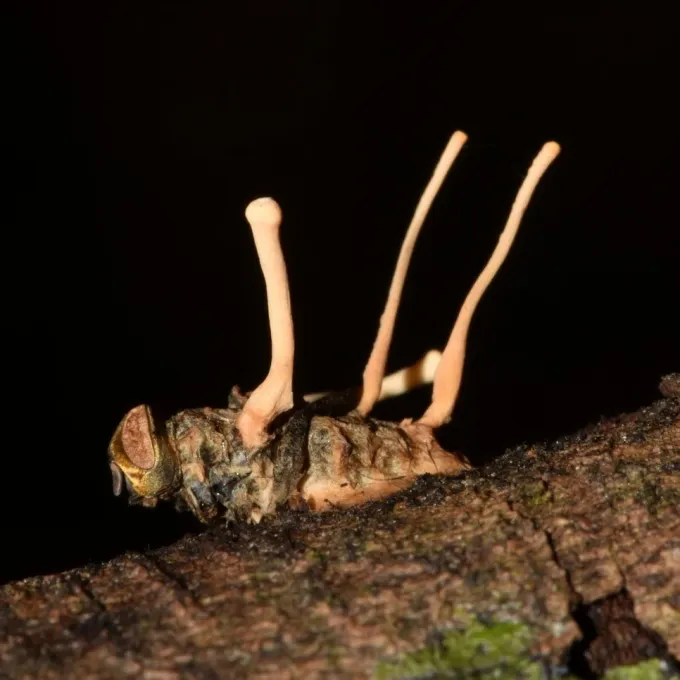
Description
Symptoms
The primary sign of infection is the presence of immobilized, dead insects attached to the undersides of leaves or stems in characteristic, rigid postures.
Visual identification involves observing the growth of thin, thread-like structures or small stalks protruding from the host's body, which indicate the reproductive phase of the fungus.
The fungus manipulates the host's behavior prior to death, often forcing the insect to migrate to elevated or humid areas that facilitate optimal spore dispersal.
Fruiting bodies often appear as whitish or yellowish filaments, and their size and shape may vary depending on the specific host species and environmental conditions.
Identifying these fungal-mummified insects in a field is a sign of high biological activity and natural suppression of pest populations.
Pathogen
Ophiocordyceps dipterigena is a specialized entomopathogenic fungus belonging to the Ophiocordycipitaceae family, known for its ability to infect and parasitize various species within the order Diptera.
The life cycle begins when fungal spores land on the cuticle of a host insect. The mycelium penetrates the exoskeleton and consumes the host's internal tissues for nutrients.
This organism does not cause disease in plants. Instead, it serves as a natural regulator of fly populations, contributing to the balance of local agroecosystems.
The fungus is highly host-specific, having evolved to target particular types of flies while sparing other beneficial insect species in the environment.
Following the death of the host, the fungus develops distinct fruiting bodies (stromata) that emerge from the insect's body to release new spores into the surrounding air.
Conditions for development
Successful germination and development of Ophiocordyceps dipterigena require high relative humidity, ideally between 90% and 100%.
The fungus thrives in moderate temperature ranges, typically between +18°C and +25°C, which aligns with common agricultural growing seasons.
Dense plant canopies provide the necessary microclimate, protecting the spores from desiccation and ensuring sufficient moisture for infection.
Areas with shade and consistent moisture, such as deep within a crop canopy, are the most favorable environments for the spread of this pathogen.
Seasonal weather patterns, specifically periods of frequent rain or heavy dew, directly influence the prevalence and impact of this fungus on insect populations.
Why it matters
This fungus poses no risk to agricultural crops, as it lacks the physiological mechanisms required to infect or degrade plant tissues.
On the contrary, it provides ecological benefits by suppressing fly populations that might otherwise damage crops or serve as vectors for plant viruses.
There is no economic harm associated with this fungus; it is essentially a biological tool that functions autonomously within the field.
Because of its strict host specificity, it does not threaten crops, livestock, or humans, remaining an integral part of the natural food web.
Consequently, the presence of the fungus is viewed as a beneficial indicator of a balanced agroecosystem with effective natural pest management.
Protection
No control measures are necessary for Ophiocordyceps dipterigena, as it is considered a beneficial organism rather than a pest or disease.
To preserve natural biological control agents, it is recommended to reduce the prophylactic use of broad-spectrum fungicides that could harm beneficial fungal communities.
Implementing integrated pest management (IPM) strategies helps protect the natural habitats of such fungi, allowing them to exert control over pests naturally.
Agronomists should monitor the insect population dynamics rather than intervening against the fungus, which acts as a free biological support system.
Encouraging biodiversity on farm margins can bolster the presence of these entomopathogenic fungi, creating a more resilient crop environment.
Discussion
No discussions yet — be the first.