
Ophiocordyceps clavulata
Ophiocordyceps clavulata
Description
Symptoms
The first observable sign of the fungus is the presence of dead scale insects that appear fixed to the plant bark or leaf surface, showing no signs of movement or biological activity.
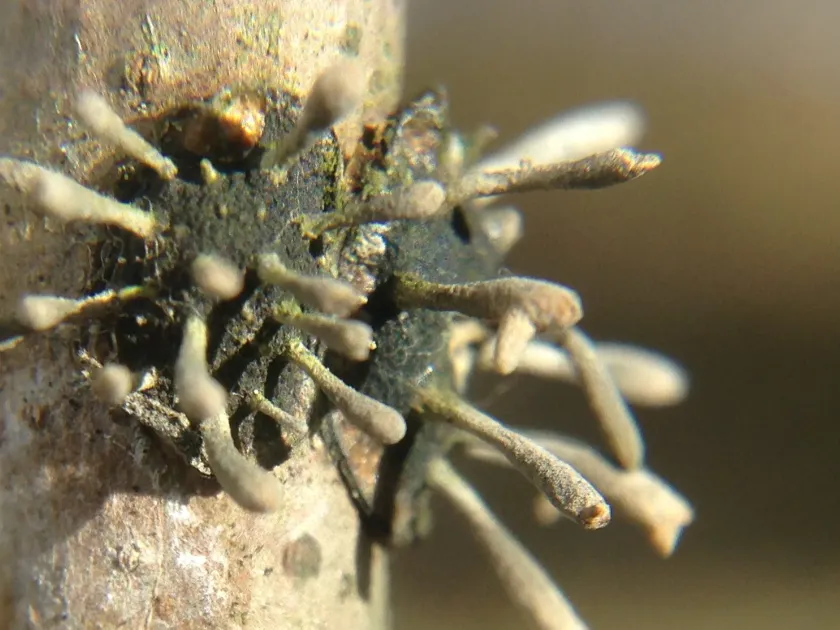
As the fungal lifecycle progresses, the infected scale insects develop characteristic club-shaped protuberances. These structures are typically pale, tan, or yellowish and are easily visible upon close inspection.
The host's body becomes rigid and often undergoes a color change, as the fungal mycelium replaces the internal organs of the insect, eventually rupturing through the exoskeleton.
Often, these signs are clustered in areas where the pest population density is highest, reflecting the fungus's ability to spread rapidly among neighboring insects under favorable environmental conditions.
Gardeners and farmers can use these visual indicators as a reliable signal that natural regulation is occurring, which helps in assessing the necessity for chemical intervention.
Pathogen
Ophiocordyceps clavulata is a specialized entomopathogenic fungus belonging to the Ascomycota phylum. It functions as a biological control agent rather than a plant pathogen, as its lifecycle revolves around infecting and consuming specific insect hosts.
The fungus is highly specialized, primarily targeting scale insects and mealybugs. Unlike diseases that affect plant vitality directly, this fungus helps manage the populations of pests that feed on plant sap.
The infection process begins when fungal spores adhere to the insect's cuticle. After germination, the fungal hyphae penetrate the insect's body cavity, systematically consuming internal tissues until the host dies.
Following the death of the host, the fungus develops distinct club-shaped stromata that protrude from the insect body. These structures serve as the primary source for producing and dispersing new spores to reach other susceptible hosts.
In agronomy, this species is recognized as a vital component of integrated pest management (IPM) systems, contributing to the natural suppression of harmful insects in diverse agricultural environments.
Conditions for development
The development and propagation of Ophiocordyceps clavulata are highly dependent on high ambient humidity levels. Sustained moisture is crucial for the germination of spores on the surface of the insect cuticle.
Moderate temperatures during the growing season provide the best environment for the fungus. Excessive heat or prolonged periods of drought significantly limit the metabolic activity and dispersal capability of the pathogen.
High pest host density is another critical factor for the effective spread of the fungus. A larger population of scale insects increases the probability of spore contact, leading to higher infection rates.
Shaded microclimates within orchard canopies or dense vegetation often provide the consistent humidity and protection from extreme solar radiation needed for the fungus to persist.
Avoiding broad-spectrum fungicides is essential for maintaining the fungal population, as these chemicals often indiscriminately eliminate beneficial entomopathogenic species along with harmful plant pathogens.
Why it matters
Ophiocordyceps clavulata does not cause damage to plants. It is considered a beneficial organism in agricultural settings because it helps to reduce the populations of sap-sucking insects that can otherwise weaken or kill trees.
The only potential downside is if the fungus incidentally infects beneficial insects or parasitoids, although such occurrences are rare and usually have no significant impact on overall ecosystem health.
The economic value of this fungus lies in its role as a natural pesticide alternative. By keeping scale populations under control, it aids in maintaining the health and yield potential of various trees and shrubs.
It supports the overall stability of the horticultural environment, acting as an ecological brake on pest reproduction cycles during favorable climatic conditions.
In most scenarios, the presence of this fungus should be encouraged and protected, as it represents a form of self-regulating biological pest control that requires zero cost to implement.
Protection
Since Ophiocordyceps clavulata is a beneficial organism, there is no need to control or eradicate it. Instead, agronomic efforts should focus on preserving the presence of this fungus within the orchard.
Practitioners should prioritize selective pest management strategies, ensuring that applied treatments do not interfere with the natural lifecycle of entomopathogenic fungi present in the area.
Maintaining proper tree spacing and pruning can help regulate humidity, ensuring conditions remain conducive to both plant health and the activity of beneficial fungi without promoting unwanted fungal diseases.
Integrated Pest Management (IPM) programs should actively include monitoring for the presence of such fungi, which allows for more precise and reduced chemical applications when thresholds are met.
Promoting awareness among farmers about the role of Ophiocordyceps clavulata encourages better stewardship of the environment and supports the adoption of more sustainable agricultural practices.
Discussion
No discussions yet — be the first.