
Ophiocordyceps
Ophiocordyceps
Ophiocordyceps is a genus of entomopathogenic fungi within the Ophiocordycipitaceae family that exclusively targets insects and other arthropods.
What the section contains
Ophiocordyceps
It is fundamentally incorrect to classify this organism as a plant disease, as its biology is strictly focused on animal hosts rather than flora.
The fungus colonizes the host internally, replacing tissues with mycelium while keeping the insect alive long enough for the fungus to complete its life cycle.
The pathogen utilizes specific biological mechanisms to manipulate the behavior of the host, ensuring optimal spore dispersal after the insect's death.
Agronomically, this organism is viewed as a beneficial biological factor within an ecosystem rather than a threat to crop production.
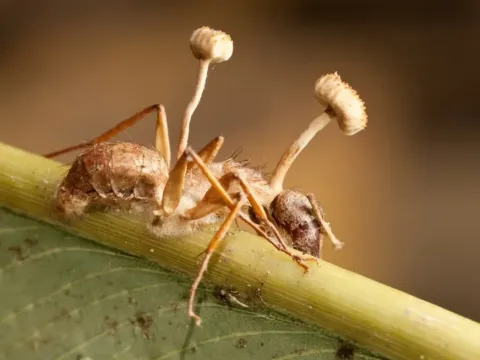
The primary symptom of an Ophiocordyceps infection is a drastic change in the host's behavior, often forcing it to climb to an elevated position.
Upon death, the fungus erupts from the host's body, forming a distinct, elongated, and often club-shaped reproductive structure known as a stroma.
The appearance of these stalks, which can be brightly colored or muted, is the definitive sign that the host has been parasitized by the fungus.
Unlike plant pathogens that cause wilting or lesions, this fungus leaves no visible damage on foliage, stems, or fruits of agricultural crops.
Field observation of mummified insects bearing fungal stalks in soil or leaf litter is the standard way to detect the presence of the organism.
The development and germination of Ophiocordyceps spores require high humidity levels within the immediate microclimate of the host.
Optimal temperature ranges are crucial for the fungus, as excessive heat can disrupt the synchronization between the fungal mycelium and the insect's physiology.
Sporulation is highly dependent on environmental stability, allowing the spores to be efficiently dispersed by wind or physical contact.
Forest floors and undisturbed agroecosystems provide the necessary moisture and biological density to sustain the lifecycle of this fungus.
Minimal soil disturbance is often beneficial for the preservation of these entomopathogenic organisms throughout the year.
There is zero harm caused by Ophiocordyceps to agricultural plants, as it lacks the enzymes and biological pathways to digest plant matter.
Classifying this fungus as a plant disease is a misconception that does not align with mycological or agronomic evidence.
Its presence is inherently neutral or even beneficial to farmers, as it can naturally reduce the populations of various insect species.
No economic damage, yield loss, or degradation of crop quality is associated with this genus in any agricultural setting worldwide.
Consequently, no management strategies are required to protect crops from this organism, as it poses no risk to plant health.
No control or protection measures are implemented against Ophiocordyceps, as it is not a pathogen of agricultural crops.
Agronomists often view the presence of these fungi as a positive indicator of soil health and natural biodiversity in and around the fields.
Standard fungicide applications intended for plant pathogens might unintentionally reduce the activity of these useful entomopathogenic fungi.
Prevention strategies are unnecessary because the organism does not threaten the yield, structure, or physiological development of crops.
Maintaining natural buffer zones around farmland is recommended to preserve the biological diversity that includes these natural regulators.