
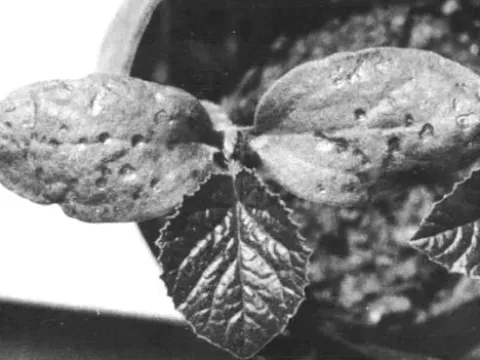
Olpidium root infection
Olpidium radicale
The causative agent of this disease is the soil-borne chytrid fungus Olpidium radicale. It is an obligate parasite that persists in the soil through resting spores called cystosori, which can remain viable for several years.
What the section contains
Olpidium root infection
The pathogen's life cycle is closely linked to soil moisture. The fungus produces motile zoospores with flagella, allowing them to swim through the soil water film to reach the roots of susceptible host plants.
This fungus primarily infects vegetables such as cucumbers, tomatoes, and lettuce. It poses a significant threat in greenhouse environments, where it can easily spread through irrigation systems or contaminated water sources.
A critical biological aspect of Olpidium radicale is its role as a vector for plant viruses, most notably the cucumber necrosis virus. Consequently, the infection causes both direct root damage and systemic viral disease.
Infection begins when zoospores attach to root hairs. Once attached, they penetrate the epidermal cells, develop inside the host tissue, and eventually release a new generation of spores into the surrounding environment.
The initial sign of infection is stunted growth. Affected plants appear smaller and less vigorous compared to healthy specimens, even when provided with adequate water and fertilizer.
Inspection of the root system often reveals browning or discoloration of the root tips. Affected root tissues become soft, water-soaked, and may eventually decay, severely impairing the plant's ability to take up nutrients.
Foliage on infected plants often shows signs of chlorosis, particularly in the lower leaves, which eventually spreads upwards. Plants may wilt during peak sunlight hours due to the inability of damaged roots to compensate for transpirational water loss.
In advanced stages, complete root system failure occurs, leading to plant collapse and death. These symptoms are often easily confused with nutrient deficiencies or other types of root rots.
Definitive diagnosis requires laboratory testing, as the visual symptoms are often masked by secondary microbial colonization of the damaged root tissues.
Excessive soil or substrate moisture is the primary condition favoring Olpidium development. High moisture levels facilitate the movement of zoospores, allowing them to effectively reach and infect roots.
Temperature plays a crucial role, with the pathogen being most active in cool to moderate conditions, typically between 15 and 20 degrees Celsius. Cool substrates in greenhouses often trigger disease outbreaks.
Soil pH also influences the infection rate. The fungus generally prefers neutral to slightly acidic environments, making regular pH monitoring essential for effective greenhouse management.
Spread is facilitated by contaminated soil, tools, and irrigation water drawn from open sources. Staff movement between different greenhouse sectors can also unintentionally spread the resting spores via footwear.
Weeds within or near the greenhouse can act as reservoirs for the fungus, allowing it to survive between main crop growing seasons.
The primary damage caused by Olpidium is a significant reduction in crop yield and quality. Restricted root development prevents the plant from meeting its metabolic requirements for fruit production.
Non-uniform plant growth complicates greenhouse management and makes scheduling harvests difficult. Severe infections may necessitate partial replanting, leading to increased labor and material costs.
The disease acts as a gateway for secondary infections. Once the root epidermis is compromised by Olpidium, opportunistic bacteria and other fungi, such as Fusarium, easily invade the root tissues.
The transmission of plant viruses is the most damaging aspect, as viral infections often render plants economically useless, causing stunted fruits and leaves.
In commercial operations, uncontrolled outbreaks can result in yield losses ranging from 30% to 50% if stringent preventive measures are not implemented in time.
The most effective strategy is the thorough disinfection of soil and substrates before planting. Thermal treatment, such as steam sterilization, is the gold standard for eradicating resting spores.
Careful irrigation management is vital; avoiding waterlogged conditions in the root zone significantly reduces the chances of zoospore transmission.
Maintaining strict phytosanitary protocols, including the disinfection of tools and the use of dedicated footwear in greenhouse sections, is essential for disease prevention.
- Regular sanitation of irrigation and drip-feed lines.
- Stringent weed control within greenhouse perimeters.
- Maintaining optimal soil temperature and aeration.
- Use of biological control agents, such as Trichoderma species.
Upon detecting an infection, affected plants should be removed immediately with their surrounding root-ball soil, and the area should be treated with appropriate disinfectants to prevent further spread.