
Omphalotaceae
Omphalotaceae
Description
Symptoms
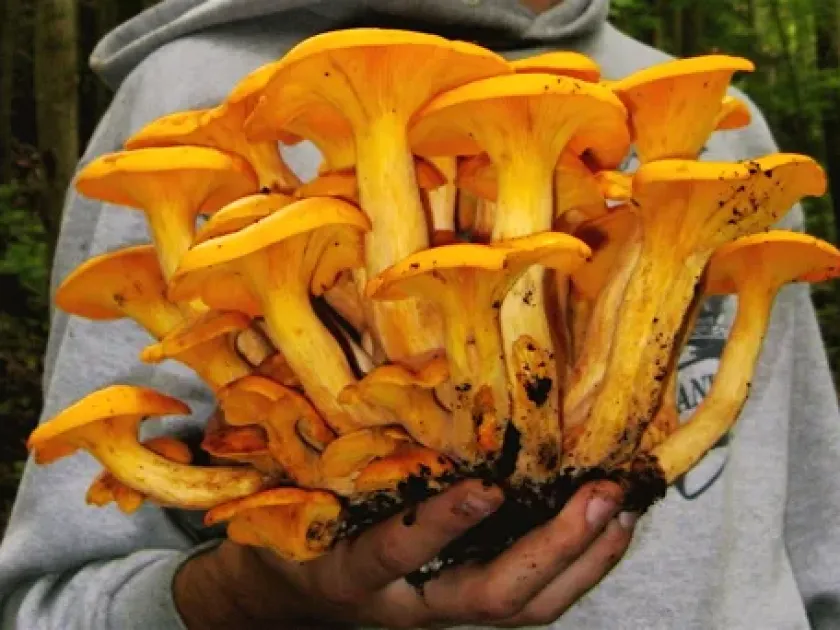
The most prominent sign is the presence of bright, often orange-hued clusters of mushrooms growing from the base or roots of the tree.
Affected trees may show signs of canopy decline, including yellowing leaves, early leaf drop, and significantly reduced annual growth.
Internal decay can be identified by the softened, bleached appearance of the wood, often featuring thin black lines throughout the decayed tissue.
As the rot progresses, the trunk loses its mechanical strength, which can lead to sudden structural failure during high winds or heavy snowfall.
In some cases, the gills of the fruiting bodies exhibit bioluminescence, emitting a faint green glow in dark conditions.
Pathogen
The Omphalotaceae family comprises fungi that typically act as saprotrophs, but some species can become opportunistic parasites on trees.
These basidiomycete fungi are capable of degrading lignin and cellulose, causing a characteristic white rot in the heartwood of deciduous trees.
The pathogen enters the host through open wounds, cracks in the bark, or pruning cuts, gradually colonizing the internal woody tissue.
The fungus develops an extensive mycelium network within the wood, which slowly compromises the structural integrity of the host plant.
Visible fruiting bodies, which appear in late summer or autumn, are usually clustered at the base of the trunk or on rotting stumps.
Conditions for development
High humidity and consistent soil moisture create the perfect environment for the germination and spread of fungal spores.
Optimal growth temperatures for the mycelium range between +18 and +25 degrees Celsius, matching the late summer and autumn climate.
Trees that are under stress from drought, poor soil quality, or physical injuries are much more susceptible to successful colonization by these fungi.
Old stumps left in the vicinity of healthy trees act as significant reservoirs for spores, facilitating easy transmission of the pathogen.
Poor ventilation and dense planting schemes contribute to increased humidity levels, which favor the proliferation of fungal infections.
Why it matters
The primary danger lies in the stealthy nature of the decay, as the fungus weakens the internal structure while the exterior appears relatively healthy.
Affected trees pose a significant safety risk, as they are prone to sudden collapse, threatening property and individuals nearby.
The disease causes a gradual death of the host, as the vascular system is eventually disrupted by the extensive destruction of woody tissue.
Productivity and aesthetic value of orchards and ornamental gardens decline as the trees lose their ability to sustain full foliage.
Once established deep within the heartwood, the fungus is virtually impossible to eradicate with current chemical control measures.
Protection
Effective management focuses on preventive measures, including regular site sanitation to eliminate potential spore sources.
Proper wound care is essential: any physical damage to the bark should be sealed immediately to prevent fungal entry points.
If an infestation is confirmed, affected trees or limbs must be removed and the wood burned or chipped to reduce the pathogen load in the area.
Maintaining tree vitality through appropriate watering, fertilization, and site improvement is the best way to prevent opportunistic infections.
- Regular inspection of trunks for mushroom clusters.
- Disinfecting pruning tools between trees to prevent cross-contamination.
- Total removal of infected stumps and root systems.
Discussion
No discussions yet — be the first.