
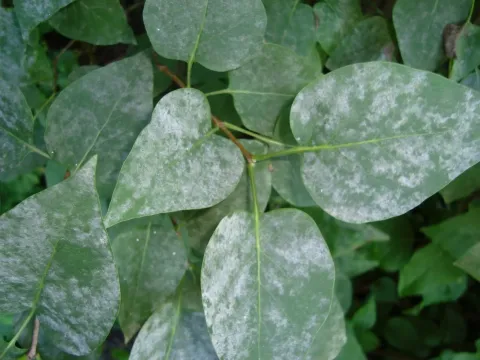
Lilac powdery mildew
Oidium syringae
The disease is caused by the fungus Microsphaera syringae, which is an obligate parasite specifically adapted to lilac species.
What the section contains
Lilac powdery mildew
This pathogen belongs to the Erysiphaceae family, characterized by a superficial mycelium that spreads across the leaves, stems, and flower buds.
The fungus extracts nutrients from the host plant by sending specialized structures called haustoria into the epidermal cells of the leaves.
The life cycle involves the production of conidia for rapid summer spread and chasmothecia for overwintering in plant debris.
It is a highly contagious disease that can devastate ornamental shrubs if left untreated during peak summer months.
The disease typically begins with the appearance of white, dusty spots on the upper surfaces of the leaves in mid-summer.
These spots gradually expand and merge, forming a thick, flour-like coating that can eventually cover entire leaves and shoots.
Affected leaves may show yellowing, curling, or distortion before turning brown and falling off prematurely from the branch.
Dark, tiny speckles eventually appear on the white mycelium layer, which are the fruiting bodies of the fungus ready to survive the winter.
Flowers and flower buds may also become covered in the white film, preventing them from opening properly or leading to total failure.
Powdery mildew thrives in warm, humid environments where temperatures range between 18 and 25 degrees Celsius.
Poor air circulation within the shrub canopy provides the perfect stillness for fungal spores to settle and germinate successfully.
High nitrogen fertilization often produces soft, succulent growth that is significantly more susceptible to fungal penetration.
Rapid fluctuations between day and night temperatures, combined with high humidity, create ideal conditions for spore release.
Planting lilacs too close to one another prevents sunlight from penetrating the canopy and keeps the humidity trapped around the leaves.
The disease inhibits photosynthesis, which reduces the plant's vigor and its ability to store energy for the following season.
Severe infections lead to significant defoliation, which causes stress and makes the lilac more susceptible to other pests or winter damage.
The cosmetic value of the plant is destroyed, rendering it unsuitable for landscape display during the late summer season.
Persistent yearly infections can stunt the growth of young lilac shrubs, preventing them from reaching their full size and potential.
The lack of proper energy storage results in fewer flowers and weaker blooms in subsequent years, diminishing the plant's primary feature.
Sanitation is the most important control measure; removing and destroying all infected leaves in the fall is essential to break the cycle.
Pruning should focus on increasing airflow; remove dense, crossing branches to keep the interior of the plant dry and airy.
Apply sulfur-based or systemic fungicides as soon as the first white spots are observed to prevent the spread to healthy parts of the plant.
Maintain consistent watering schedules to reduce plant stress, but avoid overhead irrigation that keeps the foliage wet for extended periods.
- Use resistant lilac varieties.
- Ensure proper plant spacing.
- Apply biological fungicides early.
- Monitor foliage weekly in mid-summer.