
Lily anthracnose
Colletotrichum lilii
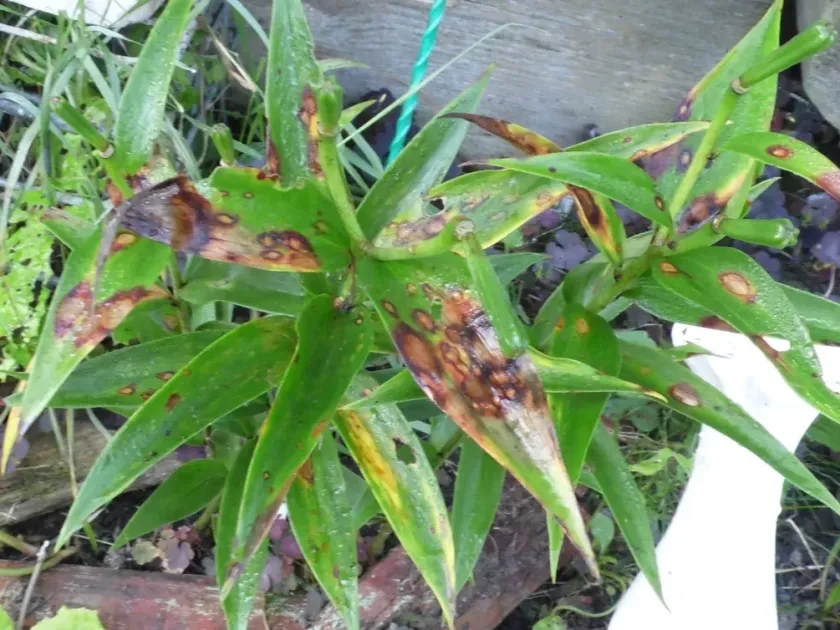
Description
Symptoms
Early symptoms appear as small, circular, or irregular brown spots on the leaves. These spots often have a yellowish halo, indicating the initial reaction of the plant to the invading fungal hyphae.
As the disease progresses, the lesions enlarge, often becoming sunken and darker. In humid weather, these spots may develop small, light-colored spore masses, which are a definitive diagnostic sign of the infection.
Stem infections are particularly destructive, often resulting in severe lesions that cause the stems to weaken, bend, or snap entirely. When the stem is girdled by the infection, the entire upper portion of the lily dies.
Bulb symptoms include dark, necrotic lesions that can lead to soft rot. The infected scales may become mushy and discolored, rendering the bulb unable to support new growth in the following season.
Overall plant vigor significantly declines as the disease advances. The foliage yellows and wilts, the buds fail to develop, and in severe cases, the entire plant collapses prematurely.
Pathogen
The causative agent of lily anthracnose is the fungus Colletotrichum lilii. This is a specialized pathogen that thrives by invading the vascular and epidermal tissues of various lily species.
The life cycle of the pathogen involves the production of conidia within acervuli, which are specialized fungal fruiting bodies that erupt through the plant cuticle. These spores serve as the primary source of dissemination.
The fungus overwinters primarily as mycelium within infected bulb scales or as dormant structures in plant debris. This resilience makes the pathogen difficult to eradicate once it is established in a garden bed.
Biologically, Colletotrichum lilii is highly opportunistic. It exploits environmental stress factors and physical wounds on the plant to facilitate its entry into the host tissue, where it begins aggressive colonization.
Under optimal conditions, the fungus can produce multiple generations of spores within a single growing season, leading to rapid spread throughout dense plant populations.
Conditions for development
High humidity is the primary driver of lily anthracnose development. Constant moisture on the leaf surface, such as that provided by frequent rain, morning dew, or overhead irrigation, is critical for spore germination.
Warm temperatures, typically ranging from 20°C to 25°C, are ideal for the rapid growth of the fungus. The pathogen thrives during periods of consistent warmth and humidity, which accelerate its reproductive cycle.
Poor air circulation in crowded plantings is a significant risk factor. When plants are spaced too closely, the microclimate around the foliage remains humid for longer periods, facilitating infection.
Plants weakened by poor soil conditions, waterlogging, or nutrient imbalances are far more susceptible to infection. Stress acts as a key trigger, lowering the plant's natural resistance to the pathogen.
Excessive nitrogen application can also create lush, succulent tissue that is highly attractive to Colletotrichum lilii, making such plants primary targets for the fungus.
Why it matters
The primary impact of lily anthracnose is the complete loss of the plant's ornamental value. Gardeners often lose the entire display of flowers due to the rapid spread of the disease on stems and leaves.
The pathogen significantly weakens the bulbs, which reduces the plant's ability to store energy for the subsequent year. This results in stunted growth, failure to bloom, or complete loss of the lily bulb during winter.
Anthracnose can become an endemic problem in a garden, as the soil can remain contaminated for several years. This limits the ability to replant lilies in the same area without significant intervention.
The disease causes substantial economic losses for commercial growers, leading to the destruction of entire inventory batches and the need for costly fungicide programs to maintain minimal production standards.
Secondary infections often follow, as the weakened tissue provides an easy entry point for opportunistic bacteria and other soil-borne pathogens, leading to complete bulb disintegration.
Protection
Effective management begins with sanitation. Always remove and destroy infected plant parts immediately upon detection to reduce the primary inoculum load in the garden environment.
Implement proper spacing when planting lilies to ensure adequate air movement. Improving drainage is equally vital to prevent the root zone and bulbs from sitting in cold, wet soil.
Use only certified disease-free bulbs for planting. If infection is suspected, treat bulbs with a recommended fungicide dip prior to planting to ensure the elimination of dormant spores.
For established plants, preventative fungicide applications using copper-based products or synthetic systemic options can significantly reduce the incidence of the disease during wet weather periods.
- Use drip irrigation to keep foliage dry;
- Maintain soil health with balanced potassium and phosphorus levels;
- Practice crop rotation by moving lily beds every few years;
- Disinfect all pruning tools with a bleach solution or alcohol;
- Mulch the soil to prevent soil-borne spores from splashing onto the leaves during heavy rains.
Discussion
No discussions yet — be the first.