
Lily Botrytis blight
Botrytis elliptica
Description
Symptoms
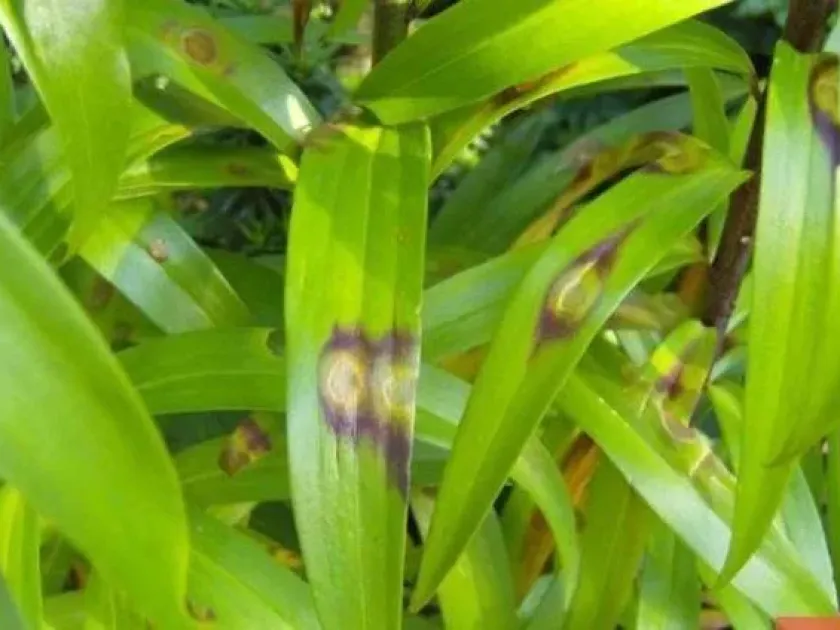
The first symptoms appear in early spring as small, round, reddish-brown spots on the leaves. As the disease progresses, these spots enlarge, take on an elliptical shape, and are often surrounded by a light halo.
Under high humidity, an abundant grayish or dusty fungal layer consisting of conidiophores and conidia forms on the surface of the affected areas. This is a key diagnostic feature that helps distinguish Botrytis blight from physiological leaf burns.
In advanced cases, the infection quickly spreads to flower buds, peduncles, and stems. Flower buds may become deformed, wither, and drop off before opening, leading to a complete loss of ornamental value.
In the lower part of the stem, severe infection leads to extensive necrotic zones, which can cause the stem to break and the aerial part of the plant to die. Examination of the bulbs may reveal sunken, rotted spots of varying depths.
The development of the disease is accompanied by a characteristic "scorched" appearance of the beds, as leaves wither from the bottom up. Without intervention, the pathogen can completely destroy the entire crop within a few weeks of favorable weather.
Pathogen
The causal agent of the disease is the highly specialized fungus Botrytis elliptica, a member of the Deuteromycetes class. This pathogen primarily affects plants of the genus Lilium, causing characteristic gray-brown leaf spots.
The fungus's life cycle involves the formation of conidia, which are asexual reproductive organs spread by wind, rain splashes, and insects. Under unfavorable conditions, the pathogen survives as small black sclerotia, which remain in the soil or on plant debris.
The fungus is highly aggressive in high-humidity conditions, rapidly colonizing plant tissues through stomata or mechanical injuries. The infectious background builds up with continuous lily cultivation in the same area without proper crop rotation.
The mycelium of the parasite can penetrate deep into the bulb scales, allowing the infection to be transmitted via planting material. This serves as a primary source of contamination in the new season if bulb harvesting and sanitation standards are violated.
Besides lilies, some strains of this species can affect other bulbous crops, but it is for lilies that Botrytis elliptica is the most dangerous and specific etiological agent.
Conditions for development
Optimal conditions for infection include prolonged spring rains, fog, and cool weather with temperatures between +12°C and +18°C. High air humidity (above 80%) is a critical factor for the onset of an epidemic.
Dense planting prevents air circulation and creates a favorable microclimate for fungal spore germination. Poor ventilation prevents the rapid drying of dew and raindrops on the leaf surfaces.
Excessive nitrogen fertilization reduces the natural resistance of lily tissues, making them more susceptible to mycelial penetration. Plants with soft, over-fertilized tissues are the first to suffer from Botrytis blight.
Temperature fluctuations, where cold nights are followed by warm days with heavy condensation, sharply activate the sporulation of Botrytis elliptica. Spring frosts also weaken the plants, creating entry points for the infection.
Soils with poor drainage and high water tables increase the risk of disease by creating excess humidity in the root zone, which triggers pathogen development.
Why it matters
The primary damage results from the premature death of the leaf assimilation surface, which blocks photosynthesis. Consequently, the bulb fails to gain mass or set flower buds for the following year.
The disease causes a sharp decline in the ornamental quality of lilies, ranging from unaesthetic spots on flowers to the total loss of inflorescences. This makes the lilies commercially unusable.
Systemic infection leads to bulb exhaustion, dwarfing, and eventual plant death within 2-3 seasons. Weakened plants become highly vulnerable to secondary bacterial infections.
Botrytis blight significantly complicates the propagation of lilies, as infected mother bulbs do not produce high-quality planting material. Infected scales root poorly and produce weak sprouts.
In commercial operations, losses from Botrytis blight can reach 50-80% of the harvest in epidemic years. This causes significant economic damage to flower-growing businesses.
Protection
Prevention begins with the careful selection of planting material and the removal of bulbs showing signs of damage. It is recommended to treat bulbs with specialized fungicides before planting.
Good agricultural practices include:
- choosing well-ventilated areas with drained soil;
- avoiding overcrowding of plants;
- balanced application of potassium-phosphorus fertilizers;
- removing and burning plant debris in the autumn.
During the growing season, at the first signs of disease, systemic fungicide spraying should be performed. Effective products include those based on active ingredients such as mancozeb, chlorothalonil, azoxystrobin, or fludioxonil.
The frequency of treatments depends on weather conditions: in damp weather, the intervals between spraying should be reduced to 7-10 days. Rotating products from different chemical groups prevents the development of pathogen resistance.
It is important to ensure regular root-zone watering, avoiding getting water on the leaves. Maintaining proper sanitary conditions on the plot significantly reduces the infectious load and the need for intensive chemical protection.
Discussion
No discussions yet — be the first.