
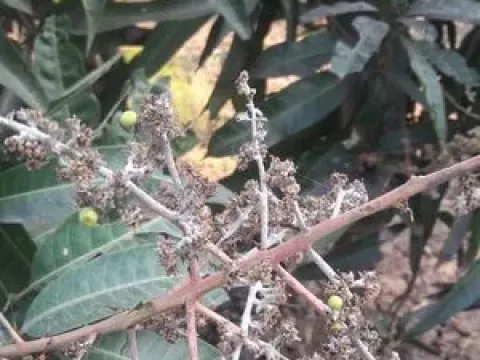
Mango powdery mildew
Oidium mangiferae
The disease is caused by the fungus Oidium mangiferae, an obligate parasite that thrives exclusively on living plant tissues.
What the section contains
Mango powdery mildew
This pathogen reproduces through conidia, which are wind-dispersed spores that rapidly colonize susceptible plant parts during favorable environmental conditions.
The fungus develops mycelia on the surface of leaves and floral organs, penetrating the epidermal cells using specialized structures called haustoria to extract nutrients.
It is widely considered one of the most destructive diseases for mango production worldwide, causing significant losses in both yield and quality.
The biological cycle of the fungus is highly synchronized with the mango flowering period, making it a critical threat during the reproductive phase of the tree.
Initial symptoms are characterized by a white or greyish powdery fungal growth appearing on young leaves, flower panicles, and tender fruit sets.
As the infection progresses, the powdery layer covers the inflorescences, preventing successful pollination and causing the flower panicles to wither and drop.
Infected young leaves typically show distortion, curling, and eventually necrotize, falling off prematurely before they can contribute to photosynthesis.
Fruits affected by the fungus develop characteristic corky lesions and scabs, which rupture as the fruit enlarges, resulting in permanent skin scarring.
In severe cases, entire panicles turn black and desiccate, which can lead to a complete failure of fruit set and total loss of the harvest.
Oidium mangiferae thrives in cool to moderate temperatures, typically between 20°C and 25°C, coupled with high atmospheric humidity.
Overcast skies, frequent morning mists, and light drizzle provide the ideal moisture level required for the germination of fungal spores on plant surfaces.
Poor ventilation within the orchard, caused by excessive canopy density or improper pruning, facilitates the accumulation of humidity that favors infection.
While extremely hot and dry weather conditions act as a natural check on the disease, any return to mild, humid conditions triggers a rapid resurgence.
The presence of susceptible host tissue, particularly during the active growth and flowering flushes, is the primary factor for the epidemic development of this disease.
The primary economic impact is the direct reduction in yield, as the fungus often destroys the blossoms before the fruit can even begin to develop.
Injuries to the fruit epidermis significantly degrade the market value, making the produce unattractive to consumers and unsuitable for premium export markets.
Weakened trees experience reduced vigor due to the loss of foliage, leading to long-term issues with tree health and reduced future production capacity.
The cost of implementing effective chemical control programs adds significant financial burden to growers, threatening the overall profitability of the enterprise.
Secondary infections are more likely to occur on damaged fruit tissue, leading to post-harvest decay and further financial losses during storage and transit.
Prophylactic spraying with sulfur-based fungicides is the most common and effective method for managing powdery mildew in mango orchards.
Systemic fungicides, particularly those from the triazole group, are recommended for curative application when infection pressure is high during the flowering stage.
Proper orchard management, including thinning of the canopy and regular pruning, is essential to ensure adequate airflow and reduce the humidity levels that favor the fungus.
Sanitation measures, such as removing and destroying infected panicles and fallen leaves, help to reduce the primary inoculum load within the garden.
Breeding and planting disease-resistant mango varieties remains the most sustainable and cost-effective strategy for long-term control of this fungal pathogen.