
Ochropsora
Ochropsora
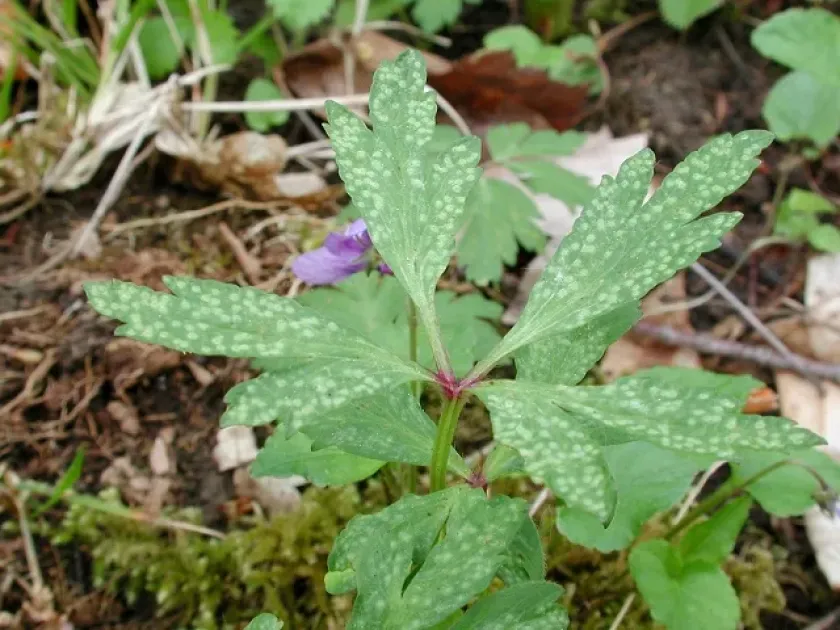
Description
Symptoms
The earliest symptoms of Ochropsora are small chlorotic spots on the leaf surface, which gradually turn bright yellow or orange as the fungus enters its reproductive phase.
Visible pustules, or aecia, develop on the underside of the leaves. These structures appear as small, slightly elevated pads that contain masses of spores waiting to be dispersed by wind or water.
Infected leaves often show signs of severe chlorosis, curling, and distortion. As the infection progresses, the tissues may become necrotic, leading to premature leaf drop.
In cases of heavy infestation, the pathogen may spread to stems and young shoots, causing localized swelling and stunted growth, which impairs the plant's overall development.
Visual identification can be confirmed by the presence of a dusty, powdery residue on the leaf surface, which is characteristic of the spore discharge typical of rust infections.
Pathogen
The causative agent of this disease is the rust fungus of the genus Ochropsora, which is classified as an obligate parasite. These fungi typically exhibit a complex life cycle requiring different host species to complete their development.
The pathogen produces several spore stages, including aeciospores and urediniospores, which facilitate rapid spread across plantations during the growing season when environmental conditions are suitable.
The fungus develops its mycelium within the plant tissues, utilizing haustoria to invade intercellular spaces and extract nutrients, which weakens the host plant over time.
Overwintering typically occurs as dormant mycelium within perennial parts of the host plant or as specialized spores on fallen leaves and organic debris from the previous season.
As a member of the order Pucciniales, the pathogen specifically targets the epidermis, leading to the eruption of spore-bearing structures known as pustules on the surfaces of leaves and stems.
Conditions for development
High humidity and the presence of liquid water on leaf surfaces are essential factors for the successful germination of rust spores and the establishment of new infections.
The fungus thrives in moderate temperature ranges, typically between 15°C and 22°C, which are common during late spring and early summer periods.
Poor aeration within the canopy and low light intensity create an ideal microclimate with stagnant humidity, significantly accelerating the spread of the pathogen among neighboring plants.
Frequent rainfall or persistent morning dew provides the necessary moisture for the spores to germinate and penetrate the host's stomata, initiating the cycle of infection.
Overcrowded planting layouts, which restrict airflow, are a major contributor to severe outbreaks, as they prevent the foliage from drying out quickly after rainy weather.
Why it matters
The primary damage caused by Ochropsora is the drastic reduction of the plant's photosynthetic capacity, leading to decreased vigor and overall exhaustion of the host.
Premature senescence and leaf loss force the plant to shed its foliage early, which limits the storage of carbohydrate reserves necessary for the following winter and spring development.
In fruit-bearing crops, the infection significantly impacts fruit development, resulting in smaller, lower-quality yields and reduced bud formation for subsequent seasons.
Continuous infection weakens the immune response of the plant, making it increasingly susceptible to opportunistic pests and secondary fungal or bacterial pathogens.
Economic losses are cumulative, arising from reduced marketable yields and the recurring necessity of applying specialized fungicides to manage the disease load in the orchard.
Protection
Sanitation is the cornerstone of disease control; removing and burning infected fallen leaves during autumn drastically reduces the primary inoculum for the following year.
Pruning techniques that improve light penetration and air circulation are vital, as they help foliage dry rapidly after rainfall, thereby discouraging fungal spore germination.
Chemical control involving copper-based or sulfur-based fungicides should be applied preventively or at the very first signs of infection to stop the spread of the disease.
- Removal of intermediate host plants from the vicinity.
- Application of systemic fungicides during the early growth stage.
- Ensuring proper spacing to facilitate rapid drying of the canopy.
Integrated pest management strategies should include regular monitoring of the site and alternating fungicide modes of action to prevent the development of resistant fungal strains.
Discussion
No discussions yet — be the first.