
Phoma leaf spot of sunflower
Nothophoma infossa
The causal agent of this disease is the fungus Nothophoma infossa (previously known as Phoma macdonaldii). It is a pathogenic microorganism that survives in the soil and on crop debris for several years.
What the section contains
Phoma leaf spot of sunflower
The fungus specializes exclusively in sunflowers, affecting all vegetative parts of the plant. It overwinters in the form of pycnidia and mycelium on plant residues left on the field after harvest.
During the growing season, the infection spreads through conidia, which are dispersed by rain, wind, or insects. The infection process begins with the germination of spores, which penetrate the plant tissues through stomata or mechanical wounds.
The biology of the pathogen is characterized by high adaptability to various agro-climatic conditions. This allows it to reproduce extensively under favorable conditions, creating a high risk of epiphytotics.
Secondary infection occurs throughout the growing period, which leads to rapid disease spread in dense stands with poor air circulation.
Primary symptoms of Phoma usually appear on lower leaves as dark brown spots that gradually increase in size. A yellow halo often surrounds these spots, indicating active tissue necrosis.
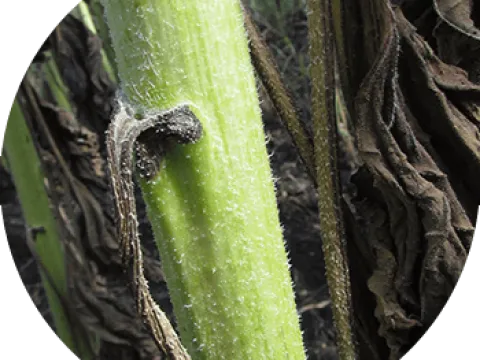
On the stems, the disease manifests as large black or dark brown spots, often localizing where leaf petioles attach. Over time, these spots can girdle the entire stem, leading to tissue death.
The internal part of an infected stem turns brown due to the destruction of the pith by the fungus. This significantly weakens the plant's mechanical stability, making it prone to lodging under wind pressure.
On the surface of the dead epidermis, one can observe tiny black dots — these are the fruiting bodies of the fungus (pycnidia), where spores mature for further spreading the infection.
- Darkening of leaf petioles.
- Appearance of necrotic spots on stems.
- Leaf chlorosis transitioning into necrosis.
- Destruction of internal stem parenchyma.
- Presence of pycnidia on affected organs.
Warm and humid weather with frequent rainfall during the summer contributes to the active development of Phoma. The optimal temperature for spore germination ranges from +20 to +25 degrees Celsius under high humidity.
Dense crop stands create a specific microclimate with poor ventilation, which keeps moisture on the leaves and accelerates the infection process. Low light in such conditions also weakens the plant's immune system.
Violation of crop rotation, where sunflowers return to the same field sooner than every 6–8 years, creates a reservoir for the pathogen in the soil. The higher the pathogen load, the greater the risk of early infection.
Mechanical damage caused by pests opens the door for the fungus to enter the tissues. Therefore, crops infested by insects are significantly more vulnerable to Phoma leaf spot.
Deficiency of micronutrients, especially boron, reduces the plant's resistance to fungal diseases, making their tissues more susceptible to colonization by Nothophoma infossa.
Phoma leaf spot causes significant yield losses due to premature leaf death, which drastically reduces the intensity of photosynthesis. As a result, seeds in the flower heads do not reach their optimal weight.
The damage manifests in a significant reduction in oil content, which affects production profitability. Infected seeds often have poor germination and low seedling vigor.
Stem destruction leads to brittleness, causing mass lodging of sunflowers before harvest. This creates difficulties for harvesting machinery and leads to huge yield losses in the field.
Severe infection can lead to yield losses ranging from 20 to 50 percent, depending on the hybrid and weather conditions. The disease also degrades the quality of the harvested produce.
Besides direct yield impact, the fungus depletes the soil and complicates field preparation for subsequent crops, as the infection persists in plant residues for a long time.
The primary method of control is strict crop rotation, excluding sunflowers from the same site for at least seven years. It is essential to perform deep plowing of stubble for rapid decomposition.
Using resistant hybrids remains the most effective way to control the disease. Breeding programs are actively developing genetically tolerant sunflower forms.
Seed treatment with systemic fungicides before planting plays an important role. This protects seedlings from early infection and helps the plant build its immunity at initial growth stages.
Spraying crops with fungicides during active growth periods allows for containing the infection upon the first signs of the disease. It is recommended to use preparations based on triazoles and strobilurins.
It is necessary to control pest and weed populations, as they can serve as infection reservoirs or damage plants, facilitating the fungus's entry into the stem.