
Phoma stem canker
Plenodomus lingam
Description
Symptoms
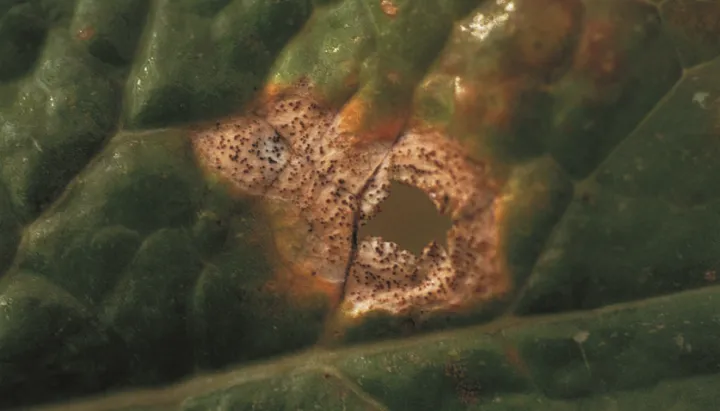
Early symptoms appear as small, greyish-white circular spots on leaves, which contain numerous tiny, black fruiting bodies known as pycnidia. These black dots are the diagnostic feature for identifying this pathogen in the field.
As the disease progresses, a distinct canker develops at the base of the stem. The tissue becomes discolored, sunken, and often woody or necrotic, which eventually leads to the structural collapse of the plant.
Infected plants frequently exhibit stunted growth and premature yellowing of lower leaves. When the stem is cut crosswise, a dark, wedge-shaped rot is often visible inside, indicating that the fungus has reached the xylem and phloem.
Pod infection can also occur, appearing as dark, sunken spots on the pods. This leads to premature pod shattering and significant loss of seeds before harvest can be completed.
In severe cases of lodging, plants break at the crown level due to the weakened stem structure, creating large, uneven patches in the field that are prone to rot and further disease development.
Pathogen
The causal agent of Phoma stem canker (often referred to as blackleg) is the fungus Plenodomus lingam, formerly identified as Leptosphaeria maculans. This pathogen is a significant threat to all brassica crops, including oilseed rape, canola, cabbage, and mustard.
The fungus survives on infected stubble, crop residues, and seeds. Its life cycle consists of two stages: the sexual stage (pseudothecia), which releases airborne spores, and the asexual stage (pycnidia), which spreads via rain-splash on foliage throughout the growing season.
Infection typically begins at the seedling stage, where spores land on leaves and cause lesions. The fungus then grows systemically through the plant's vascular system, eventually colonizing the stem base and causing the characteristic necrotic canker.
The speed at which the fungus progresses within the plant tissue depends heavily on environmental conditions and the plant's resistance level. Once the stem base is girdled by the canker, the plant's ability to transport water and nutrients is severely compromised.
The pathogen is highly persistent, capable of remaining active in the soil environment for several years. This makes crop rotation a fundamental requirement for managing the risk of infection in high-density brassica regions.
Conditions for development
Phoma stem canker thrives in temperate, moist environments with temperatures ranging from +15°C to +25°C. Frequent rainfall is critical for the dispersal of pycnidiospores via water droplets, which drives the secondary spread of the disease.
High humidity and moderate temperatures during autumn are particularly dangerous as they facilitate early infection of young seedlings. Mild winters can also allow the pathogen to continue slow development within the host tissues.
Dense crop stands increase humidity around the leaf canopy, creating a perfect microclimate for fungal colonization. Poor air circulation in such fields significantly exacerbates the rapid spread of the disease throughout the planting.
Physical damage to the plants, often caused by insect feeding or tillage operations, significantly increases susceptibility by providing easy entry points for fungal spores to penetrate plant tissues.
Failure to manage crop residues creates a constant reservoir for the fungus. When residues remain on the soil surface, the fungus can produce spores over multiple seasons, sustaining high levels of inoculum in the vicinity.
Why it matters
The economic impact of Phoma stem canker is severe, with the potential for yield losses exceeding 50% in vulnerable, high-density rapeseed fields. The loss is primarily driven by plant death and the reduction of overall vigor in surviving plants.
Quality reduction is another critical issue, as the disease lowers oil content and seed size. Seeds harvested from highly infected crops often have poor viability, making them unsuitable for future sowing or commercial oil extraction.
Lodging and pre-harvest pod shatter significantly increase logistical costs and mechanical losses. Farmers often face challenges during harvest, as affected plants may be harder to pick up with modern combine headers.
The systemic nature of the disease means that even plants that do not die prematurely may suffer from reduced yield potential. The restricted vascular transport limits the plant's capacity to fill seeds properly.
The ongoing threat of this disease necessitates repeated fungicide applications, which increases production costs and places pressure on the farm's operating budget throughout the growing season.
Protection
Implementing a strict crop rotation strategy is the most effective way to control Phoma stem canker. A gap of at least 3 to 4 years between brassica crops allows infected residues to decompose sufficiently, drastically reducing inoculum levels.
Cultural practices, such as burying crop residues through deep tillage, can interrupt the life cycle of the pathogen. Eliminating volunteer rapeseed and wild mustard plants is essential to remove bridges for early-season infection.
Using certified, fungicide-treated seeds ensures that crops are protected during the most vulnerable early stage. This preventative measure is vital for establishing a healthy stand and reducing the likelihood of early infection.
Fungicide application during the rosette stage and early flowering provides a strategic barrier against fungal colonization. Farmers should monitor disease pressure and apply treatments based on economic thresholds and local forecasts.
- Selecting resistant varieties to minimize the impact of the pathogen.
- Ensuring balanced fertilization to promote strong, resilient plant growth.
- Monitoring fields regularly to track the timing of spore release and infection stages.
Discussion
No discussions yet — be the first.