
Phoma rot of solanaceous crops
Boeremia gilvescens
Description
Symptoms
Early symptoms appear as small, dark brown spots that gradually enlarge, often developing concentric rings that give the lesions a target-like appearance.
Leaves exhibit grayish-brown lesions with distinct margins. Under high humidity, the centers of these lesions may display small black dots, which are the fungal pycnidia.
Stem lesions manifest as elongated, sunken cankers. If the stem is girdled by these lesions, the plant may wilt rapidly and eventually collapse due to tissue death.
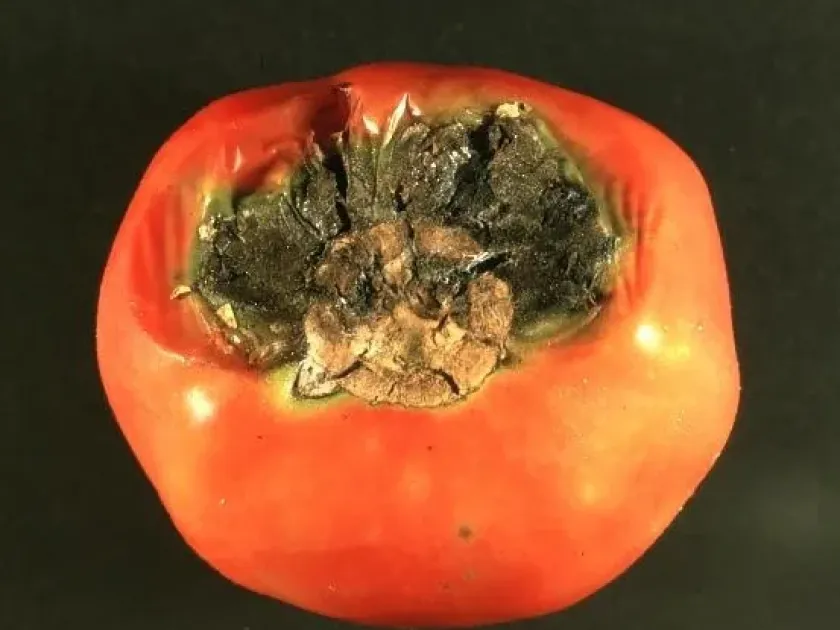
On fruits, Phoma rot appears as deep, sunken, dark brown to black spots. The tissue within these lesions becomes leathery, and the fruit may eventually rot entirely.
- Dark brown lesions on fruit surface.
- Small black pycnidia visible within the lesions.
- Yellowing and premature abscission of leaves.
- Sunken stem cankers leading to plant wilt.
Pathogen
The causative agent of Phoma rot in solanaceous crops is the fungus Boeremia gilvescens (formerly known as Phoma destructiva). This pathogen is characterized by the production of pycnidia, which act as the primary structures for spore dispersal.
The fungus overwinters in plant debris, soil, and on seeds. Its ability to persist in harsh conditions makes it a highly resilient pathogen for many commercial vegetable operations.
Infection occurs primarily through natural openings or wounds created by pests or cultural activities. Once inside, the fungal mycelium colonizes the plant tissue, causing necrosis.
The pathogen exists in various strains, some of which exhibit different levels of aggressiveness depending on the specific host cultivar and environmental stress factors present.
Understanding the biology of Boeremia gilvescens is essential, as the life cycle depends on moisture for the germination of conidia and the successful penetration of the host's surface.
Conditions for development
The development of Phoma rot is favored by high relative humidity (above 80%) and moderate temperatures, typically between +20°C and +25°C.
Prolonged rainfall, heavy fog, and dew accumulation on leaves create the perfect environment for the pathogen to spread via splash dispersal or wind-borne spores.
Poor airflow in greenhouses, especially when plants are densely spaced, significantly accelerates the spread of the fungus among healthy individuals.
Plants under nutritional stress or those suffering from improper irrigation management are much more susceptible to infection by Boeremia gilvescens.
The pathogen is highly opportunistic, and outbreaks often coincide with periods of unstable weather that keep the foliage wet for extended durations.
Why it matters
Phoma rot significantly reduces marketability, as infected fruits develop unattractive lesions that make them unfit for fresh consumption or processing.
Reduced photosynthetic area due to leaf infection limits the plant's ability to produce sugars, leading to lower fruit yield and inferior quality.
In nursery stages, the infection can cause systemic damping-off, leading to significant economic losses for growers who rely on high-quality transplant production.
The fungus can cause post-harvest losses if infected fruits are packed with healthy ones, leading to rapid decay within the storage container.
Increased management costs, including labor for pruning and fungicide applications, are necessary to mitigate the spread of the disease within infected fields.
Protection
Implementing a strict crop rotation schedule, avoiding solanaceous plants for at least three to four years, is the most effective cultural control measure.
Strict sanitation practices, such as the removal and destruction of all plant debris, are crucial to reducing the primary inoculum source in the field.
The use of certified, treated seeds is mandatory to ensure that the pathogen is not introduced into the crop production area from the start.
Regular fungicide applications, particularly those targeting foliar protection during wet weather, can keep the fungal population below an economic threshold.
Managing greenhouse microclimates, including proper ventilation and spacing, helps minimize leaf wetness duration and suppresses the onset of the infection.
Discussion
No discussions yet — be the first.