
Annosum root rot
Heterobasidion annosum
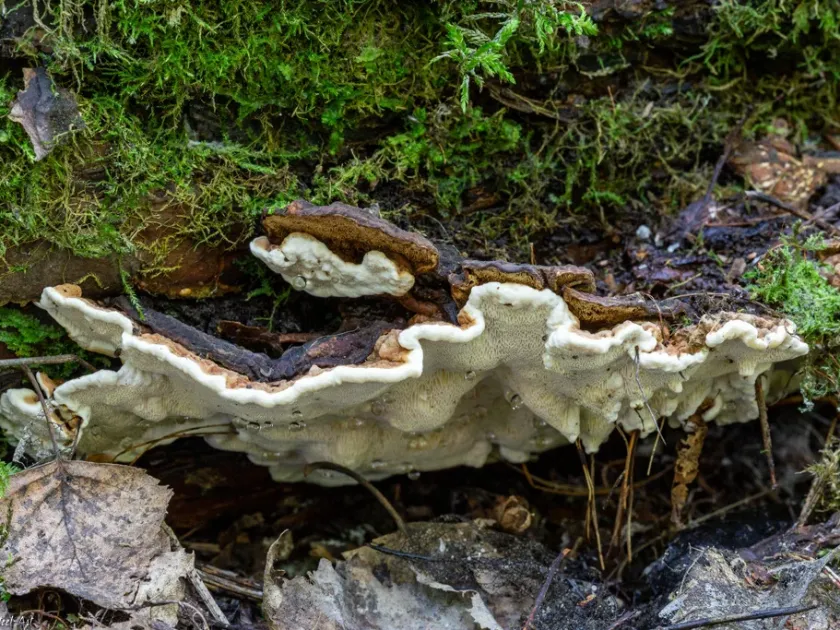
Description
Symptoms
Early symptoms include a gradual thinning of the tree crown and discoloration of the needles, which often turn yellow or pale green before dropping prematurely.
On the roots and the base of the stem, a white, mycelial felt can be observed beneath the bark. This is a characteristic sign of the fungal invasion destroying the cambium.
The wood affected by the fungus displays a distinct white pocket rot. As the disease progresses, the heartwood becomes brownish, brittle, and eventually hollowed out.
Trees become structurally unstable, leading to an increased risk of windfall. Often, trees fall during relatively light wind events because their roots have been severely degraded.
Groups of dying trees, often referred to as infection centers, are a clear visual indicator. These clusters expand outward as the fungus continues its subterranean spread.
Pathogen
The disease is caused by the basidiomycete fungus Heterobasidion annosum. It is a highly destructive pathogen that primarily attacks the root systems and the lower trunks of coniferous trees.
This fungus acts as a necrotrophic parasite, consuming living tissue while also surviving as a saprotroph in dead stumps and roots. Its ability to persist in the soil makes it a long-term threat.
The fungal fruit bodies are perennial, often appearing as woody, bracket-shaped structures. They are typically found hidden under the needle litter or in the crevices of the bark at the base of trees.
These fruiting bodies release vast quantities of basidiospores into the air. These spores are capable of traveling long distances to land on fresh stumps, initiating new infection cycles.
Spread within a stand occurs primarily through root grafting. When roots of a healthy tree make contact with those of an infected one, the fungal mycelium migrates to the healthy host.
Conditions for development
Sandy and well-drained soils are most conducive to the rapid development of the pathogen. These soil types allow for efficient movement of the mycelium through root contacts.
The presence of freshly cut stumps following timber harvesting is the primary driver of new infections. Spores colonize these surfaces within hours of exposure.
High humidity and moderate temperatures provide the ideal environment for the production of spores by the fruiting bodies of the fungus.
Monocultures, particularly of spruce or pine, are highly susceptible due to the uniformity of the root systems and the high frequency of root contact between trees.
Mechanical damage to the roots or bark of living trees caused by forestry machinery creates entry points that facilitate infection by the fungus.
Why it matters
Annosum root rot is considered one of the most economically damaging forest diseases worldwide. It leads to massive timber losses and increased management costs.
The decay of the root system significantly reduces the merchantable volume of trees, rendering the timber unsuitable for high-quality wood products or construction.
The disease destroys the ecological stability of forest stands, leading to the creation of gaps and the eventual collapse of entire forested areas if left unmanaged.
Once established in a site, the fungus is nearly impossible to eradicate completely. This persistent threat complicates long-term forestry planning and silviculture.
Increased mortality rates reduce the carbon sequestration potential of the forest, impacting environmental goals related to climate change mitigation.
Protection
The most effective preventative measure is the treatment of fresh stump surfaces with biological control agents such as Phlebiopsis gigantea to prevent colonization.
Forest managers should avoid scheduling logging operations during peak spore release periods to minimize the risk of airborne infections.
In infested areas, sanitation procedures including the removal of infected trees and stump extraction are necessary to break the network of root contacts.
Promoting species diversity through mixed forest stands is a crucial strategy. Broadleaved trees act as biological barriers that prevent the spread of the fungal mycelium.
Ongoing monitoring using aerial or ground-based surveys is essential to detect new infection centers early and implement containment strategies before the damage spreads.
Discussion
No discussions yet — be the first.