
Angular leaf spot of persimmon
Plurivorosphaerella nawae
Description
Symptoms
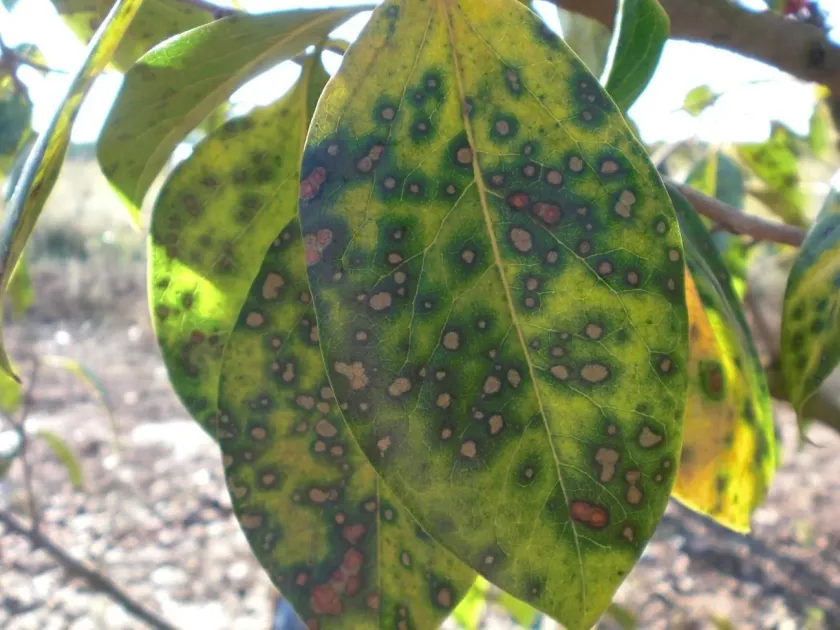
Symptoms appear as small, angular spots on the leaves, which are limited by the small leaf veins, giving them a distinct geometric appearance.
Initially, these spots are light green or yellowish, but they eventually turn dark brown or black as the tissue begins to die.
Under humid conditions, one may observe the development of an olive-colored fungal growth on the underside of the affected leaf areas.
In cases of severe infection, these individual spots coalesce, leading to large necrotic sections across the leaf blade.
The disease eventually results in premature yellowing and heavy leaf drop, often leaving the branches bare long before the natural dormancy period.
Pathogen
The causal agent of angular leaf spot in persimmon is the pathogenic fungus known as Plurivorosphaerella nawae. This specific fungus primarily affects trees belonging to the Diospyros genus.
The pathogen belongs to the Ascomycota phylum and utilizes fallen leaves as a primary site for overwintering, specifically in the form of pseudothecia.
During the spring season, these structures release ascospores, which act as the primary inoculum disseminated by wind and water splashes.
Upon reaching the surface of the leaves, the spores germinate and penetrate the plant tissue through natural openings such as stomata.
The fungus colonizes the leaf tissue, disrupting physiological processes and causing the characteristic visual damage associated with this disease.
Conditions for development
Angular leaf spot thrives under conditions of high humidity and prolonged rainfall, which facilitate the spreading of fungal spores.
The optimal temperature range for the rapid development of the disease is approximately 20 to 25 degrees Celsius during the growing season.
Orchards with poor air circulation, often caused by overgrown canopies or dense planting, show a much higher incidence of the disease.
Leaves that remain on the ground from the previous season serve as the primary source for recurring infections each year.
Plants that are physiologically stressed due to poor soil conditions or lack of balanced nutrition are significantly more susceptible to infection.
Why it matters
The main impact of this disease is the reduction of total photosynthetic area, which directly affects the overall vigor of the persimmon tree.
Fruit development is significantly compromised, as trees infected with this fungus often produce smaller, less sweet, and lower-quality fruit.
Early defoliation prevents the accumulation of essential carbohydrates, making the trees much more vulnerable to winter cold and frost injury.
Long-term consequences include a significant reduction in fruit yield for the subsequent season due to poor bud formation.
In nursery settings, the infection can be devastating, leading to stunted growth or total failure of young persimmon seedlings.
Protection
Sanitation is the cornerstone of control; all fallen leaves must be collected and removed from the orchard floor to eliminate the inoculum source.
Pruning the canopy is essential to improve airflow, allowing leaves to dry faster after rain and reducing the time available for fungal spore germination.
Applying copper-based fungicides during the dormant season can effectively reduce the population of overwintering fungal structures.
During the growing season, if symptoms are detected, the application of systemic fungicides can help prevent the spread of the pathogen.
- Implement balanced fertilization to enhance tree resistance.
- Avoid overhead irrigation that keeps foliage wet for long periods.
- Monitor the orchard regularly during the early stages of the season.
Discussion
No discussions yet — be the first.