
Grapevine diplodia dieback
Diplodia seriata
Description
Symptoms
Visible symptoms often include stunted shoot growth and the sudden wilting of leaves during the growing season. As the disease progresses, whole arms or cordons may die, often referred to as "dieback".
When infected wood is cross-sectioned, characteristic dark brown or black wedge-shaped necrotic lesions are visible. These lesions represent the path of the fungus moving through the woody tissue over several years.
Leaves may show interveinal chlorosis and necrosis, often with a "tiger-stripe" appearance in some cases, although this is more common in other trunk diseases. Affected leaves may eventually drop prematurely.
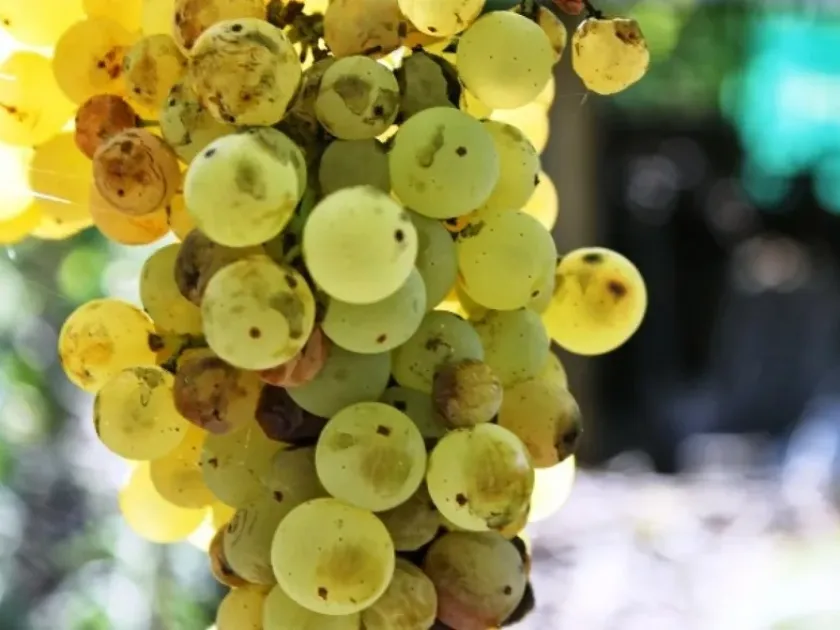
Clusters can be directly infected, resulting in brown, withered berries covered in small, black, pin-prick structures which are the fungal fruiting bodies (pycnidia). This significantly reduces yield and quality.
- Wedge-shaped necrosis in wood cross-sections.
- Dieback of cordons and entire branches.
- Black pycnidia on dead bark or clusters.
Pathogen
The disease is caused by the fungus Diplodia seriata (teleomorph Botryosphaeria obtusa), a significant pathogen associated with Grapevine Trunk Diseases (GTD). It is a wood-inhabiting fungus that colonizes the vascular tissues of the vine.
The fungus overwinters as mycelium and fruiting bodies (pycnidia and pseudothecia) within infected wood or dead plant material. Spores are released primarily during rainfall and are spread by wind-driven rain and splashes across the vineyard.
Infection occurs mainly through natural openings and wounds, particularly pruning cuts. Once the spores germinate on a fresh wound, the fungus penetrates the xylem, leading to long-term colonization of the perennial woody parts of the vine.
As the fungus grows inside the vascular system, it causes internal tissue necrosis. This disrupts the plant's ability to transport water and nutrients, leading to a slow but progressive decline of the vine's physiological functions.
This pathogen is known for its endophytic nature, often remaining dormant in the vine tissues for years before symptoms become visible. This biological trait makes it difficult to detect and eradicate early in the infection cycle.
Conditions for development
The development of Diplodia dieback is heavily influenced by humidity and rainfall, which are essential for spore release and germination. Warm and moist weather conditions during the pruning season significantly increase infection risk.
Wound age is a critical factor; fresh pruning wounds are highly susceptible to infection, but this susceptibility decreases as the wound heals naturally over time. Delaying pruning until late winter or spring reduces exposure to rainy conditions.
Stress factors such as water deficit, heat stress, or physical damage from hail increase the vulnerability of vines. Stressed plants have a lower threshold for fungal invasion and faster symptom progression.
High planting density and poor canopy management, which limit airflow and trap moisture, create an environment conducive to fungal growth. Infected woody debris left on the ground serves as a continuous source of inoculum.
Vine age significantly impacts disease severity. Older vineyards, having experienced many years of pruning, harbor more wood injuries and consequently have higher rates of Diplodia infection compared to young plantations.
Why it matters
The primary harm caused by this disease is the gradual loss of productivity and the ultimate death of individual vines. This leads to gaps in the vineyard, reducing the overall yield potential of the block.
Infection compromises the vine's structural integrity, making it more susceptible to environmental extremes like winter frost or drought. Once a vine is severely colonized, it cannot be recovered, requiring costly removal.
Fruit quality is severely impacted by the presence of the pathogen. Fungal metabolites can reach the berries, affecting the chemical composition of the must and potentially introducing off-flavors in the finished wine.
The lack of early diagnostic symptoms leads to delayed management decisions, allowing the fungus to spread extensively through the wood before the grower is even aware of the problem.
In the long run, Diplodia dieback forces growers into a cycle of vine replanting, which represents a massive economic burden and significantly lowers the profitability and longevity of a viticultural operation.
Protection
Effective management starts with strict sanitary practices. Disinfecting pruning tools between vines with 70% ethanol or other approved disinfectants is crucial to prevent the human-aided spread of fungal spores.
Protecting pruning wounds is a standard industry practice. Applying biological control agents (like Trichoderma) or synthetic fungicides as a paste or spray immediately after pruning prevents the spores from establishing.
Sanitation involves removing and destroying heavily infected wood from the vineyard. It is critical not to leave prunings in the row, as they act as a persistent source of spores for neighboring vines.
Scheduling pruning during periods of low rainfall and avoiding pruning in wet, humid conditions helps minimize the risk of infection. Late pruning can also promote faster healing of wounds, reducing the time they are vulnerable.
Providing optimal vine nutrition and managing secondary pests helps maintain a vigorous plant. A strong, healthy vine is better equipped to compartmentalize and limit the spread of the fungus within its woody tissues.
Discussion
No discussions yet — be the first.