
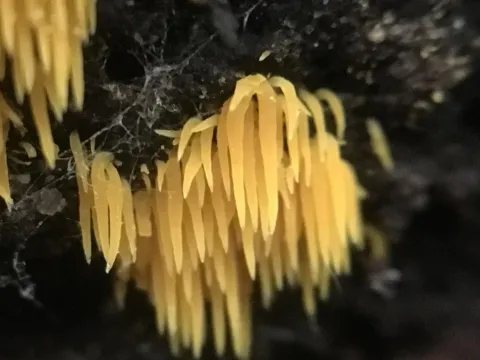
Mucronella flava
Mucronella flava
The causal agent of this disease is the fungus Mucronella flava, a member of the Basidiomycota phylum. It functions primarily as a wood-decaying fungus that attacks the structural components of trees.
What the section contains
Mucronella flava
The fungus is characterized by the production of distinctive, tooth-like structures (hymenophores) that appear on the surface of the bark or decaying wood. These structures are yellow and responsible for spore release.
Biologically, it acts as a saprotroph that can opportunistically infect stressed or damaged living tissue. It utilizes enzymatic processes to break down lignin and cellulose within the wood.
The mycelium grows within the substrate, gradually turning the interior of the wood into a spongy, degraded mass. This process can be slow but eventually compromises the entire host tree.
The species name flava refers to its bright yellow coloration during the active reproductive stage. This color is a diagnostic feature used by foresters to identify the presence of the pathogen.
The most visible symptom is the appearance of bright yellow, tooth-like fungal outgrowths on the stems, trunks, or larger branches of affected trees.
Affected wood becomes noticeably soft and fragile. In advanced stages, the wood can be easily broken or crushed by hand, indicating severe decay of the inner structure.
The foliage of infected trees often appears sparse or chlorotic. This happens because the pathogen disrupts the vascular system, limiting the transport of water and nutrients.
Cracks and fissures often appear in the bark near the colonized area. These physical injuries are often where the fungus has gained initial entry into the host tree.
White or bleached areas within the wood, visible if the bark is peeled away, serve as a clear sign of the delignification process caused by the fungus.
Mucronella flava thrives in environments characterized by high humidity and poor air circulation. These conditions are commonly found in dense, overgrown orchards or forests.
Optimal temperatures for the growth of this fungus generally range between 15°C and 25°C. Moderate temperatures allow for year-round persistence in suitable habitats.
Wounds in the bark are the primary entry point for the fungus. These can be caused by pruning, animal damage, or extreme weather events like frost cracks.
Accumulation of leaf litter and deadwood on the ground provides a reservoir for the pathogen. Clean sanitation practices are essential to prevent outbreaks.
Weakened trees, suffering from drought stress or nutrient deficiencies, are much more susceptible to colonization compared to healthy, vigorous plants.
The primary damage caused by Mucronella flava is the significant weakening of the tree's internal structure, which increases the risk of windthrow and breakage.
The infection leads to a steady decline in the health of the host, eventually resulting in the death of the tree if left untreated over several years.
For commercial orchards, the presence of this fungus translates into reduced fruit yield and loss of overall tree vitality, impacting economic output.
The fungus serves as a source of spores that can easily spread to healthy neighboring trees, potentially creating a widespread infection throughout a plantation.
Long-term degradation of the wood structure makes the affected timber useless for industrial or construction purposes, causing direct loss in forestry.
Sanitary pruning is the most effective way to manage the disease. All infected branches must be removed and destroyed to stop the spread of spores.
Sterilizing pruning tools after every cut is critical. Using alcohol or a bleach solution prevents the transfer of pathogens from diseased to healthy trees.
Proper wound management is necessary. Applying specialized pruning sealants or fungicides to fresh cuts prevents the fungus from gaining a foothold.
Regular maintenance of air circulation within the canopy helps keep the bark dry, creating an unfavorable environment for fungal development.
Maintaining the overall health of the garden through proper fertilization and irrigation helps the trees develop the natural defense mechanisms needed to resist infection.