
Mulberry cercospora leaf spot
Cercospora moricola
Description
Symptoms
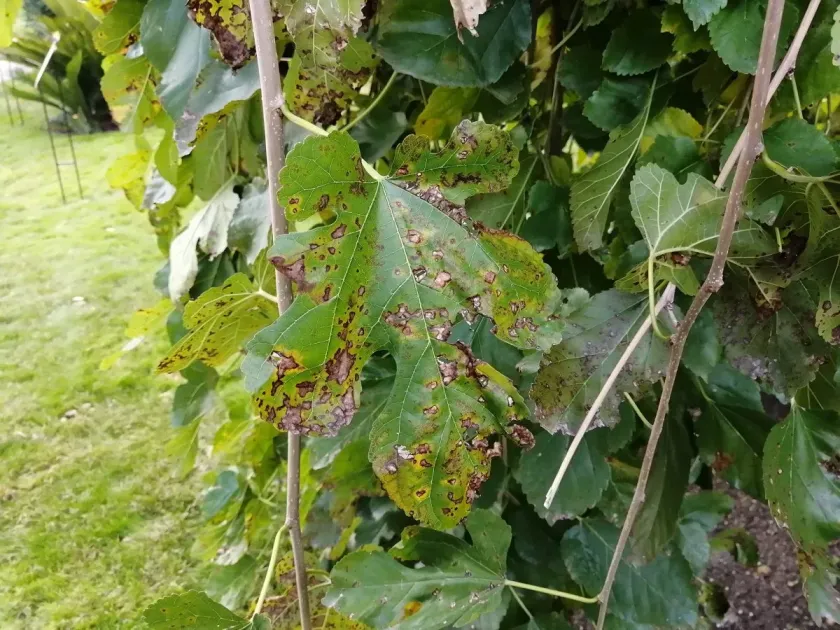
The primary symptom of this disease is the appearance of small, angular or circular spots on the leaf blades. Initially, these spots are light brown and often go unnoticed by the grower.
As the disease progresses, the spots darken and enlarge, sometimes coalescing to cover larger areas of the leaf. The centers of these spots may eventually dry out and fall away, resulting in a shot-hole appearance.
A distinctive grayish-olive fungal growth develops on the underside of the leaves in the affected areas. This fuzzy layer consists of spores, which are essential for the pathogen's dispersal.
Heavy infection causes the leaves to yellow prematurely and drop from the tree. This often occurs well before the natural autumn senescence of the foliage.
In severe cases, the tree's overall vigor declines, and the canopy may become sparse, leading to weakened branches and reduced growth during the next season.
Pathogen
The disease is caused by the fungus Cercospora moricola, an imperfect fungus belonging to the Hyphomycetes order. It is highly specific to the Morus species.
The pathogen overwinters primarily in fallen, infected leaves on the ground. When environmental conditions become favorable in the spring, it begins its new life cycle.
Spore dissemination occurs via wind currents, rain splash, and movement of insects. These spores land on healthy leaves and initiate a new infection cycle upon germination.
The mycelium grows through the leaf tissue, extracting nutrients and causing cell death, which leads to the visible symptoms. The pathogen can complete multiple generations during a single growing season.
Biological persistence in the soil allows the fungus to reappear year after year if proper sanitation measures are not consistently followed in the orchard.
Conditions for development
High relative humidity and frequent rainfall are the most critical factors promoting the development of Cercospora leaf spot. Wet conditions are necessary for successful spore germination.
Temperatures between 20°C and 28°C provide the ideal environment for the rapid expansion of the fungus. Warm, humid summers typically see the highest infection rates.
Poor airflow within the tree canopy contributes significantly to disease outbreaks. Densely planted orchards often experience higher disease pressure due to trapped moisture.
Trees growing in low-lying areas with poor drainage are more susceptible to infection. Stagnant air and persistent morning dew prolong the period that leaves stay wet.
Poor plant nutrition and lack of proper orchard hygiene create a conducive environment for the fungus to establish itself and thrive throughout the growing season.
Why it matters
The primary harm caused by Cercospora moricola is the destruction of leaf tissue, which is essential for photosynthesis and carbohydrate storage in the tree.
For sericulture, the disease is particularly devastating as the leaves serve as the sole food source for silkworms. Quality degradation makes the foliage unusable for production.
Early leaf drop forces the tree to enter winter dormancy unprepared, making it more susceptible to frost damage and winter kill of tender shoots and buds.
Cumulative effects over several years weaken the tree significantly, leading to reduced fruit yields, slower branch development, and a shortened overall lifespan of the tree.
The aesthetic value of mulberry trees in ornamental landscapes is severely compromised when trees lose their canopy in mid-summer due to fungal infection.
Protection
Cultural management is the cornerstone of control. Removing and burning all fallen leaves in autumn is crucial to eliminate the primary source of the fungal inoculum.
- Pruning the crown to increase airflow and sunlight penetration.
- Ensuring proper spacing between trees during initial planting.
- Applying balanced fertilization to support strong tree immunity.
- Removing infected branches during dormant season pruning.
- Selecting resistant mulberry varieties where available.
Chemical control involving copper-based fungicides can be used if an outbreak is detected. Timely application at the onset of symptoms is necessary for effectiveness.
Integrated pest management (IPM) practices, including regular monitoring and sanitation, can often reduce the reliance on intensive chemical applications.
Maintaining tree health through proper watering and soil management helps the mulberry tree resist the pathogen's initial attempt to establish an infection.
Discussion
No discussions yet — be the first.