
Mulberry leaf spot
Gonatophragmium mori
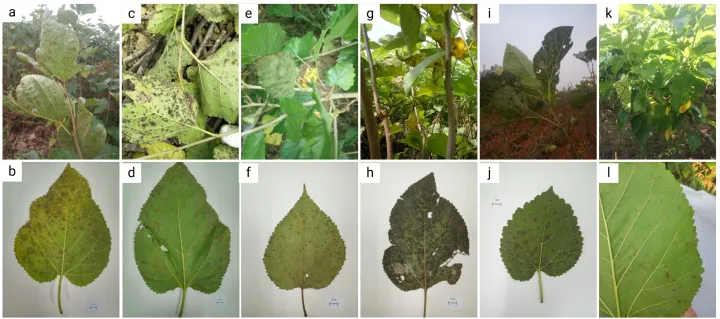
Description
Symptoms
The primary sign of the disease is the appearance of distinct spots on mulberry leaves. These lesions vary in shape and size, starting as chlorotic spots that eventually turn brown or necrotic with a dark, defined margin.
As the infection progresses, a characteristic velvety coating forms on the underside of the leaves. This coating represents the mass of conidiophores and conidia produced by the fungus Gonatophragmium mori, ranging in color from olive-green to dark brown.
Affected leaf tissue gradually dies, leading to the formation of localized dead zones. In severe cases, the leaves curl prematurely, become brittle, and drop from the tree, significantly impairing the plant's photosynthetic capacity.
The fungus can also infect young shoots, causing tissue deformation and darkening. Such damage weakens the overall growth potential of the tree and can lead to stunted branch development over time.
The disease often spreads from the lower, more shaded parts of the canopy upwards, particularly if environmental conditions remain favorable for fungal growth for extended periods.
Pathogen
The causative agent of this disease is Gonatophragmium mori, a microscopic hyphomycete fungus. It is a highly specialized parasite that exclusively targets members of the Morus genus, relying on the host tissue for survival.
The fungus reproduces through the production of conidia, which serve as the primary inoculum for spreading the infection throughout the growing season. Wind, rain splashes, and insects act as major vectors for dispersing these spores.
Upon landing on a leaf, the fungal spores germinate and penetrate the host tissue. The mycelium grows within the leaf intercellular spaces, feeding on nutrients and causing the characteristic cell destruction that results in visible symptoms.
The pathogen overwinters as mycelium or conidia on fallen leaves, in soil debris, or within bark crevices. With the onset of warmer spring weather and high humidity, the life cycle of the fungus is reactivated.
The biology of Gonatophragmium mori is intimately tied to the density and health of the mulberry plantation, making management of environmental stress a key aspect of preventing fungal outbreaks.
Conditions for development
High relative humidity is the most critical factor for the widespread development of mulberry leaf spot. Periods of prolonged rainfall, heavy fog, and dew provide the necessary surface moisture for spore germination.
The optimal temperature range for the fungus to flourish is between 20°C and 25°C. Within this range, the incubation period is significantly shortened, allowing the disease to progress rapidly through the foliage.
Poorly ventilated, high-density plantings are particularly susceptible to this disease. Lack of airflow prevents moisture from evaporating from leaf surfaces, creating a microclimate that strongly favors fungal activity.
Trees suffering from nutritional deficiencies or those stressed by environmental factors exhibit a lowered immune response. Such weakened trees are much more prone to successful infection by the fungus compared to healthy ones.
The failure to remove leaf litter from the orchard floor allows the pathogen to persist throughout the winter. When spring rains occur, these residual spores are easily splashed onto the new, susceptible spring foliage.
Why it matters
The primary economic impact of this disease is the drastic reduction in foliage quality and quantity. Since mulberry leaves are the primary feed for silkworms, a heavy infection can lead to significant losses in sericulture operations.
The premature loss of leaves interferes with the tree's ability to accumulate reserves for the dormant season. This depletion of energy stores can reduce the tree's winter hardiness and its overall vigor for the subsequent year.
Damaged leaves are less nutritious and may contain fungal toxins or degraded nutrients, making them unsuitable for commercial silk production. This impacts the productivity and efficiency of the entire rearing process.
In nursery settings, leaf spot stunts the growth of saplings, leading to lower-quality planting material and longer production cycles, which negatively affects the financial bottom line for growers.
Chronic infestation weakens the plant's defensive systems, increasing its susceptibility to secondary pest attacks and potentially shortening the total lifespan of the trees in a plantation.
Protection
The most important prophylactic measure is the thorough removal and disposal of fallen leaves during the autumn. Clearing these plant residues eliminates the primary source of overwintering inoculum.
Agronomic practices, such as proper crown pruning, are essential to improve aeration and light penetration. Thinning the canopy allows leaves to dry out faster after rainfall, which inhibits the conditions required for fungal growth.
Maintaining proper planting spacing is crucial to avoid overcrowding. Good orchard hygiene, including weed control in the aisles, reduces unnecessary humidity and competition, supporting the overall health of the plantation.
Fungicidal treatments can be employed during periods of high infection risk. Contact or systemic fungicides approved for use on mulberry should be applied according to local guidelines at the first sign of symptoms.
- Apply balanced fertilization to bolster tree immunity and resilience.
- Conduct regular sanitary pruning to remove dead or diseased branches.
- Monitor the plantation frequently during rainy or high-humidity weather.
Discussion
No discussions yet — be the first.