
Mucuna rust
Uromyces mucunae
Description
Symptoms
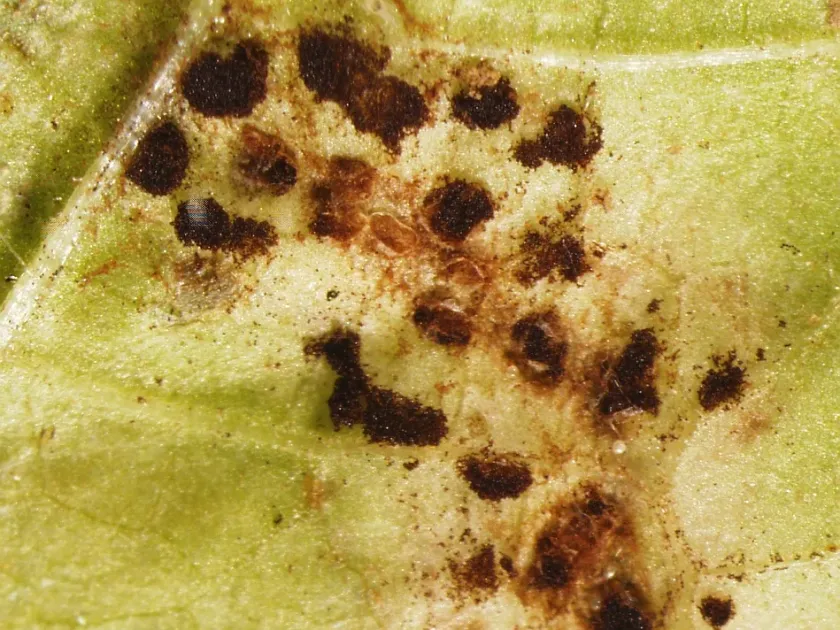
The most distinctive symptoms are the small, rust-colored, powdery pustules (uredinia) that develop on the underside of the leaves. These often appear as scattered lesions initially.
As the infection progresses, the pustules rupture the leaf epidermis, releasing millions of spores that appear as a yellow-to-brown dust on the leaf surface.
Affected leaves often show signs of chlorosis, followed by premature necrosis and senescence. Severe cases lead to significant leaf drop, which weakens the entire plant structure.
Lesions can also appear on stems and petioles, which can cause structural weakness and disrupt the translocation of water and nutrients to the fruit and pods.
During the late season, pustules may turn darker as the fungus produces teliospores, giving the infected parts a black, crusty appearance.
Pathogen
The causal agent of this disease is the obligate parasite Uromyces mucunae, which belongs to the class of Basidiomycetes. This fungus specifically targets plants within the Mucuna genus.
The life cycle of the pathogen involves multiple spore stages, ensuring its survival and rapid dissemination throughout the growing season. It thrives by extracting nutrients directly from the host plant's tissues.
Infection primarily occurs when spores land on leaf surfaces and enter through natural openings such as stomata. Once inside, the fungal mycelium colonizes the intracellular spaces.
Uromyces mucunae can persist on crop debris, making it a recurring challenge in fields where legumes are grown repeatedly without proper sanitation.
As a typical rust fungus, it produces urediniospores for rapid spread and teliospores, which often serve as the overwintering stage for the pathogen.
Conditions for development
Mucuna rust development is heavily dependent on moisture and humidity. High relative humidity and the presence of free water on foliage from dew or rain are essential for spore germination.
The optimal temperature range for the pathogen's activity is between 18°C and 25°C, making it particularly troublesome in tropical and subtropical climates.
Dense planting patterns that restrict airflow create a stagnant microclimate within the canopy, which encourages the rapid spread of the disease.
Poorly drained soils or excessive overhead irrigation can also increase the duration of leaf wetness, thereby facilitating higher infection rates.
The pathogen is highly effective at spreading via wind currents, allowing it to move quickly between plants and adjacent fields under favorable weather conditions.
Why it matters
The primary damage is caused by the loss of photosynthetic area, which significantly reduces the plant's ability to produce energy and sustain vegetative growth.
A heavy infestation leads to a reduction in pod count and seed quality, resulting in substantial yield losses for the grower.
Plants affected by rust become more susceptible to secondary invaders, including opportunistic bacteria and insects that target stressed plant tissues.
If the infection occurs early in the season, it can stunt the development of the entire crop, sometimes leading to complete crop failure in highly susceptible varieties.
The aesthetic and commercial value of the crop is often ruined by the presence of rust pustules, especially in legumes intended for fresh market or ornamental use.
Protection
Integrated management begins with selecting high-quality seeds and practicing strict crop rotation to avoid the buildup of soil-borne inoculum.
Field sanitation is critical; removing and destroying crop residues immediately after harvest can significantly reduce the amount of pathogen present for the next cycle.
When the disease threshold is reached, chemical intervention with systemic fungicides—such as triazoles or strobilurins—is the most reliable method for stopping further spread.
- Maintain adequate plant spacing to improve canopy airflow.
- Implement balanced fertilization to avoid excess nitrogen.
- Regular field monitoring for early detection of initial symptoms.
- Use of resistant or tolerant cultivars where such options are available.
Biological control agents, such as specific mycoparasites, are being researched as potential supplements or alternatives to synthetic chemicals in integrated pest management programs.
Discussion
No discussions yet — be the first.