
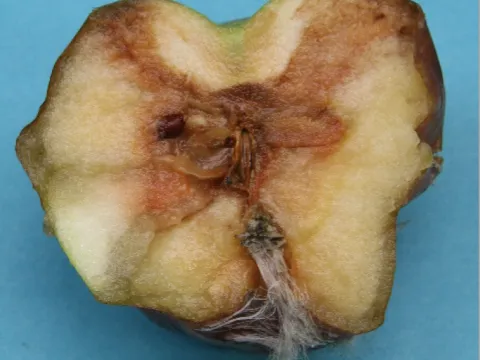
Mucor saturninus
Mucor saturninus
Mucor saturninus is a species of mold fungus belonging to the order Mucorales. As a soil-borne saprotroph, it can occasionally exhibit facultative parasitic behavior, colonizing plant tissues and agricultural products during post-harvest storage.
What the section contains
Mucor saturninus
This fungus is characterized by rapid mycelial growth, forming dense, fluffy mats that often display a greyish or bluish hue. Reproduction occurs primarily through the production of sporangia, which release vast numbers of spores that are easily disseminated by air currents.
Biologically, the species possesses high enzymatic activity, allowing it to efficiently degrade organic matter. This capability makes it a formidable colonizer of weakened or decaying plant parts, as it quickly accesses nutrients released by degrading cells.
In a phytopathological context, Mucor saturninus often functions as a secondary invader. It frequently gains entry into healthy tissues through pre-existing wounds, frost damage, or areas previously affected by primary pathogens or insect pests.
The genetic plasticity of Mucor saturninus allows it to survive in diverse ecological niches, including low-temperature environments, which complicates management efforts both in field and storage conditions.
The development of the fungus is strictly dependent on high moisture levels. Relative humidity between 70% and 95% is optimal for mycelial expansion and massive spore production, making poor storage ventilation a primary risk factor.
While the fungus thrives at temperatures between +15°C and +25°C, it exhibits significant cold tolerance. It can continue to develop slowly even in cold storage, which makes it a persistent threat to perishable goods stored through winter.
In agricultural settings, crowded plantings and inadequate airflow in crop canopies create localized microclimates with high moisture, favoring the infection process.
Unincorporated crop residues left in the field act as primary reservoirs for the fungus. These residues support the survival of the pathogen through dormant periods, allowing for re-infection of new crops during the subsequent growing season.
Mechanical damage to fruit, vegetables, or roots during harvest or handling provides the necessary entry points for rapid infection, significantly increasing the likelihood of outbreaks in storage batches.
The primary harm is the rapid decomposition of plant tissues, which renders produce unmarketable and causes significant economic losses. The infected tissues soften and turn into a pulpy, foul-smelling mass.
When seeds are infected, germination rates decrease significantly, leading to poor crop stands and the necessity for replanting. Seedlings that emerge often suffer from damping-off, leading to total loss of individual plants.
In storage facilities, Mucor saturninus can cause catastrophic losses. Once established, the fungus spreads rapidly, and a single infected item can contaminate an entire crate or shipment within a short timeframe.
The production of secondary metabolites by the fungus can potentially degrade the quality and safety of agricultural goods, making them unsuitable for animal feed or human consumption due to potential toxicity or off-flavors.
Economic impact is compounded by the labor-intensive costs of sorting, culling damaged goods, and the logistical challenges of maintaining high-quality storage conditions to prevent rapid fungal spread.
Effective control focuses on integrated management strategies, primarily maintaining proper moisture levels in storage and field environments. Regular sanitation and disinfection of storage facilities are essential to reduce the inoculum load.
Proper harvest handling is critical; ensuring produce is dry, free of soil, and handled with care to minimize physical bruising prevents Mucor saturninus from gaining easy access to tissues.
Crop rotation and the cultivation of resistant or tolerant varieties help lower the baseline pressure of the pathogen in the soil. Removing crop residues prevents the fungus from overwintering.
- Maintain optimal airflow and low humidity in all storage units.
- Strictly cull any bruised or damaged fruits prior to long-term storage.
- Apply preventive fungicides to seeds where appropriate to ensure healthy germination.
- Manage field pests to minimize physical damage to crops.
- Keep fields free of debris to disrupt the lifecycle of the pathogen.
When weather forecasts indicate extended periods of high humidity during the pre-harvest phase, preventive field treatments may be necessary to protect the yield quality before storage.