
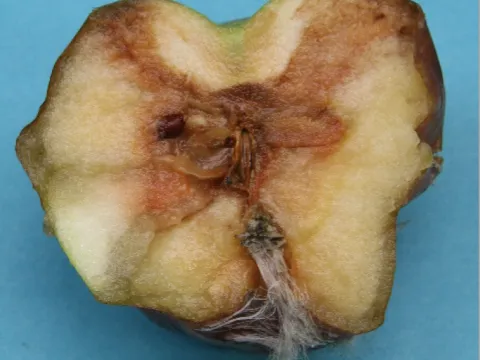
Mucor rot
Mucor racemosus
The causative agent of this disease is the microscopic fungus Mucor racemosus, a member of the Zygomycota phylum. It is a common soil-borne mold that typically acts as a saprophyte but can easily become an opportunistic pathogen.
What the section contains
Mucor rot
The fungus develops an abundant, filamentous mycelium that is initially white but turns grayish or brownish as sporangia develop. It is known for its ability to adapt its growth form according to environmental conditions.
Reproduction occurs through spores, which are easily disseminated by air currents, water splashes, and insects. The rapid germination of these spores allows the fungus to colonize organic substrates within hours.
As a facultative parasite, the pathogen can survive for long periods in the soil or on decaying plant material. It remains viable even in the absence of a host plant, waiting for suitable conditions to thrive.
Mucor primarily targets weakened tissues, plants with mechanical damage, or seeds with compromised integuments. When a plant's immune system is stressed, it becomes highly susceptible to infection.
The first signs of Mucor infection include a fluffy, cotton-like growth on the surface of seeds, fruits, or plant tissues. Initially white, the mold turns greyish as it produces spore-bearing structures.
In seeds, the infection causes a distinct "moldy" appearance and a stale, musty odor. The embryo is typically killed, leading to seed decay and failure to germinate.
In fruits and vegetables, the disease manifests as a soft, watery rot. Affected tissues lose their firmness rapidly, turning into an amorphous, mushy mass that is completely unmarketable.
Microscopic examination or close inspection reveals numerous sporangiophores with tiny, dark, globe-shaped sporangia. These structures are the defining characteristic of the Mucor genus.
Seedlings infected by the fungus exhibit damping-off symptoms. The base of the stem becomes soft and discolored, causing the young plant to collapse and die rapidly.
High relative humidity (above 70-80%) is the primary catalyst for the development of Mucor racemosus. Stagnant air and waterlogged soil create an ideal environment for rapid mold growth.
The optimal temperature range for the fungus is between 20°C and 28°C. However, it is highly adaptable and can grow even at lower temperatures, making it a significant issue in cold storage.
The presence of decomposing organic matter in the soil promotes the buildup of fungal inoculum. Uncomposted manure or organic debris serves as a primary source for the initial infection.
Inadequate ventilation in greenhouses and storage facilities significantly increases the risk of outbreaks. Dense plant spacing prevents airflow, leading to moisture accumulation in the canopy or root zone.
Mechanical injuries caused by insect pests or harvesting tools provide easy entry points for the fungus. Failure to properly treat seeds or sanitize equipment further exacerbates the spread.
The primary damage caused by Mucor is the severe reduction in seed germination rates. Infested seeds often decay before they can sprout, leading to poor crop stands.
Post-harvest, the fungus can destroy entire batches of produce in a very short time. Due to the rapid spore dispersal, one infected fruit can contaminate an entire crate of healthy produce.
The quality of agricultural products is drastically reduced, as the rot renders food unsafe or unappealing. This leads to direct financial losses for farmers and retailers alike.
Early-stage infections in seedlings result in poor plant vigor and increased reliance on chemical interventions. The need for replanting adds labor and input costs to the production cycle.
Economic damage is further compounded by the loss of shelf life for perishable goods. Products infected with Mucor often fail quality control standards, resulting in discarded inventory.
Effective management begins with good agricultural practices, such as crop rotation, thorough removal of plant debris, and deep plowing to reduce soil inoculum levels.
Seed treatment with systemic fungicides is a crucial step to protect the young embryo from soil-borne pathogens. This provides a vital protective barrier during the critical germination phase.
Maintaining strict environmental control in greenhouses and storage rooms is essential. Proper ventilation and humidity management are the most effective non-chemical deterrents against mold.
Fungicidal applications are necessary if environmental conditions favor disease development. It is vital to intervene early to prevent the formation of massive amounts of spores.
- Select high-quality, treated seeds for planting.
- Ensure adequate plant spacing to promote airflow.
- Sanitize storage facilities and tools regularly.
- Promptly remove and destroy infected plant parts.
- Control insects to minimize physical wounds on tissues.