
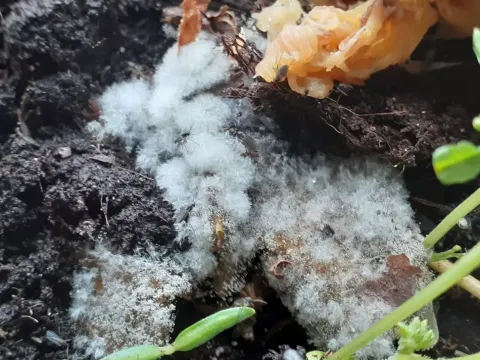
Mucor circinelloides
Mucor circinelloides
Mucor circinelloides is a micro-fungus belonging to the Zygomycetes class, widely recognized as a major cause of post-harvest rot.
What the section contains
Mucor circinelloides
This fungus typically acts as a saprophyte on decaying organic matter but can readily switch to a parasitic phase, infecting healthy plant tissues under stress.
The fungus produces a fast-growing, dense mycelium that forms a characteristic fluffy, white-to-grey mold often described as "pin-mold".
Propagation is primarily through the production of massive quantities of spores within sporangia, which are easily disseminated by air currents.
The pathogen secretes potent enzymes that effectively break down plant cell walls and middle lamellae, leading to rapid tissue maceration.
The primary symptom is the emergence of a lush, cotton-like mycelial growth on the surface of fruits, vegetables, or stored grains.
As spores mature, the white mycelium often darkens, giving the surface a speckled or dusty appearance due to the darkening sporangia.
Infected tissues quickly lose structural integrity, turning into a soft, mushy, and watery mass that is often prone to secondary bacterial infection.
Unlike some specific plant diseases, Mucor rot spreads rapidly across the surface, often covering the entire host in a matter of days.
A distinct, often unpleasant musty odor accompanies the decay, which serves as a reliable field sign for detecting the presence of the pathogen.
High relative humidity, typically above 85 to 90 percent, is the primary environmental requirement for the successful infection and colonization by the fungus.
The optimal temperature range for rapid mycelial development is between 20 and 25 degrees Celsius, although growth can occur at lower temperatures.
Poor ventilation within storage facilities allows for the accumulation of moisture on produce surfaces, facilitating spore germination.
Mechanical damage, such as punctures, bruises, or cracks caused during harvesting and sorting, provides direct entry points for fungal hyphae.
Weakened plant health, often due to over-ripeness or pre-existing injuries, makes the crop significantly more susceptible to this opportunistic pathogen.
The most significant impact of Mucor circinelloides is the widespread destruction of stored produce, leading to substantial economic losses for growers.
It affects a vast range of commodities, including berries, stone fruits, root vegetables, and various grain products stored in silos.
The speed of infection is a major concern; a small outbreak can quickly contaminate an entire bin or warehouse if conditions are not corrected.
Besides physical destruction, the fungus compromises the marketability and safety of the food, making it unsuitable for human consumption or processing.
Managing this disease is particularly challenging due to the ease with which spores move through ventilation systems and human handling.
Effective management begins with maintaining strict control over temperature and relative humidity within all storage environments.
Sanitation is crucial; regular cleaning and disinfection of crates, equipment, and storage bays are necessary to reduce the fungal inoculum.
Careful handling during harvest is essential to minimize mechanical wounding, as intact skins provide a strong physical barrier against infection.
Rapid cooling of harvested produce and maintaining a dry environment prevents the germination of airborne spores that may be present.
Sorting out damaged or infected fruit immediately upon harvest is an effective way to prevent the disease from spreading to healthy parts of the batch.