
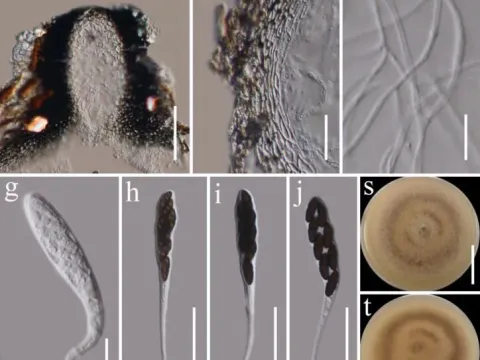
Montagnula donacina
Montagnula donacina
The disease is caused by the ascomycete fungus Montagnula donacina, which belongs to the order Pleosporales and is known to infect various herbaceous plants.
What the section contains
Montagnula donacina
This pathogen acts primarily as a facultative parasite, colonizing tissues that have been weakened by environmental stress or secondary infection from other organisms.
The life cycle involves the formation of perithecia containing spores, which serve as the primary inoculum for spreading the fungus to healthy host tissues.
As a resilient organism, Montagnula donacina can persist for extended periods in dead plant debris, ensuring its survival during unfavorable seasons.
The fungus effectively utilizes saprophytic pathways, allowing it to maintain its presence in the field environment until conditions favor active parasitism.
Initial symptoms are characterized by necrotic spots on stems and foliage, which gradually expand and darken as the fungal infection progresses through the tissue.
Small, dark fruiting bodies appear on the surface of the lesions; these serve as clear diagnostic markers of the presence of the pathogen within the plant structures.
Affected plants often show premature yellowing or wilting, reflecting the disruption of the vascular system caused by the colonization of the fungus.
The infected stems lose their structural integrity, becoming brittle and prone to snapping, which severely compromises the overall vitality of the crop.
In high humidity, visible mycelial growth may be observed on the necrotic areas, indicating active reproduction and the release of new spores into the environment.
High moisture levels and prolonged leaf wetness are essential for the germination of Montagnula donacina spores and the infection of host tissues.
Optimal development usually occurs in moderate temperatures, allowing the pathogen to thrive in standard field conditions during active vegetation periods.
Densely planted crops that lack adequate airflow create a favorable microclimate for the rapid multiplication of the fungus, leading to localized outbreaks.
Mechanical injuries to the plant, whether caused by agricultural tools or insect activity, provide entry points that significantly accelerate the colonization process.
Continuous monoculture systems promote the buildup of fungal spores in the soil and on crop debris, making subsequent seasons increasingly susceptible to infection.
The main impact of Montagnula donacina is the reduction of crop yield due to the inhibition of essential physiological processes like photosynthesis and nutrient transport.
The disease leads to a decrease in the quality of the harvest, as the plant's inability to fully mature its seeds or fruits due to stem damage results in smaller, lower-quality produce.
Stem weakness caused by the infection makes crops susceptible to lodging, which complicates mechanical harvesting and leads to significant yield losses in the field.
Persistent infection in the field creates a chronic disease pressure that necessitates intensive management and reduces the long-term profitability of the land.
Beyond individual crop losses, the spread of this pathogen can lead to increased expenditures on fungicides and other protective measures required to contain the damage.
Sanitation is a cornerstone of control; burying or destroying plant debris after harvest effectively removes the primary source of the overwintering pathogen.
Implementing strict crop rotation schedules helps to break the life cycle of Montagnula donacina by denying it a suitable host for successive seasons.
Judicious use of fungicides can be employed when monitoring confirms a high risk of infection, focusing on protecting vulnerable developmental stages of the crop.
Choosing resistant or tolerant plant varieties provides a proactive defense, significantly reducing the likelihood and severity of an outbreak in the field.
Optimizing plant spacing and nutrient management promotes a vigorous crop stand, which is better equipped to resist infection and survive potential pathogen pressure.