
Monilia
Monilinia
The disease is caused by fungi belonging to the Monilinia genus, most notably Monilinia fructigena and Monilinia laxa. These pathogens are ascomycete fungi known to survive in infected plant tissues.
What the section contains
Monilia
The fungus overwinters as mycelium within mummified fruits hanging on branches, as well as in cankers on twigs and branches. It can remain viable for several seasons under favorable conditions.
Monilia primarily affects rosaceous crops, including apples, pears, peaches, cherries, plums, and apricots. It is one of the most significant threats to stone and pome fruits globally.
The fungus spreads via conidia, which are disseminated by wind, rain, and insects. It infects plants through wounds, natural openings, or directly through the surface of developing fruit.
The biological cycle of the pathogen is highly dependent on climate. Under optimal conditions, the fungus produces secondary spores rapidly, allowing for multiple infection cycles within one season.
The disease manifests in two primary forms: blossom blight and brown rot. Blossom blight occurs early in the season, causing flowers and young shoots to wilt and turn brown suddenly.
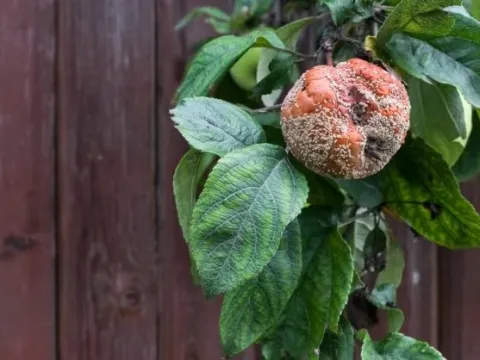
Brown rot typically affects the fruit as it matures. Small circular brown spots appear, which rapidly expand to cover the entire fruit surface as the fungus consumes the tissue.
Clusters of grey or tan fungal pustules often appear on the surface of rotting fruit in concentric rings. These are the fruiting bodies of the fungus, producing millions of spores.
As the rot progresses, the fruit dehydrates and becomes hard, shriveled, and black. These "mummies" are highly infectious and often remain attached to the tree during the dormant season.
Twig cankers may form at the site of infection, especially on stone fruits. This often leads to gumming (gummosis) and the dieback of branches distal to the infected area.
High humidity and moisture are the most critical factors for Monilia infection. Periods of rainfall, persistent morning dew, or fog during the flowering stage trigger severe blossom blight.
Temperature plays a crucial role in development; while the fungus can grow across a wide range, temperatures between 15°C and 25°C are optimal for the rapid spread of brown rot.
Poor orchard sanitation, such as failing to remove infected mummified fruit, ensures that the primary inoculum remains in the orchard to initiate new infections the following spring.
Dense canopy structures that restrict airflow and sunlight penetration keep the foliage and fruit moist for longer periods, creating a microclimate perfect for fungal colonization.
Insect damage is a major facilitator of the disease. Pests that bite or bore into fruit break the skin, providing easy entry points for fungal spores that would otherwise not be able to penetrate.
The economic impact of Monilia is severe, with potential yield losses ranging from significant damage to total crop failure in susceptible varieties under wet conditions.
Beyond fruit loss, the disease weakens trees by causing chronic dieback of twigs and branches, which reduces the photosynthetic area and overall tree vigor over several years.
Post-harvest losses are substantial, as infected fruit can contaminate healthy ones during storage and transportation, potentially ruining an entire harvest batch.
The necessity for frequent fungicide applications increases the cost of production, while the presence of the disease decreases the quality and market value of the remaining fruit.
Repeated infections can lead to the need for drastic pruning to remove diseased wood, which disrupts the growth habit and productivity of the orchard for the long term.
Sanitation is the cornerstone of Monilia management. It is essential to remove and destroy all mummified fruits and prune away infected twigs to reduce the level of primary inoculum.
Proper canopy management, including regular pruning, is necessary to improve air circulation and sunlight exposure, thereby discouraging the development of high-humidity microclimates.
Fungicide programs should be timed strategically, focusing on the critical phases of bud burst, full bloom, and fruit maturation to protect sensitive tissues from infection.
- Use copper-based products during the dormant stage to suppress spore production.
- Apply systemic fungicides, such as triazoles or strobilurins, during the growing season.
- Manage orchard pests effectively to minimize fruit wounding.
Post-harvest care involves handling fruit with extreme care to avoid bruises and storing them under strict temperature and humidity controls to inhibit further rot development.