
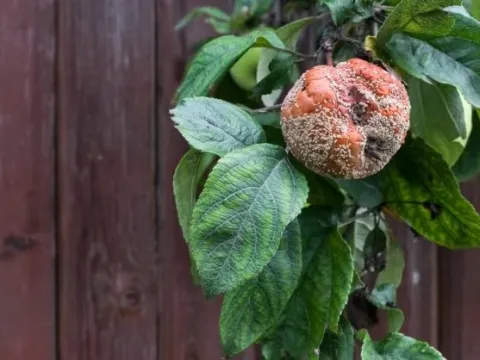
Monilia blight
Boletus clavipes
Monilia blight is caused by pathogenic fungi belonging to the genus Monilinia, specifically Monilinia fructigena and Monilinia laxa, which are highly destructive to fruit crops.
What the section contains
Monilia blight
The fungus overwinters as mycelium within mummified fruits and infected branches, which serve as the primary source of inoculum for the next spring season.
Once conditions become favorable, the fungus produces conidia, which are disseminated by wind, rainwater splashes, and pollinating insects to healthy plant parts.
Infection primarily occurs through the stigma of flowers or via wounds in the bark of young shoots, allowing the fungal hyphae to penetrate deeper into plant tissues.
The fungus produces toxic metabolites that lead to rapid cell death, causing the characteristic necrotic symptoms associated with the disease.
The most prominent sign of Monilia blight is the sudden wilting and drying of blossoms and young shoots shortly after the flowering period.
Affected plant parts turn brown or black, resembling tissue damaged by fire, which is why the disease is commonly known as blossom wilt or fire blight.
During the fruit-bearing stage, the pathogen causes brown rot, characterized by circular, concentric arrangements of grey or yellow spores on the fruit surface.
Infected fruits eventually shrivel, harden into "mummies," and may persist on the branches, remaining attached throughout the winter months.
Exudation of gum on branches is another common sign, occurring as the plant attempts to seal off the localized fungal infection in the woody tissue.
Cool and wet weather during the flowering stage is the most critical environmental condition that facilitates the rapid spread of the disease.
High relative humidity levels exceeding 70-80% provide the necessary moisture for fungal spores to germinate and infect vulnerable plant tissues.
Poor orchard hygiene, characterized by dense, unpruned canopies, restricts air circulation and keeps the plant foliage wet for longer periods.
Mechanical damage to the bark caused by hail, heavy wind, or pruning tools creates entry points that significantly increase the susceptibility of the tree.
Increased populations of insects can significantly enhance the rate of disease transmission by carrying spores between blossoms and fruit clusters.
Monilia blight is economically devastating, often resulting in significant yield losses, potentially exceeding 80% if environmental conditions favor the pathogen.
Repeated infections weaken the structural integrity of trees, reducing their vigor and making them more susceptible to other pests and diseases.
The disease renders fruits completely unmarketable and creates significant challenges for post-harvest storage due to the persistence of fungal spores.
Loss of blossoms directly reduces the potential crop load, impacting both the immediate harvest and the long-term productivity of the orchard.
Severely blighted trees may exhibit reduced growth and dieback of major branches, often requiring extensive and corrective pruning measures.
Sanitation is the cornerstone of control, involving the immediate removal and destruction of all infected shoots and mummified fruits from the orchard.
Applying copper-based fungicides in the early spring before bud break helps eliminate the overwintering fungal spores on the tree bark.
During the growing season, strategic applications of systemic fungicides are essential to protect blossoms and developing fruits from infection.
Proper pruning techniques should be employed to open the canopy, allowing sunlight and air to reach the inner branches and reducing humidity levels.
- Managing insect populations to prevent the spread of spores.
- Maintaining optimal tree health through balanced fertilization and irrigation.
- Using resistant cultivars when establishing new orchard blocks.