
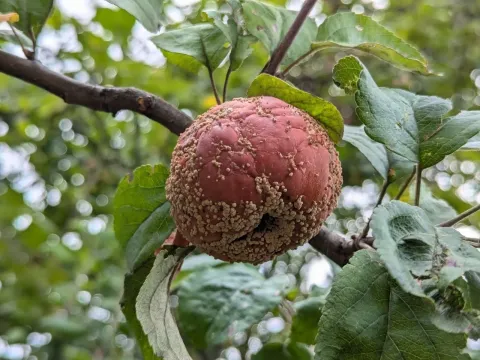
Monilinia fructigena
Monilinia fructigena
Monilinia fructigena is a fungus of the family Sclerotiniaceae, responsible for brown rot in many pome and stone fruit species. It is a highly destructive pathogen that can devastate fruit yields.
What the section contains
Monilinia fructigena
The pathogen overwinters as mycelium within mummified fruits that remain on the tree or fallen on the ground, as well as in infected twigs and bark fissures.
In spring, as temperatures rise, the fungus produces conidia. These spores are disseminated by wind, rain, and insects, landing on flowers and young shoots, initiating the infection cycle.
The life cycle of Monilinia fructigena is characterized by two distinct phases: the blossom blight phase, which affects flowers and twigs, and the fruit rot phase, which targets developing fruits.
The fungus is highly resilient and thrives in diverse environmental conditions, making it one of the most persistent and problematic pathogens in commercial and private orchards worldwide.
The initial symptom of infection in spring is blossom blight, where flowers suddenly wilt, turn brown, and wither, often remaining attached to the spurs rather than falling off.
The infection progresses rapidly into the twigs and small branches, causing them to die back. In some stone fruit species, this process is accompanied by significant gumming on the bark surface.
On fruits, the disease typically begins as a small, circular brown spot that expands rapidly. The flesh of the fruit softens and turns dark brown, eventually leading to a complete breakdown of the tissue.
A hallmark sign of the infection is the development of greyish-tan spore pustules on the fruit surface, often arranged in concentric circles. These masses of conidia are easily spread to nearby healthy fruits.
Eventually, the affected fruits shrivel, harden, and become dark, wrinkled "mummies." These mummies are primary sources of inoculum that can sustain the disease in the orchard for subsequent years.
High humidity and moderate temperatures ranging from 15°C to 20°C are the primary drivers for the germination and infection processes of Monilinia fructigena.
Frequent rainfall and prolonged periods of leaf wetness during the bloom period create an ideal microclimate for the spores to penetrate the blossoms and initiate blossom blight.
Orchards with dense, unpruned canopies that restrict airflow are at a much higher risk, as these environments maintain moisture levels for longer periods after rain.
Physical injuries to the fruit skin, caused by hail, birds, or insects such as the codling moth, provide direct entry points for the fungal mycelium, often leading to severe rot outbreaks.
Poor orchard sanitation, such as leaving rotted fruit on the ground or failing to remove mummified fruit from the branches, drastically increases the spore load for the following season.
The economic impact of brown rot is substantial, as it affects a wide range of fruit crops including apples, pears, plums, peaches, cherries, and apricots.
The direct loss of yield is significant, with infected fruits becoming completely inedible. In favorable conditions for the fungus, it can cause total loss of the fruit crop before harvest.
In addition to yield loss, the disease impairs the health of the trees. Repeated attacks of blossom blight and shoot dieback can weaken the trees, reducing their vigor and overall productivity.
Post-harvest losses are also a major concern, as even slightly infected fruits can continue to decay in storage, spreading the rot to healthy fruits in proximity.
The costs associated with repeated fungicide applications and intensive labor for orchard sanitation make brown rot management a major expense for fruit growers.
Integrated management begins with rigorous orchard sanitation, focusing on the removal and destruction of all mummified fruits and infected twigs during the dormant season.
Strategic pruning is essential to improve airflow and sunlight penetration into the canopy, which helps to reduce the duration of leaf wetness and creates a less favorable environment for the fungus.
Chemical control usually involves the application of fungicides during the critical stages: bloom, early fruit development, and shortly before harvest to prevent post-harvest rot.
Managing insect pests is critical, as controlling insects that damage fruit skins significantly reduces the opportunity for fungal infection through mechanical wounds.
- Remove all mummified fruits from trees and the orchard floor.
- Prune out infected branches during dry weather conditions.
- Control insects that cause fruit damage to reduce entry points.
- Use copper-based sprays during the dormant season for hygiene.
- Rotate different fungicide classes to prevent resistance development.