
Monilochaetes
Monilochaetes
The disease is caused by the soil-borne fungus Monilochaetes infuscans, which primarily targets the epidermal tissues of sweet potato roots.
What the section contains
Monilochaetes
The pathogen is a hyphomycete that survives in the soil and on crop residues for several years through the production of dormant resting structures.
It colonizes the skin of the storage root without causing extensive rot, but its impact is highly visible and economically significant.
The fungus spreads via conidia which can be transported by water, soil movement, or contact with infected tubers during harvest and storage.
Its biological cycle is strictly dependent on the moisture availability in the top layer of the soil where the tubers develop.
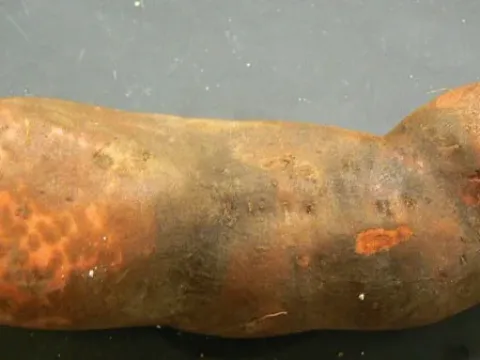
The most recognizable symptom is the development of brown or blackish spots on the surface of the storage roots, commonly known as scurf.
These spots are typically superficial and vary in size, often merging together to discolor large areas of the sweet potato root.
The infected skin may appear slightly roughened, but the flesh beneath the spot usually remains firm and healthy to the touch.
Under humid conditions, the lesions may show a thin, dark fungal growth consisting of conidiophores and spores, though it is often microscopic.
Unlike soft rots, the internal tissue is not damaged, but the dark staining makes the produce visually unappealing for commercial use.
The disease thrives in moist, heavy soils where water drainage is poor and humidity remains high around the root zone.
Temperatures between 20°C and 25°C are considered optimal for the rapid growth and colonization of Monilochaetes infuscans.
Introduction of the fungus usually occurs via contaminated planting material or by planting in fields where the pathogen is already present.
High soil acidity can sometimes aggravate the incidence of the disease, making the roots more susceptible to the fungal infection.
Poor sanitization of storage facilities can also contribute to the spread of spores from infected tubers to healthy batches.
The primary damage caused by Monilochaetes is the loss of market value due to the unsightly dark lesions on the tubers.
Infected roots lose moisture faster than healthy ones, leading to dehydration and shriveling, which reduces the shelf life during storage.
Although the vegetable remains edible, its appearance often leads to its rejection by consumers and retailers, causing severe economic losses.
The disrupted surface can become a portal for secondary opportunistic pathogens that might lead to further storage rot.
Farmers face increased costs due to the need for more rigorous grading and the potential loss of entire harvests if the infection is severe.
The most effective strategy is the use of disease-free planting material, which prevents the fungus from being introduced to the farm.
Implementing a long-term crop rotation cycle helps reduce the fungal inoculum levels present in the soil over time.
Improving soil drainage and maintaining optimal soil aeration are critical for preventing the conditions that favor the pathogen.
Sanitation practices, including the removal and disposal of infected plant debris, are essential to break the cycle of infection.
Fungicide treatments of slips or storage roots before planting can protect the young crop during the early stages of root development.