
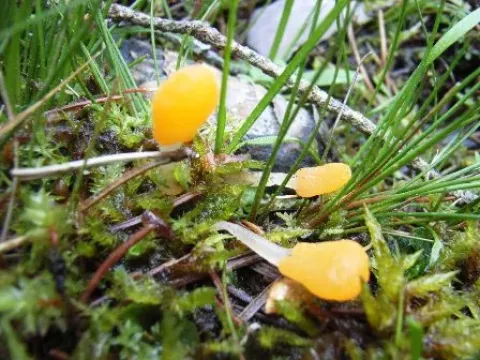
Mitrula
Mitrula
The disease is caused by the fungus Mitrula, with Mitrula paludosa being the most prominent species. It is an ascomycete fungus that thrives in damp environments, acting as a saprotroph but showing opportunistic pathogenic characteristics.
What the section contains
Mitrula
The fungus is classified within the order Helotiales. It is visually distinct due to its bright yellow or orange club-shaped fruiting bodies, which emerge from the substrate during the growth cycle.
It prefers habitats such as bogs, marshes, or saturated soil where plants are in contact with standing water or high moisture levels for extended periods.
The life cycle is moisture-dependent, relying on spores dispersed by water currents or contact between infected debris and healthy plant stems.
The mycelium penetrates the plant epidermis, leading to cellular degradation and tissue softening, which serves as a foundation for further colonization by the fungus.
The most visible symptom is the appearance of vibrant yellow or orange club-shaped fruiting structures on the stems or leaves of the affected plants.
Tissues at the site of infection typically become brown, mushy, and lose their structural integrity, which eventually leads to the decay of the affected plant part.
Early signs include a whitish or yellowish film on the surface of the stem, often appearing at the waterline in aquatic or semi-aquatic environments.
Plants affected by Mitrula show visible wilting, stunted growth, and a loss of turgor, as the vascular system struggles to maintain normal functions.
In advanced stages of the disease, the necrotic area spreads along the stem, resulting in the collapse of the plant and the death of individual leaves or shoots.
Excessive moisture is the primary condition required for the development of Mitrula. Standing water and saturated soil provide the necessary environment for the pathogen.
The fungus is most active in cool, temperate conditions, typically favoring temperatures between +10°C and +18°C, often appearing in early spring.
Accumulation of dead organic matter, such as fallen leaves or decaying vegetation, provides the initial energy source for the pathogen to establish itself.
Poor ventilation in dense plant clusters maintains the high humidity levels necessary for the fungus to fruit and release its spores effectively.
Agricultural practices that involve excessive irrigation or poor site drainage significantly increase the risk of an outbreak in a cultivated area.
The harm caused by Mitrula involves the structural breakdown of plant tissues, which disrupts nutrient and water transport within the plant.
For ornamental or aquatic gardens, the presence of the fungus ruins the aesthetic quality of the plants, rendering them unsuitable for decorative use.
In seedlings or sensitive crops, the disease can lead to damping-off, causing significant losses in plant population density.
Weakened plants become susceptible to secondary infections by other, more aggressive pathogens that exploit the damaged necrotic tissue.
The presence of Mitrula acts as a persistent source of inoculum, increasing the risk of spread throughout the entire cultivated area if conditions remain favorable.
Effective drainage management is the most critical control measure, as reducing stagnant water directly inhibits the pathogen's ability to survive.
Sanitation is essential; regularly removing decaying plant debris prevents the buildup of the fungus and eliminates its primary food source.
Ensuring proper spacing between plants improves airflow, which helps to keep leaf surfaces dry and reduces the likelihood of successful spore germination.
Promptly removing and destroying any infected plant material helps limit the dispersal of spores to neighboring healthy plants.
- Improve site drainage.
- Remove decaying organic matter.
- Maintain proper plant spacing.
- Monitor moisture levels closely.