
Mixiales
Mixiales
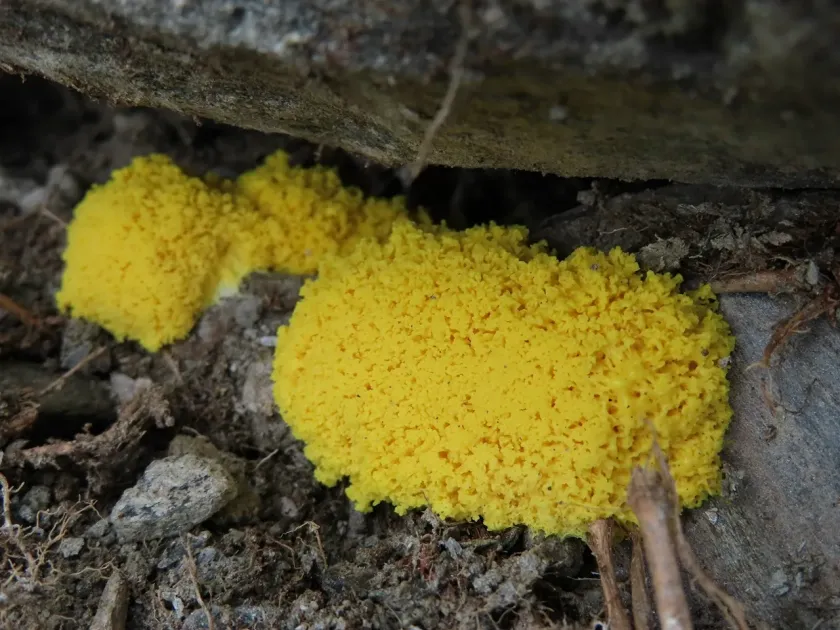
Description
Symptoms
The primary symptom of Mixiales infection is the presence of a slimy, often iridescent or white film covering the stems, leaves, or the base of the plant.
As the infection progresses, affected tissues show characteristic signs of yellowing or chlorosis, often mistaken for a nitrogen or micronutrient deficiency.
In humid conditions, the infected plant parts develop water-soaked lesions that soften the tissue and cause the plant to droop or lose its structural integrity.
When environmental moisture decreases, the slime dries out into a powdery, crust-like substance, which represents the matured spore-producing structures.
Severe infestations lead to premature senescence of leaves, inhibited growth, and eventual plant collapse as the plasmodium disrupts essential physiological processes.
Pathogen
Mixiales are a group of organisms often classified as slime molds (myxomycetes) that can behave as plant pathogens or saprotrophs, impacting the health of various crop species.
The disease is caused by these myxomycetes, which undergo a life cycle characterized by the formation of a plasmodium—a mobile, multinucleate mass of protoplasm.
These organisms are unique biological entities, sitting between protozoa and fungi, which makes their management in the field a complex agronomic challenge.
Transmission primarily occurs through the dispersal of spores by wind, water splashes, or contaminated agricultural equipment moving across the field.
Upon germination, amoeboid cells penetrate the plant tissues, primarily colonizing intercellular spaces and drawing nutrients from the host's living cells.
Conditions for development
High relative humidity, consistently above 85-90%, is the most critical environmental factor triggering the rapid development and spread of this disease.
Moderate temperatures ranging from 15 to 22 degrees Celsius create a perfect microclimate for the organism to transition from resting spores to active plasmodium.
Dense crop canopies that limit airflow and trap humidity are particularly susceptible to outbreaks, especially in fields with poor drainage characteristics.
Over-fertilization with nitrogenous fertilizers encourages excessive growth of soft, succulent plant tissues that are easily penetrated by the pathogen.
The presence of abundant crop residue in the field acts as a significant reservoir, allowing the organism to survive from one growing season to the next.
Why it matters
Mixiales cause damage by mechanically disrupting plant cells and extracting metabolic resources, which significantly reduces the plant's overall vitality.
The physical breakdown of tissues creates entry points for various opportunistic bacteria, which often leads to secondary soft rot infections.
Economic losses arise from decreased biomass production, poor seed quality, and reduced shelf-life of harvestable produce due to tissue degradation.
The overall yield potential can drop significantly, as the weakened plants are unable to sustain fruit or grain development under stress conditions.
For ornamental or high-value specialty crops, even minor infection can render the entire product commercially worthless due to aesthetic damage.
Protection
Effective management begins with proper field hygiene, including the complete removal and destruction of crop residues that harbor resting spores.
Crop rotation programs should be strictly followed, avoiding the replanting of highly susceptible species in the same field for multiple consecutive years.
Improving field drainage and adjusting planting density are crucial cultural practices to decrease the humidity levels within the crop canopy.
Chemical control involving fungicides with systemic activity can be applied upon early detection to stop the expansion of the plasmodial mass.
- Implementing regular field inspections to detect early symptoms.
- Balancing nutrient management to ensure hardy tissue development.
- Utilizing biocontrol agents that compete with or suppress myxomycete activity.
Discussion
No discussions yet — be the first.