
Melampsora rust
Melampsoraceae
The causative agents of this disease are fungi belonging to the Melampsoraceae family. They are known as rust fungi, characterized by complex life cycles that often involve alternating between two unrelated host plant species.
What the section contains
Melampsora rust
This disease primarily targets the tissues of leaves, young shoots, and bark. The fungus absorbs nutrients from the host's cells, severely disrupting vital metabolic processes and photosynthesis.
The life cycle of the pathogen includes several spore stages, such as urediniospores and teliospores. This biological diversity allows the fungus to survive and adapt to different seasonal conditions.
Melampsoraceae species are highly specialized, meaning they target specific types of woody and herbaceous plants. This host-specific nature dictates the patterns of disease spread in natural and cultivated landscapes.
Dissemination is facilitated by airborne spores. Under favorable conditions, these spores can travel long distances, leading to rapid infection across forests, nurseries, and orchards.
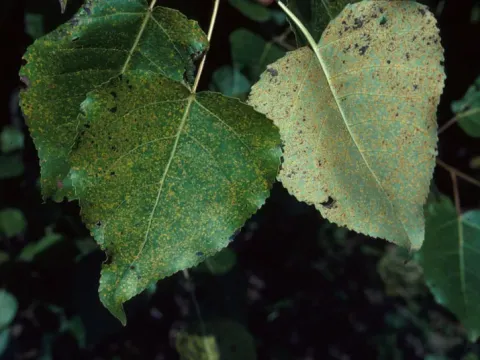
Early symptoms include the appearance of small, yellow to orange spots on the underside of leaves, which are concentrated masses of urediniospores. As the disease develops, these spots expand.
Advanced stages are marked by the presence of bright, rust-colored pustules that erupt through the leaf surface. This indicates active fungal growth and spore production.
Heavily infected trees often experience premature leaf yellowing and shedding, which can significantly defoliate the plant by mid-summer, weakening the tree's health.
Infection on young stems and trunks often results in bark cracking, swelling, or open lesions. Sometimes, resin exudation occurs at the sites of active fungal activity.
In coniferous hosts, the disease manifests as needle deformation, abnormal bending, or the formation of blister-like structures that eventually release powdery spores.
High humidity and mild temperatures are the primary drivers of disease development. The optimal range for spore germination is between 15 and 22 degrees Celsius.
Frequent fog, heavy morning dew, and persistent rainfall create ideal moisture levels for the fungus to thrive. These periods are typically associated with peak infection outbreaks.
Dense planting schemes that restrict airflow and reduce light penetration favor the pathogen. Poorly managed orchards with stagnant air are at a significantly higher risk.
The presence of alternate host plants in the immediate vicinity completes the fungus's reproductive cycle, leading to more frequent and severe infestations.
Failing to remove infected fallen leaves during the dormant season provides a critical reservoir for the pathogen, ensuring the cycle repeats in the spring.
Rust infection stunts growth and reduces the overall vigor of trees. It makes them more susceptible to secondary pests and various environmental stressors.
The reduction in leaf area due to premature shedding hampers the tree's ability to accumulate reserves for the winter, often leading to cold injury or dieback.
In ornamental trees and shrubs, the disease causes significant aesthetic damage, reducing the market value and suitability of the plants for landscaping purposes.
Seedlings in commercial nurseries can be decimated by chronic rust infections, leading to substantial economic losses for growers and forestry managers.
For fruit-bearing trees, the disease negatively impacts yields and fruit quality, often making the produce unsuitable for commercial sale.
Sanitation is the most effective preventative measure. Pruning and destroying infected branches and clearing leaf litter helps significantly reduce the primary spore load.
Chemical control involving fungicides, particularly those based on copper or modern systemic agents, is recommended. Preventive sprays should be applied during bud break.
Establishing spatial separation between different host species can disrupt the pathogen's life cycle, making it harder for the rust to propagate in the area.
Promoting tree health through balanced fertilization—especially with phosphorus and potassium—helps improve the tree's natural resistance to fungal pathogens.
- Maintain proper spacing to improve airflow and reduce humidity.
- Choose resistant cultivars or species when planning new plantings.
- Monitor trees regularly and initiate control measures at the first sign of infection.