
Melampsoridium rust
Melampsoridium
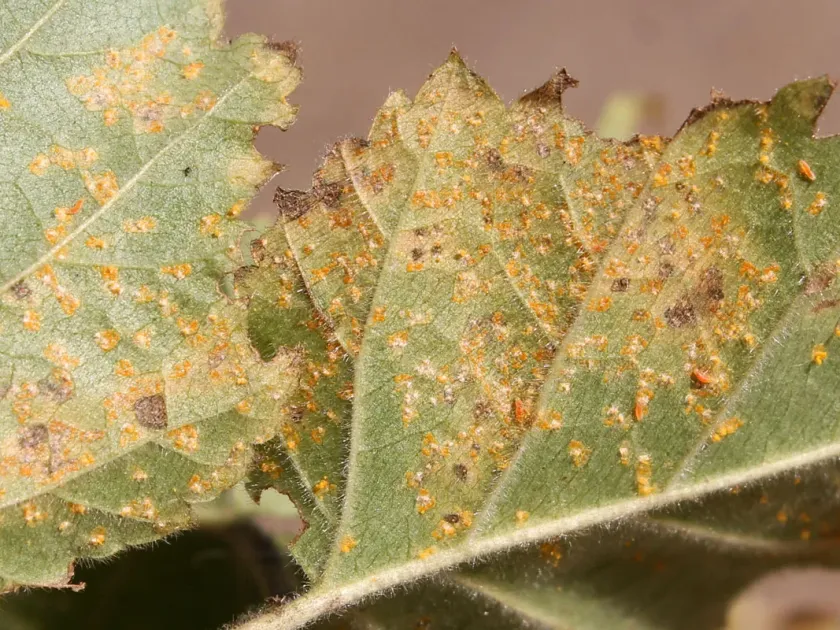
Description
Symptoms
The most visible signs of Melampsoridium rust appear in mid-summer on the underside of leaves. Tiny, bright yellow or orange pustules, known as uredinia, develop across the leaf surface.
Over time, these pustules can merge, creating a dusty, rusty-colored appearance. This condition can lead to the deformation of the leaves and the premature appearance of brown, necrotic tissue.
In late summer or early autumn, the symptoms shift as the fungus produces teliospores. These appear as darker, brownish-black pads on the leaf surface, indicating the fungus is transitioning to its overwintering stage.
Severe infestations cause massive premature leaf drop. While a healthy tree might lose some leaves, a heavy infection can lead to the tree becoming almost completely defoliated by late summer.
- Development of bright orange-yellow spots on the underside of leaves.
- Presence of powdery rust-colored pustules.
- Early onset of leaf yellowing and senescence.
- Premature shedding of foliage throughout the canopy.
- Development of dark overwintering structures on leaf surfaces.
Pathogen
Melampsoridium is a genus of rust fungi that causes significant leaf diseases in various forest trees. These pathogens are obligate biotrophs, meaning they survive by extracting nutrients directly from the host's living cells.
The most prominent species, Melampsoridium betulinum, specifically targets birch species, while Melampsoridium alni is primarily associated with alder. These fungi exhibit high host specificity, focusing their development on certain tree families.
The life cycle of these fungi is complex, involving multiple spore stages. They propagate through urediniospores during the growing season, which are wind-dispersed and facilitate rapid spread through forest stands.
The fungus spends the winter in the form of dormant spores or mycelium within fallen, decaying leaves. This debris acts as the primary reservoir for the infection to start again in the following spring.
As the infection progresses, the fungus redirects the host's metabolic energy to fuel its own sporulation, which eventually leads to the visible symptoms and damage observed on the foliage.
Conditions for development
Environmental conditions play a critical role in the outbreak of Melampsoridium. The fungus thrives in cool to moderate temperatures and high humidity, which are essential for spore germination.
Extended periods of rainfall or heavy morning dew are particularly conducive to the spread of the pathogen. These conditions provide the necessary surface moisture for spores to penetrate the leaf tissue.
Dense forest stands with poor air circulation create a microclimate that remains humid for longer periods, significantly increasing the risk of widespread infection.
Tree vigor is also a factor; trees growing in stressed environments, such as poor soil or those affected by drought, are generally more susceptible to rust infections than healthy, robust trees.
Wind patterns are the primary mechanism for long-distance dispersal of the pathogen, allowing spores to travel from infected areas to healthy stands across large distances.
Why it matters
The primary damage caused by Melampsoridium is the reduction of the leaf surface area available for photosynthesis. This depletion of energy production leads to significantly reduced growth rates.
Repeated annual infections weaken the overall vitality of the tree. This makes it difficult for trees to store sufficient carbohydrate reserves, leading to poor winter hardiness and increased mortality in cold weather.
In nursery settings, the infection can be devastating, causing severe stunting of seedlings and rendering them unsuitable for reforestation or commercial landscaping projects.
Beyond physical growth reduction, the disease severely detracts from the aesthetic quality of trees in parks and urban forests, often forcing the removal or intensive treatment of the trees.
Stressed trees are also more likely to be attacked by opportunistic secondary pests, such as borers, which exploit the weakened state of the host to cause further internal structural damage.
Protection
The most effective cultural practice for controlling this rust is the sanitation of the site. Collecting and burning or composting fallen leaves removes the primary inoculum source for the following season.
Management of stand density is essential to promote good air circulation within the canopy. Thinning trees helps lower the relative humidity, making the environment less favorable for fungal development.
In high-value areas such as nurseries or ornamental landscapes, fungicidal applications are often employed. Systemic fungicides, particularly those from the triazole family, provide effective control when applied at the first signs of disease.
Regular monitoring of the canopy during the early growing season allows for early detection of hotspots, enabling localized control efforts before the disease spreads throughout the entire forest or nursery.
When planning new plantings, selecting resistant cultivars or species is the most sustainable long-term strategy for minimizing the impact of Melampsoridium in future forestry initiatives.
Discussion
No discussions yet — be the first.