
Melanconium leaf spot of oil palm
Melanconium elaeidis
Description
Symptoms
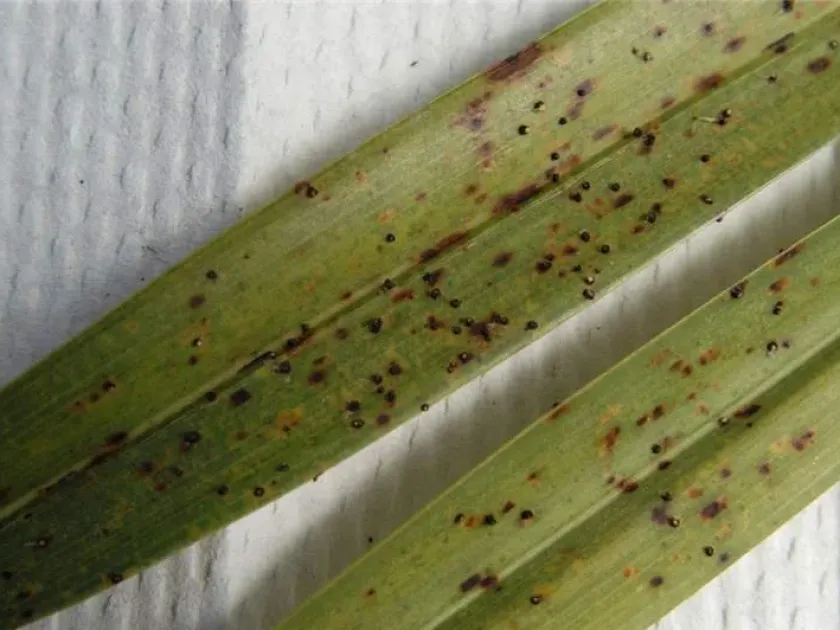
Symptoms typically begin with the appearance of small, yellowish spots on the leaflets. As the infection progresses, these spots expand into dark brown or black necrotic lesions.
A distinctive feature of this disease is the emergence of small black pustules on the necrotic tissue, which represent the fungal fruiting bodies erupting through the leaf surface.
The infection usually progresses from the older, lower leaves upwards. Heavily infected leaves may show chlorosis, premature wilting, and eventual death, leaving the palm with a sparse canopy.
Tissue in the affected areas often becomes brittle. In severe cases, the entire leaflet can wither, significantly reducing the tree's photosynthetic capacity.
- Chlorotic spots appearing on the leaflet surface.
- Dark necrotic lesions expanding over time.
- Development of black fungal pustules (spore-bearing bodies).
- Premature leaf necrosis and shedding.
- General yellowing and canopy thinning.
Pathogen
The causal agent of this disease is the fungus Melanconium elaeidis (also known as Stilbosphora elaeidis). It is a pathogen characterized by the production of acervuli, small asexual fruiting bodies that develop beneath the plant epidermis.
The fungus is primarily a pathogen of stressed or weakened tissues, though it can survive as a saprophyte on decaying organic matter within the plantation environment.
Conidia (spores) are the main dispersal units. Under humid conditions, these spores are released from the acervuli and spread through wind and rain splash to infect new, healthy tissues.
The pathogen thrives in high-moisture environments, allowing it to complete its infection cycle efficiently during the rainy seasons in tropical oil palm regions.
Research indicates that the mycelium of Melanconium elaeidis can persist for extended periods, making it difficult to eradicate completely once it has established a foothold in a plantation.
Conditions for development
High relative humidity and persistent rainfall are the primary environmental factors that promote the development and spread of Melanconium elaeidis.
Poor plantation management, such as excessive planting density, prevents airflow and keeps the canopy environment moist, providing ideal conditions for fungal spore germination.
Trees undergoing physiological stress due to poor soil fertility, drought, or insect infestation are significantly more susceptible to colonization by this fungus.
Mechanical damage caused by harvesting tools or pest activity acts as an entry point for the pathogen, allowing it to bypass the plant's natural protective barriers.
Temperature fluctuations in tropical climates rarely limit the fungus, meaning the disease remains a year-round concern for plantation managers in endemic areas.
Why it matters
The main impact of the disease is the reduction of the green leaf area, which limits the tree's ability to produce the sugars required for healthy growth and fruit development.
Affected oil palms exhibit reduced bunch weight and lower oil extraction rates, leading to significant economic losses for the plantation owner.
Chronic infections weaken the overall vigor of the palm, making it more vulnerable to secondary fungal attacks and pests, potentially leading to total tree failure.
The spread of the disease requires high labor costs for pruning, sanitation, and chemical intervention to protect the integrity of the oil palm stands.
Long-term harm includes the need for premature replanting of blocks where the disease has significantly impacted the productive lifespan of the palms.
Protection
Sanitation is the most effective management strategy. Regularly pruning and burning infected leaves is crucial to reducing the inoculum density within the plantation.
Proper agronomic practices, such as maintaining correct plant spacing, are essential to improve air circulation and reduce humidity levels in the canopy.
Balanced fertilization, particularly with potassium and magnesium, strengthens the palm's natural defenses, making it less prone to fungal infections.
When necessary, systemic fungicides can be applied to protect high-value stands, provided they are applied according to the manufacturer's guidelines for oil palm.
Strict hygiene protocols should be implemented for harvesting tools. Disinfecting blades between trees is vital to prevent the mechanical transmission of spores across the plantation.
Discussion
No discussions yet — be the first.