
Massospora cicadina
Massospora cicadina
Description
Symptoms
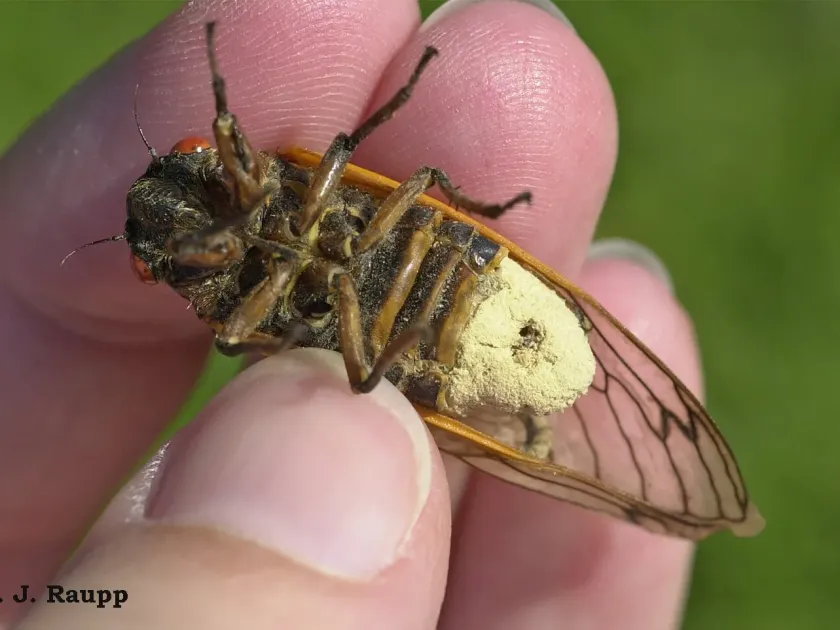
The most distinctive symptom of infection is the loss of the posterior abdominal segments, which are replaced by a visible mass of spores.
This fungal structure appears as a firm, chalk-white or yellowish plug that protrudes from the tip of the cicada's abdomen.
Infected insects exhibit altered behavior, often becoming hyper-active as the fungus manipulates them to increase spore dispersal.
Male cicadas infected with the fungus may mimic female mating calls to attract healthy individuals, facilitating the spread of spores.
Despite the severe physical damage and loss of internal organs, the cicadas remain mobile and continue to fly for a period during the infection.
Pathogen
Massospora cicadina is a specialized entomopathogenic fungus that specifically targets periodical cicadas of the genus Magicicada.
The fungus functions by infecting the insects during their emergence from the soil, where they encounter dormant spores.
Unlike common plant pathogens, it is entirely dependent on its insect host to complete its complex biological life cycle.
The fungus is perfectly adapted to the long 13-year or 17-year life cycles of its host, remaining dormant in the soil until the next emergence.
Once inside the cicada, the fungus proliferates, systematically replacing the insect's internal tissues with its own reproductive structures.
Conditions for development
The disease cycle is triggered when nymphs crawl out of the ground, exposing them to infective spores residing in the soil matrix.
High population densities of cicadas are critical for the fungus, as frequent physical interaction between individuals aids transmission.
Environmental factors such as ambient temperature and local humidity levels during the emergence period are key for spore germination.
The fungus exploits the synchronized emergence of periodical cicadas, allowing it to spread rapidly across the entire population.
Long-term survival of the fungus is ensured by the robust nature of its resting spores, which can persist in the soil for over a decade.
Why it matters
The primary impact of Massospora cicadina is the sterilization of the host, as the fungus destroys the reproductive organs of the cicada.
By preventing the insects from mating successfully, the fungus acts as a significant natural regulator of the cicada population size.
There is no direct harm to crops from this fungus, as it is strictly restricted to infecting and utilizing cicada species.
The ecological benefit includes the natural suppression of insect outbreaks, which might otherwise result in damage to hardwood trees.
The pathogen does not pose a threat to agricultural productivity, making it an object of biological interest rather than a pest control target.
Protection
No agricultural control measures are required for Massospora cicadina because it is not a threat to cultivated plants.
The fungus is considered a natural biocontrol agent that limits the population of cicadas without human intervention.
There are no chemical pesticides or fungicides intended for the eradication of this fungus in a professional agricultural setting.
Managing the impact of this fungus is unnecessary, as its presence is a part of the natural equilibrium of forest and orchard ecosystems.
Research focus remains purely on understanding the fungal mechanisms of behavioral manipulation in insects for scientific advancement.
Discussion
No discussions yet — be the first.