
Massospora
Massospora
Massospora is a genus of specialized entomopathogenic fungi belonging to the order Entomophthorales that primarily target cicada populations.
What the section contains
Massospora
Unlike standard crop pathogens, this fungus acts as a parasite that infects insects, replacing their internal organs with fungal hyphae.
The life cycle of the fungus is tightly synchronized with the emergence of periodical cicadas, allowing it to persist in the environment for years.
A distinctive feature of Massospora is its ability to manipulate the host's behavior to facilitate the spread of infectious spores to other members of the population.
Recent studies have identified that the fungus produces bioactive substances, including alkaloids, that alter the behavior of infected insects to maximize transmission.
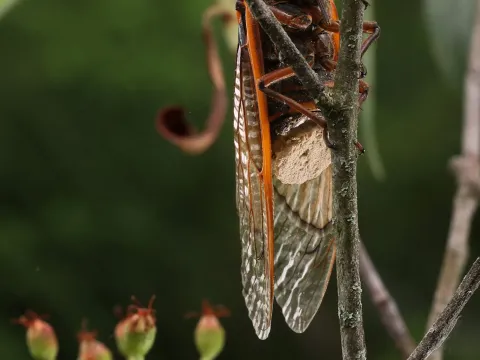
The most visible symptom of a Massospora infection is the degradation of the insect's abdomen, where the cuticle eventually detaches.
In the final stages of the infection, a prominent white or creamy plug of fungal spores is formed, which is easily observed on the cicada's posterior.
Infected insects often display strange behavior, such as male cicadas mimicking the mating calls of females to attract other males for infection.
Despite significant internal damage, the insects often remain active and mobile, which plays a crucial role in spreading the fungal spores within the colony.
The reproduction of the insect is effectively halted as the fungal mass occupies the space previously used for reproductive organs.
The spread of Massospora is heavily dependent on the density of the host population, with high insect concentrations fueling rapid outbreaks.
Environmental conditions such as temperature and humidity levels influence the germination rate of the spores when cicadas emerge from the soil.
The fungus can remain dormant in the soil for years, waiting for the next emergence of cicada nymphs, demonstrating high resilience in natural habitats.
Outbreaks are periodic, occurring in alignment with the life cycle of the host insects, leading to significant infection rates during emergence years.
The presence of suitable environmental cues ensures that the fungus synchronizes its development with the most vulnerable stages of the cicada life cycle.
The harm caused by Massospora is localized to the cicada population itself, significantly reducing the reproductive output of the infected insects.
For agricultural and forest ecosystems, this fungus is beneficial rather than harmful, as it acts as a natural biological control agent against cicadas.
By keeping cicada populations in check, the fungus reduces the amount of mechanical damage caused to trees and shrubs during the insect's egg-laying process.
The economic impact of the fungus is positive from an agricultural standpoint, as it provides a self-sustaining method of pest suppression.
There is no evidence that Massospora poses any direct threat to agricultural crops, as its specialization is strictly limited to insect hosts.
No control measures are necessary against Massospora, as it is considered a beneficial organism within integrated pest management strategies.
To support the natural suppression of cicada populations, farmers should avoid the indiscriminate use of broad-spectrum insecticides that could harm entomopathogenic fungi.
Promoting a balanced ecosystem helps maintain the prevalence of natural pathogens, which assists in keeping pest populations below economic thresholds.
Future agricultural practices may focus on cultivating and utilizing similar fungal pathogens to enhance biological control efforts in various crop systems.
Preserving natural habitat corridors is essential for maintaining the ecological balance required for these beneficial fungi to function effectively.