
Marssonina truncatula
Marssonina truncatula
The fungus Marssonina truncatula is the causative agent of this plant disease, belonging to the group of deuteromycetes. The pathogen primarily targets the foliage, developing specialized fruiting structures known as acervuli.
What the section contains
Marssonina truncatula
The lifecycle involves the formation of asexual spores (conidia) beneath the leaf epidermis. Once mature, these structures rupture the plant tissue to release spores into the surrounding environment.
The pathogen overwinters as dormant mycelium or conidia within fallen leaves and infected plant debris, ensuring its survival during the cold winter months.
Infection begins in the spring when moisture facilitates the dispersal of spores onto susceptible host tissues, initiating the primary infection cycle.
The biology of Marssonina truncatula is highly adaptive, allowing it to exploit even minor vulnerabilities in the host plant's defense mechanisms during active growth phases.
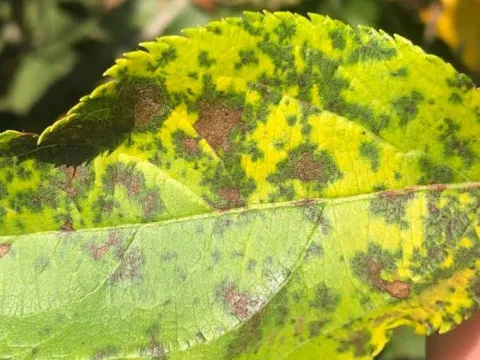
The characteristic symptoms include the emergence of distinct, angular spots on the leaves. These spots are often truncated by leaf veins, resulting in a specific, geometric appearance.
Lesions typically exhibit shades of brown to dark necrotic coloration. Over time, the center of the spot may develop small, raised pustules representing the acervuli of the fungus.
A dark, prominent margin often surrounds the necrotic area, which is a key diagnostic feature distinguishing this condition from other leaf-spotting diseases.
Severe infestations lead to premature yellowing of leaves and subsequent defoliation, which can occur long before the natural end of the growing season.
Additionally, infected shoots may develop small, shallow lesions or cankers, which can lead to stunted growth or tip dieback in young stems.
High relative humidity and frequent rainfall are the primary environmental drivers for the rapid spread and infection rate of the fungus.
Temperatures ranging from 18 to 24 degrees Celsius create the perfect conditions for the pathogen to thrive and complete its developmental stages efficiently.
Poor aeration within the canopy, often resulting from overcrowded planting schemes, maintains a damp microclimate that supports fungal sporulation.
Plant stress, often induced by nutrient imbalances or inadequate irrigation, significantly increases susceptibility to Marssonina truncatula invasion.
Extended periods of wet, overcast weather during the spring effectively turn the disease into a widespread issue, impacting entire plantation areas.
The primary damage is caused by the substantial loss of photosynthetic surface area, which disrupts the plant's overall energy production and carbohydrate storage.
Premature leaf drop undermines the plant's ability to prepare for dormancy, leading to decreased winter hardiness and increased risk of frost damage.
Consistent annual attacks severely weaken the vigor of the plants, making them more vulnerable to subsequent secondary pest or pathogen infestations.
For nursery and ornamental growers, the disease results in significant economic losses due to the deterioration of visual quality and marketability of the plants.
Left unmanaged, the cumulative stress can result in the progressive decline of entire specimen trees or shrubs over several consecutive growing seasons.
Rigorous sanitation practices are paramount, specifically the systematic removal and destruction of all fallen leaves to eliminate primary inoculum sources.
Preventative applications of contact fungicides during the early spring bud-break phase provide a robust barrier against initial spore germination.
Implementing regular pruning techniques to optimize crown structure significantly improves air circulation, thereby reducing the environmental suitability for the fungus.
Strengthening the plant's physiological defenses through balanced fertilization—emphasizing potassium and phosphorus—helps thicken cell walls against penetration.
In cases of epidemic outbreaks, rotational use of systemic fungicides is recommended to achieve effective control while preventing the development of resistant pathogen strains.