
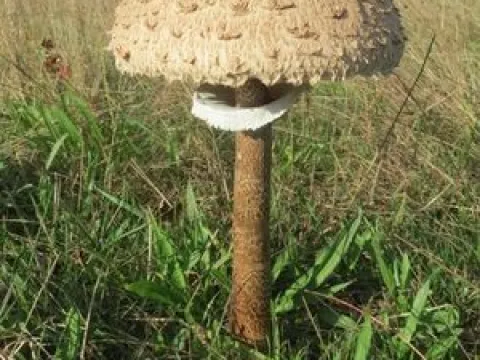
Parasol mushroom
Macrolepiota
The parasol mushroom (genus Macrolepiota) is not a plant pathogen; it is a saprotrophic fungus that lives on decomposing organic matter in the soil.
What the section contains
Parasol mushroom
Because these fungi survive solely on dead organic debris, they do not possess the biological capability to invade or infect living plant tissues.
Farmers often mistakenly label these mushrooms as a crop disease because they observe the mycelium near their crops, but this is merely a spatial coincidence.
The organism's role in the ecosystem is strictly to break down complex organic materials, contributing to soil nutrient cycling and general fertility.
In terms of agricultural pathology, Macrolepiota is considered harmless and does not require diagnostic testing or eradication.
Parasol mushrooms thrive in damp, humus-rich environments where the soil structure allows for the development of extensive underground mycelial networks.
They generally appear during periods of high humidity and mild temperatures, which are essential for the formation of their large fruiting bodies above ground.
Spore dispersal occurs via wind currents, allowing the fungi to colonize new areas that meet their specific requirements for soil moisture and nutrient availability.
Unlike true pathogens that require a susceptible host plant, these fungi are independent of crop health and grow based on the composition of the soil surface.
Their presence is typically a sign of high biological activity and organic matter content in the soil, which is generally beneficial for crop production.
These mushrooms cause no harm to crops, as they do not compete with plants for resources and do not produce any substances that inhibit plant growth.
There is no economic damage associated with the presence of Macrolepiota, and it does not affect the yield, quality, or safety of agricultural products.
It is important to differentiate between these harmless saprotrophs and harmful fungal pathogens that cause wilting, rot, or damping-off in crops.
Applying fungicides to control these mushrooms is counterproductive, as it disrupts the beneficial fungal community that assists in nutrient mobilization.
Any perceived "harm" is purely aesthetic, as the growth of the mushroom cap does not interfere with the growth of crops in the surrounding field.
No control measures are necessary for the parasol mushroom, as it is a beneficial part of the soil ecosystem rather than a plant disease.
If the appearance of mushrooms is considered undesirable for field maintenance, improving soil drainage will naturally reduce the frequency of fruiting.
Regular cultivation and the removal of excess organic litter from the soil surface can minimize the conditions conducive to the growth of fungal mycelia.
Agro-technical practices should focus on managing actual pests and pathogens while allowing saprotrophic fungi to continue their work in soil enrichment.
Farmers are advised to treat the appearance of these mushrooms as a marker of fertile soil rather than a problem requiring chemical treatment.