
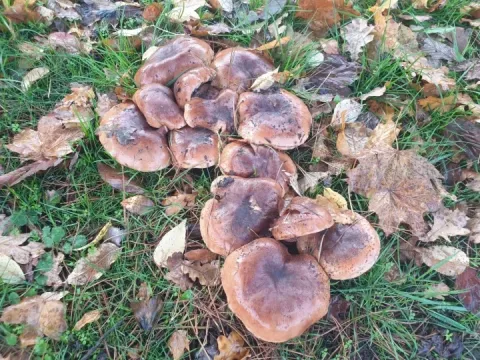
Lyophyllum decastes
Lyophyllum decastes
Lyophyllum decastes, commonly known as the fried chicken mushroom, is a saprotrophic fungus that lives in soil and decaying organic matter. It is not a plant pathogen and does not cause diseases in crops.
What the section contains
Lyophyllum decastes
Unlike parasitic fungi that attack living plant tissues, Lyophyllum decastes plays a vital role as a decomposer, breaking down complex organic materials and enriching the soil with nutrients.
It belongs to the Lyophyllaceae family and is widespread in temperate regions. In agricultural settings, its presence is often an indicator of high organic matter content in the soil rather than a symptom of plant health issues.
The fungus develops an extensive mycelium network that thrives in moist, humus-rich soil. This network is essential for the nutrient cycling process in garden environments.
Since it lacks the biological mechanisms to invade and harm live plants, it is classified as a beneficial or neutral soil organism rather than a threat to agricultural productivity.
The most distinctive sign of this fungus is the formation of dense, clustered groups of fruiting bodies. The stems often appear fused at the base, forming large, bouquet-like structures.
In the soil, especially under layers of mulch or organic debris, one can identify the white, cord-like strands of the fungal mycelium spreading through the substrate.
During the peak fruiting season, typically from late summer to autumn, greyish-brown mushrooms appear in large clusters, which are easily noticeable on lawns or garden beds.
On manicured lawns, the presence of these mushrooms may cause localized discoloration of the grass, often referred to as fairy rings, due to the competition for water and nutrients.
The mushrooms themselves are relatively large and their clustered growth habit creates a dense mat that can physically displace small seedlings or surface roots.
The fungus thrives in conditions characterized by high humidity and moderate temperatures. It prefers loose, well-aerated soils that contain plenty of decomposing plant material.
It frequently appears in areas enriched with manure, compost, or wood chips, which provide the high levels of carbon and nitrogen necessary for its vigorous growth.
Spore dispersal occurs via air currents, and the spores germinate readily when they land in suitable, nutrient-rich environments, especially after prolonged rainfall.
Soil compaction can inhibit the spread of the fungus, which is why it is more common in loose garden soils than in heavily trafficked or compacted areas.
The fungus is highly resilient, capable of surviving through the winter as mycelium within the soil, ready to resume active growth when conditions become favorable again.
Lyophyllum decastes causes no direct harm to crops. It does not induce wilting, root rot, or any form of necrosis in agricultural or horticultural plants.
In intensive cultivation or greenhouse setups, the rapid expansion of the mycelium might temporarily compete with young plants for moisture and soil nutrients, although this is rarely significant.
For gardeners, the primary concern is usually aesthetic, as the sudden appearance of large mushroom clusters can disrupt the visual uniformity of lawns and flower beds.
There is a potential risk related to the mushroom's tendency to bioaccumulate heavy metals from the soil, making them unsafe for human consumption if found in contaminated agricultural lands.
In high-density seedbeds, the physical presence of the fruiting bodies can disturb the soil structure, potentially affecting the germination and early growth of very delicate seedlings.
As this fungus is not a pathogen, there is no need for chemical disease control measures. Agricultural practices should focus on physical management if the mushrooms become a nuisance.
Regular cultivation and soil aeration are effective ways to break up the mycelial network and prevent the fungus from establishing large, deep-seated colonies.
To discourage growth, one should limit the application of fresh, raw organic fertilizers and ensure that mulch is properly aged or mixed with soil to improve decomposition.
Maintaining a good drainage system in the garden prevents the excessive soil moisture that often triggers the production of large, visible fruiting bodies.
While fungicides exist, their use against saprotrophic fungi is strongly discouraged as it can lead to an imbalance in the soil microbiome, which is essential for long-term plant health.