
Macrocystidia
Macrocystidia
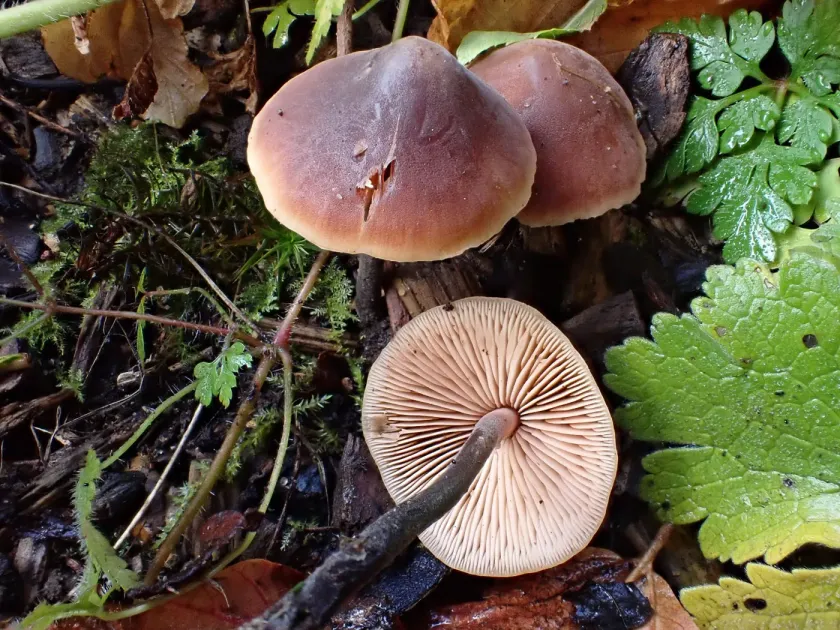
Description
Symptoms
The main signs of the presence of fungi of this genus in the soil manifest through the formation of fruit bodies, which have a specific shape and color.
Fruit bodies are usually small, with characteristic macrocystidia that can only be seen under a microscope or at high magnification.
When plant debris is affected, intense development of light-colored mycelium covering the affected areas of the substrate is observed.
In case of influence on the root system of healthy plants, the aerial part may show signs of suppression, manifested in leaf chlorosis.
Plants growing near the zone of active mycelium growth often lag in development due to changes in the microbiological balance of the root zone.
Pathogen
Macrocystidia is a genus of fungi belonging to the Marasmiaceae family. Although in strict agronomic terms this fungus often acts as a saprotroph living on decaying wood or plant debris, its presence in agroecosystems requires attention.
The pathogen is a basidiomycete fungus that can, under certain conditions, compete with beneficial soil microflora.
The mycelium of this fungus actively spreads in the upper layers of the soil, penetrating organic substrate and processing it.
Biologically active substances secreted by Macrocystidia during its life cycle can affect the root systems of sensitive crops.
Systematically, this object is studied in the context of mycology, but its agronomic significance is often underestimated in field conditions.
Conditions for development
The development of the fungus is closely related to high soil moisture levels and the presence of large amounts of undecomposed plant debris.
Optimal conditions for Macrocystidia vegetation are created during moderate temperatures in spring and autumn periods.
Excessive accumulation of organic matter without proper humification processes promotes rapid mycelium expansion.
Acidic soil reaction and poor aeration are also favorable factors for the successful dominance of this species in the microbial community.
The presence of woody fragments in the soil or mulch creates an ideal staging ground for the establishment and spread of fungal spores.
Why it matters
The harm of Macrocystidia primarily manifests in reducing the availability of nutrients for cultivated plants.
The fungi compete with agricultural crops for nitrogen and mineral elements, leading to nutritional deficiencies in the latter.
The biological activity of the mycelium can lead to damage to young roots, especially in the seedling stage or during early seed germination.
Intensive mycelium development degrades soil structure, making it more compacted and less permeable to moisture.
In the long term, this reduces overall yields and produce quality due to disruption of normal metabolism in the root zone.
Protection
The main method of control is compliance with crop rotation and timely incorporation of organic debris into the soil.
It is recommended to carry out regular soil liming to neutralize acidity, which suppresses the development of many fungal communities.
Improving the drainage properties of the plot prevents water stagnation, which is critical for mycelium activity.
The use of biological preparations based on Trichoderma helps to displace pathogenic microflora from the root zone.
- Deep plowing for high-quality processing of plant debris.
- Moisture level control during active growth periods.
- Application of mineral fertilizers in balanced dosages.
Discussion
No discussions yet — be the first.