
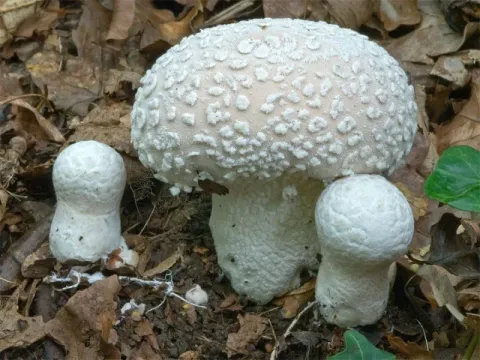
Lycoperdon mammiforme
Lycoperdon mammiforme
Lycoperdon mammiforme, commonly known as a type of puffball, is a basidiomycete fungus. It is essential to clarify that it is not a plant pathogen or a disease-causing agent for crops.
What the section contains
Lycoperdon mammiforme
The fungus functions strictly as a saprotroph. It obtains nutrients by decomposing organic matter in soil and leaf litter, rather than infecting living plant hosts.
It possesses a complex mycelial structure that infiltrates decaying vegetation to facilitate nutrient cycling in forest environments.
There are no recorded instances of this species causing damage to commercial crops, as it lacks the physiological traits required to attack living plant tissues.
The fungus is widely recognized by mycologists for its role in soil health and ecosystem productivity.
Lycoperdon mammiforme thrives in forest habitats characterized by high moisture content and rich organic layers such as humus.
It requires stable environmental conditions, particularly high humidity, for the development of its distinctive breast-shaped fruiting bodies.
The distribution of the fungus is often linked to the presence of deciduous tree species that provide a constant supply of leaf litter.
Spore dispersal relies on environmental factors like wind and physical contact with the mature, dry fruiting body.
It prefers undisturbed soils where the decomposition process is ongoing and not interrupted by intensive tillage or excessive chemical application.
The presence of Lycoperdon mammiforme poses no threat to agriculture. It is an environmentally beneficial organism that contributes to soil enrichment.
As a decomposer, it helps break down complex organic materials, making them available as nutrients for other plants in the ecosystem.
Growers do not need to implement any control measures or protective strategies against this fungus, as it is entirely harmless to cultivated plants.
It is not known to produce toxins or secondary metabolites that would negatively affect crop yields or soil fertility.
Correct identification prevents unnecessary concern and avoids the misuse of fungicides in areas where beneficial fungi are present.